

AGA cleaning with eco-friendly, non-toxic products is safe for children and pets when trained technicians use plant-based cleaners and rinse every surface properly. Once the oven has been wiped down and ventilated, the cooker is ready for normal family use. Bee Cleaning Services Manchester follows this approach in Oldham homes, where range cookers are often the centre of a busy kitchen. This article explains how non-toxic oven cleaning works, why AGA ovens need specialist handling, and what households should expect before, during and after the visit.
What Makes Oven Cleaning Eco-Friendly and Non-Toxic?
Traditional oven cleaners often rely on caustic soda or strong solvents that release sharp fumes and leave residue on metal surfaces. Eco-friendly alternatives use plant-based degreasers, biodegradable surfactants and mild alkaline agents that break down carbonised grease without harsh vapours. These products are usually labelled as free from ammonia, chlorine bleach and solvent-based fragrances. The result is a kitchen that does not need long periods of ventilation or restricted access after the clean is finished.
Non-toxic does not mean weak. The cleaning power comes from correct dwell time, controlled heat and the right agitation tools rather than from aggressive chemistry. Carbon deposits soften when a gentle cleaner has time to work, and a trained technician removes the loosened layer with brushes and scrapers. This method protects enamel, cast iron and seals from the corrosion that stronger products can cause. It also keeps airborne irritants low, which matters for households with asthma, allergies or young children.
Why AGA Ovens Need a Different Approach
An AGA is not a standard electric or gas oven. Many models are built around heavy cast iron, retain heat for long periods and use enamelled lids, doors and linings that react badly to the wrong products. Applying a generic oven cleaner can stain enamel, dull the finish or leave residue that burns off with an unpleasant smell at the next firing. Manufacturer guidance usually favours careful, low-moisture methods, so technicians need to know the model before they start.
Cast Iron Cavities and Heat Retention
The oven cavities in a range cooker hold heat far longer than a conventional appliance, so timing is part of the job. Technicians plan the visit so the cooker has cooled enough to be worked on safely, and so that cleaning agents are never sprayed onto hot metal. Cast iron is also porous, which means excess liquid can be absorbed and later turn to steam or odour. Controlled application and thorough wiping are therefore more important than large volumes of product.
Cleaning Equipment Used on Range Cookers
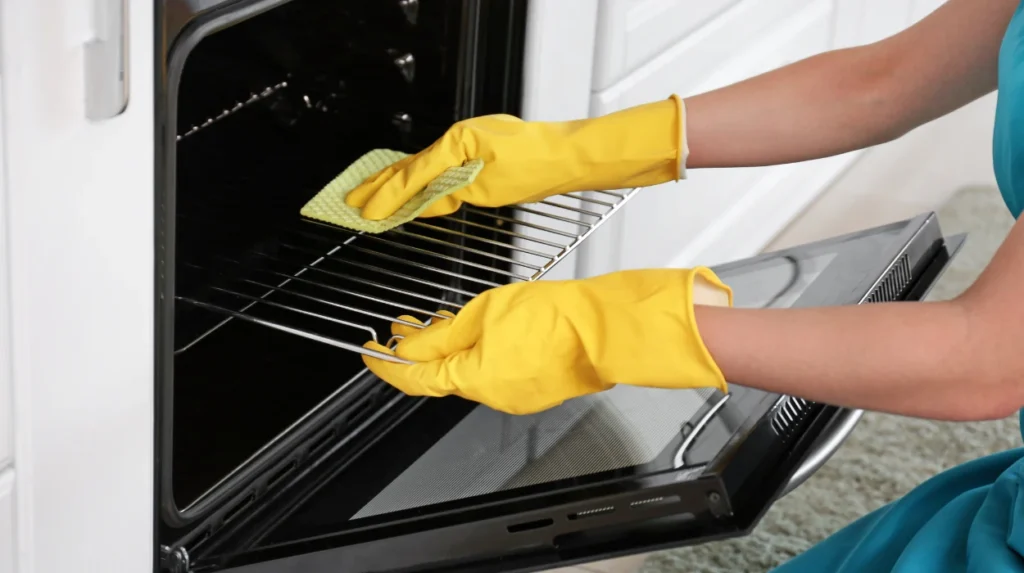
The right cleaning equipment makes a visible difference to both safety and results. Professionals typically use non-scratch scrapers, nylon and brass-free brushes, microfibre cloths, protective sheeting and, where suitable, a steam unit that lifts grease without chemicals. Racks, trays and removable parts are often cleaned separately in a dip tank or by hand. Using purpose-built tools avoids the scratching and pitting that improvised methods, such as steel wool, can cause on enamel.
How Child and Pet Safety Is Maintained
Safety starts with the choice of products and continues through the way the work area is managed. Technicians protect floors and worktops, keep cleaning agents closed when not in use and remove all residue before leaving. Households can help by keeping children and pets out of the kitchen while the clean is under way. Pets are especially sensitive to surface residue because they lick paws and fur, so a complete rinse and dry wipe is essential.
After the visit, the oven should look clean and smell neutral rather than chemical. A faint warm smell on first use can occur as trace moisture evaporates, and it is normally harmless. Families who want to know when the cooker is ready can read this guide on using your oven straight after a professional clean, which explains drying times, first-use checks and what to look for. Following those steps keeps the kitchen safe for everyday cooking.
What Happens During a Professional Clean
A professional visit begins with an inspection of the oven, the hotplates and any removable parts. The technician notes the level of carbon build-up, checks the condition of seals and enamel, and chooses the gentlest method that will work. Protective covers are laid down, and cleaning agents are applied to the heavily soiled areas first so they have time to soften deposits. This planning step is what separates a careful clean from a quick wipe-over.
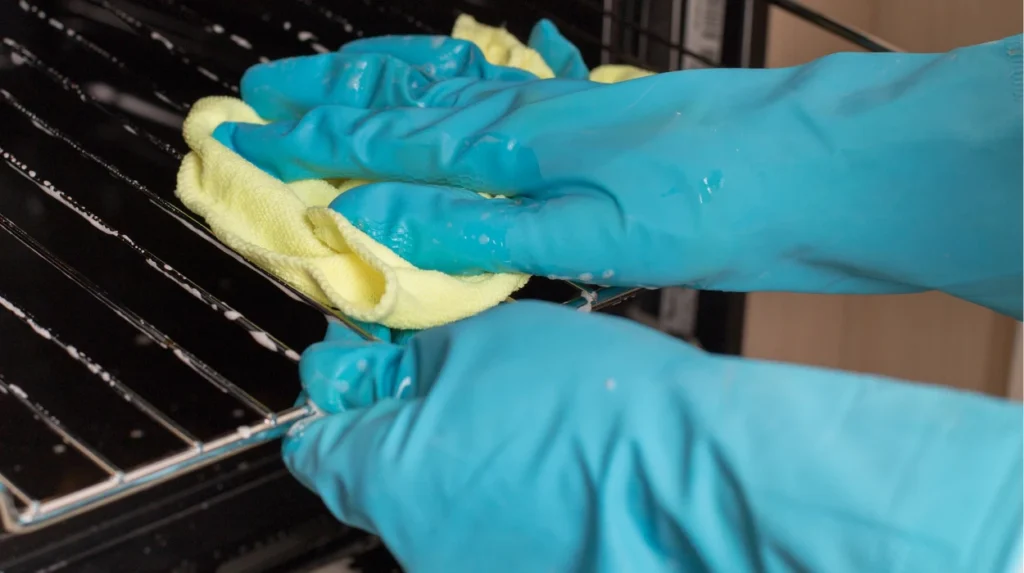
Next comes the detailed work of agitating, rinsing and drying each section. Doors, glass panels, shelf runners and the flue area are cleaned where access allows, and parts are refitted once they are fully dry. The technician then runs a final inspection to confirm that no product remains on the surfaces that touch food. Customers who book deep oven cleaning with non-toxic products in Oldham receive the same structured process whatever the size or age of the cooker.
Choosing a Safe and Reliable Service in Oldham
Choosing a provider is easier when you know which questions to ask. Households should confirm which products are used, whether safety data sheets are available, and whether the technician has experience with range cookers. It is also reasonable to ask how long the visit will take and what aftercare advice is given. Clear answers suggest a business that treats the cooker as a valued appliance rather than a routine job.
Price is another practical consideration, and it varies with the size of the oven, the number of cavities and the level of build-up. Understanding the factors behind a quote helps you compare services fairly, and this overview of oven cleaning cost in Oldham sets out what typically affects the final figure. Bee Cleaning Services Manchester provides Oven Cleaning Services in Oldham with a focus on safe products and careful methods. Always compare scope and safety alongside price.
A clean range cooker supports safer cooking, better performance and a longer appliance life, and doing it with non-toxic products protects the people and pets who share the kitchen. Understanding the materials, the equipment and the process helps households make confident decisions. Bee Cleaning Services Manchester provides professional cleaning solutions for ovens and range cookers across Oldham, using careful methods suited to family homes.
Frequently Asked Questions
How often should an AGA be cleaned professionally?
Most households benefit from a professional clean once or twice a year, depending on how often the cooker is used. Heavy daily cooking, roasting and spillages create carbon deposits faster. Light use may stretch the interval to eighteen months. Regular wiping between visits keeps build-up manageable. A technician can advise on a schedule after seeing the condition of the cavities.
Can I use a supermarket oven cleaner on my AGA?
It is best to avoid it unless the manufacturer specifically approves the product. Many shop-bought cleaners contain caustic ingredients that can mark enamel and leave strong fumes. Cast iron can also absorb liquids, so residue may reappear when the cooker heats up. Many owners prefer dry brushing for light carbon and a specialist for deeper cleaning. Checking your model’s care guidance is always the safest first step.
Are oven cleaning fumes harmful to dogs, cats and birds?
Strong chemical fumes can irritate the airways of pets, and birds are especially sensitive to airborne irritants. This is why non-toxic, low-odour products are often preferred in homes with animals. Keeping pets in a different room during the clean and airing the kitchen afterwards reduces risk. If a pet shows coughing, drooling or distress, contact a vet promptly. Ask any provider for product details before the appointment.
Does an AGA need to be switched off before cleaning?
Some models run continuously, so this depends on the type and the technician’s plan. The cooker must be cool enough to handle safely, and cleaners should never be applied to hot surfaces. Many professionals arrange the visit so the oven can be cooled in advance and then brought back to temperature. Follow your manufacturer’s guidance for turning the cooker down or off. A competent technician will explain the plan before starting.
Why does my oven smell after a professional clean?
A mild warm smell is common on first use because trace moisture and microscopic residue burn off. It usually fades within one or two heating cycles. Strong chemical odours are less common with eco-friendly products. Running the oven empty for a short period can help clear any remaining scent. If the smell persists or seems sharp, contact the cleaning company so they can check the work.