

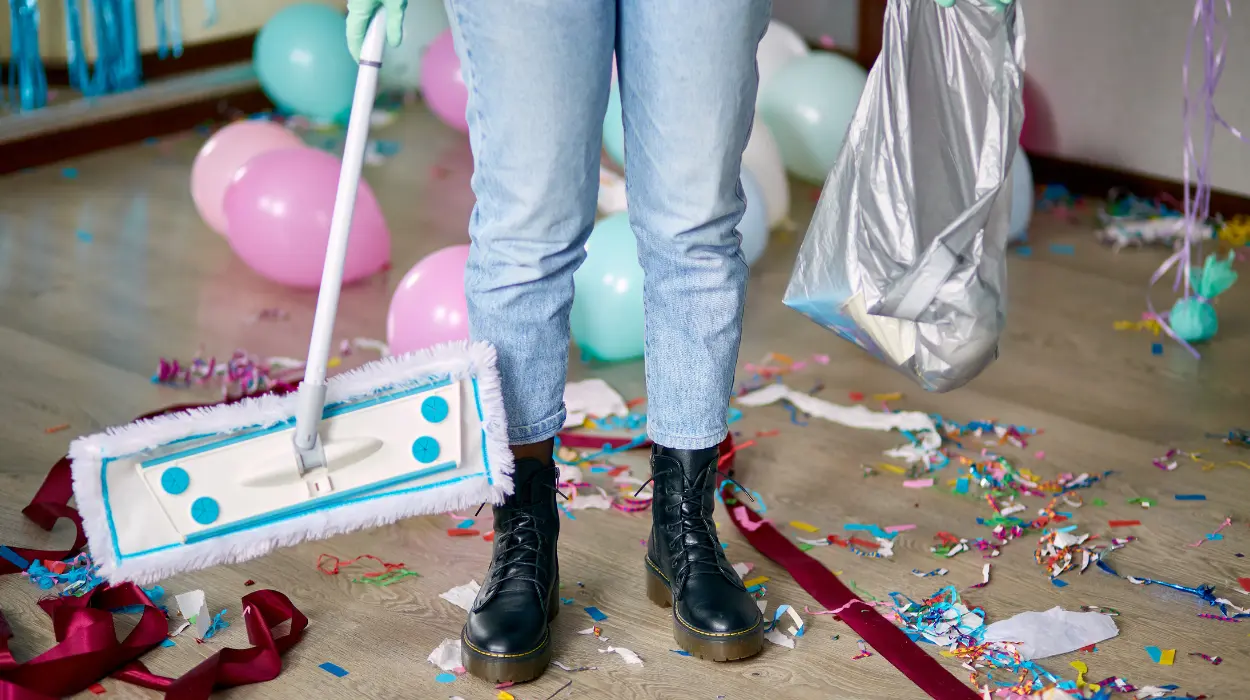
Professional party cleanup includes rubbish removal, surface sanitising, kitchen and bathroom cleaning, floor care and a final inspection. Trained cleaners work through these stages in a fixed order so the space is hygienic and ready to use again.
A party can leave behind far more than visible mess. Spilled drinks, food residue, grease marks and scattered decorations all need handling in a particular sequence, or dirt simply gets moved from one room to another. Professional teams plan the job before they start, bring suitable products and tools, and treat each surface according to its material. This guide explains each stage so you know what to expect from a proper service and how to judge the quality of the finished result.
Scope of Post-Party Cleaning
The scope of a party clean depends on the venue, the guest count and the type of event. A birthday in a small flat needs a different approach from a wedding reception in a hall or a large house gathering with several rooms in use. Cleaners usually agree the areas, the level of mess and any special concerns, such as red wine on carpets, before arriving. This keeps the work organised and prevents surprises on the day.
Local providers such as Bee Cleaning Services Manchester structure their work around these factors, which helps customers understand what is covered. Households and venues that want a dependable finish often choose after party cleaning services in Oldham to return the property to a presentable, hygienic state. A clear scope also makes it easier to compare quotes, because each provider’s inclusions can be checked against the same list of tasks.
The Step-by-Step Cleaning Process
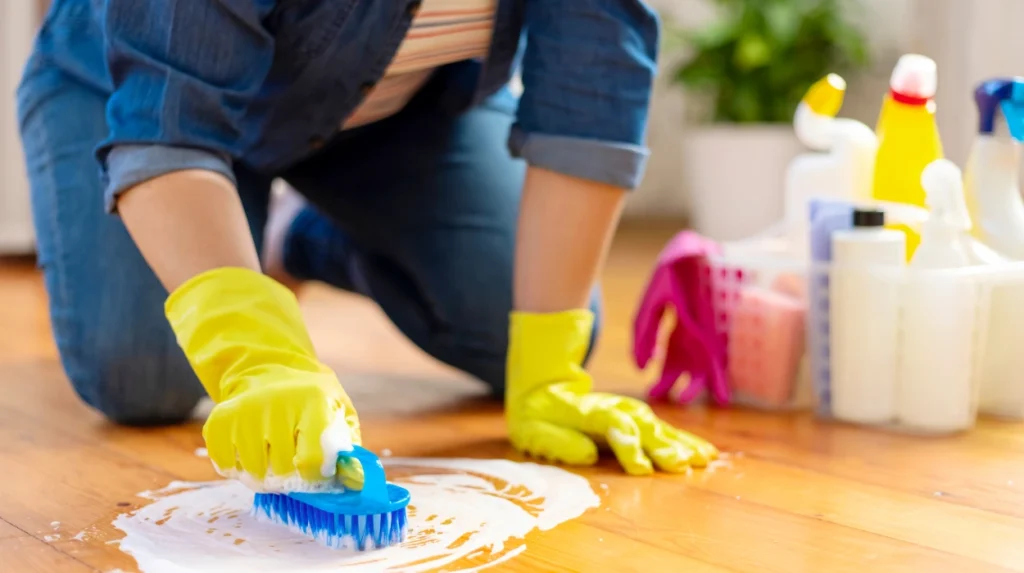
Initial Walkthrough and Assessment
Every job starts with a walkthrough. The cleaning team moves through each room, noting heavy staining, sticky floors, damaged items and areas that need extra time. This stage also identifies delicate surfaces such as polished wood, natural stone or fabric upholstery, which need gentler products than standard kitchen tiles. Spending ten or fifteen minutes on assessment lets the team assign tasks properly and avoid mistakes that could cause damage. It also gives the client a chance to point out priorities before the work begins.
Rubbish and Waste Removal
Once the plan is set, cleaners clear the bulk waste. This covers bottles, cans, paper plates, food scraps, balloons and decorations. Items are sorted into general waste and recycling where possible, and sharp or broken glass is handled with protective gloves and rigid containers. Removing waste first is important because it exposes the surfaces underneath and stops cleaning products from mixing with leftover food or liquid. A clear space also allows the next stages to move faster and more thoroughly.
Surface Cleaning and Sanitising
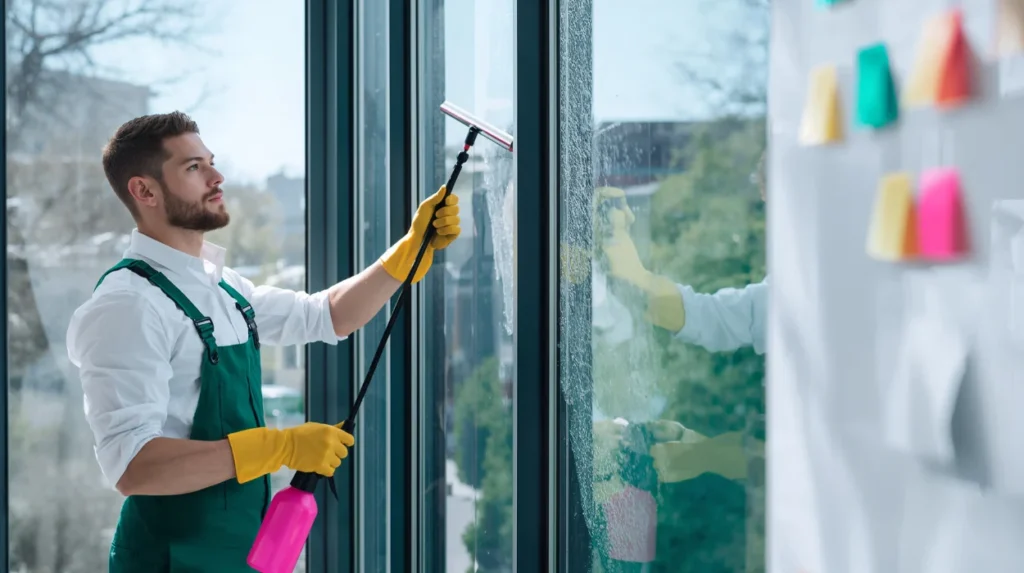
Next comes the work on tables, worktops, shelves, door handles, light switches and other high-touch surfaces. Cleaners apply the right product for each material, allow the correct contact time, and wipe with colour-coded cloths to prevent cross-contamination. Sticky drink rings, grease and fingerprints are removed, and sanitiser is used where hygiene matters most. Windows, mirrors and glass tables are often included, since parties tend to leave smudges and splashes on them. This stage is what makes a room look and feel properly clean rather than just tidy.
Kitchen and Bathroom Reset
Kitchens and bathrooms usually take the most effort after a party. In the kitchen, cleaners degrease hobs, wipe appliances, clean sinks and tidy surfaces that have been used for food preparation. Bathrooms are descaled and disinfected, including toilets, basins, taps, mirrors and floors, because heavy use during an event can leave them in poor condition. Bins are emptied and fresh liners are fitted. These two areas affect hygiene most directly, so professional teams give them careful attention before moving on.
Floor, Carpet and Upholstery Care
Floors are vacuumed first to lift crumbs, glitter and debris, then mopped with a product suited to the flooring type. Hard floors such as laminate, vinyl and tile need controlled moisture, while carpets may need spot treatment for stains from food, wine or coloured drinks. Sofas and chairs are checked for spills and marks, and fabric is treated according to its care label. Prompt treatment matters because many stains set permanently if left for several days. A consistent floor finish also makes the whole property look refreshed.
Final Inspection and Handover
The last stage is a room-by-room inspection. The team checks for missed spots, streaks, lingering odours and items that need to be put back in place. Any problems are corrected before the client sees the result. This quality check is a defining feature of professional party cleanup, because it separates a structured service from a rushed tidy-up. Customers should receive a clean, odour-free space that is ready for normal use, with clear communication about anything that could not be fully removed.
Cleaning Equipment Used in Party Cleanup
The cleaning equipment a team brings has a direct effect on results and on how long the job takes. Commercial vacuum cleaners with strong suction handle crumbs, glitter and fine debris more effectively than domestic models. Steam cleaners, microfibre cloths, scrubbing pads, extendable dusters and carpet extraction machines each have a specific purpose. Using the right tool for each surface also reduces the risk of scratches, water marks and fabric damage.
Cleaning products are chosen as carefully as the tools. Degreasers deal with kitchen residue, disinfectants target bathrooms and high-touch areas, and stain removers treat fabrics and carpets. Professional teams also carry protective gloves, sealed bin bags and colour-coded cloths to maintain hygiene standards. Having a complete kit on arrival means the work can start immediately instead of waiting for supplies, which is useful when a property must be ready again quickly.
How Long It Takes and What Affects the Price
Most party cleanups take between two and six hours, depending on the size of the property, the number of guests and the severity of the mess. A small flat with light staining can be finished quickly, while a multi-room house or hall with heavy spills will need a larger team or more time. Access, parking and the amount of waste to remove also influence the schedule. Giving the provider accurate details in advance leads to a more reliable estimate.
Pricing usually reflects labour hours, the number of rooms, the equipment required and any extras such as carpet stain treatment or oven cleaning. Reading what customers say about party cleaning in Oldham can help you understand typical expectations around quality, punctuality and communication. Comparing written quotes against a clear checklist of inclusions is the most dependable way to avoid hidden costs.
When to Arrange Cleaning After Your Event
Cleaning is most effective when it happens soon after the party. Spilled drinks, grease and food residue become harder to remove as they dry, and carpets are especially vulnerable to permanent marks. Many hosts also need the property restored quickly for the next day, a landlord inspection or a return to normal routines. Planning the clean before the event, even loosely, removes the pressure of arranging help while tired.
If your plans change at short notice, it is possible to book same day party cleaning in Oldham for urgent situations. Same day availability depends on the schedule and the size of the job, so confirming the details early is sensible. A short phone call or message with the room count, the type of mess and your preferred time is usually enough for a provider to give a clear answer
A structured approach to cleaning turns a stressful aftermath into a manageable task. Understanding what professional party cleanup includes helps you set realistic expectations, compare providers fairly and prepare the space properly. Bee Cleaning Services Manchester provides professional cleaning solutions built around these stages, and its after party cleaning services in Oldham follow the same organised method, from assessment to final inspection, so hosts can return to a clean and comfortable property.
Frequently Asked Questions
How much does it cost to clean up after a party?
Costs depend on property size, guest numbers and the level of mess. Small homes usually cost less than large houses or halls. Extras like carpet stain removal or oven cleaning add to the total. Most providers charge by the hour or by a fixed quote. Always request a written estimate that lists exactly what is included.
Should I clean up right after a party or wait until morning?
Clearing rubbish and wiping up spills the same night is wise. Wine, coloured drinks and grease can stain surfaces permanently if left. Heavy cleaning like floors and bathrooms can wait until the next day when you are rested. Soak sticky dishes and blot carpet spills straight away. This makes the later deep clean much easier.
How do I get red wine out of a carpet after a party?
Blot the stain with a clean cloth and never rub it. Apply cold water and keep blotting until the colour lifts. A carpet stain remover or a mix of washing-up liquid and water can help. Avoid hot water because it sets the stain. Old or large stains are best treated by a professional with extraction equipment.
Is it worth hiring cleaners after a party?
Many hosts say it saves time and effort, especially after a large event. Professionals bring commercial cleaning equipment and know how to treat different surfaces safely. It also reduces the risk of damage from using the wrong product. This matters most for rented properties and hired venues. You also get a consistent, hygienic finish.
How long does party cleaning take?
Most jobs take between two and six hours. A small flat after a modest gathering is quick, while a large house with heavy mess takes longer. Room count, waste volume and stains all affect timing. Extra cleaners can shorten the job. Sharing accurate details beforehand gives the best estimate.