

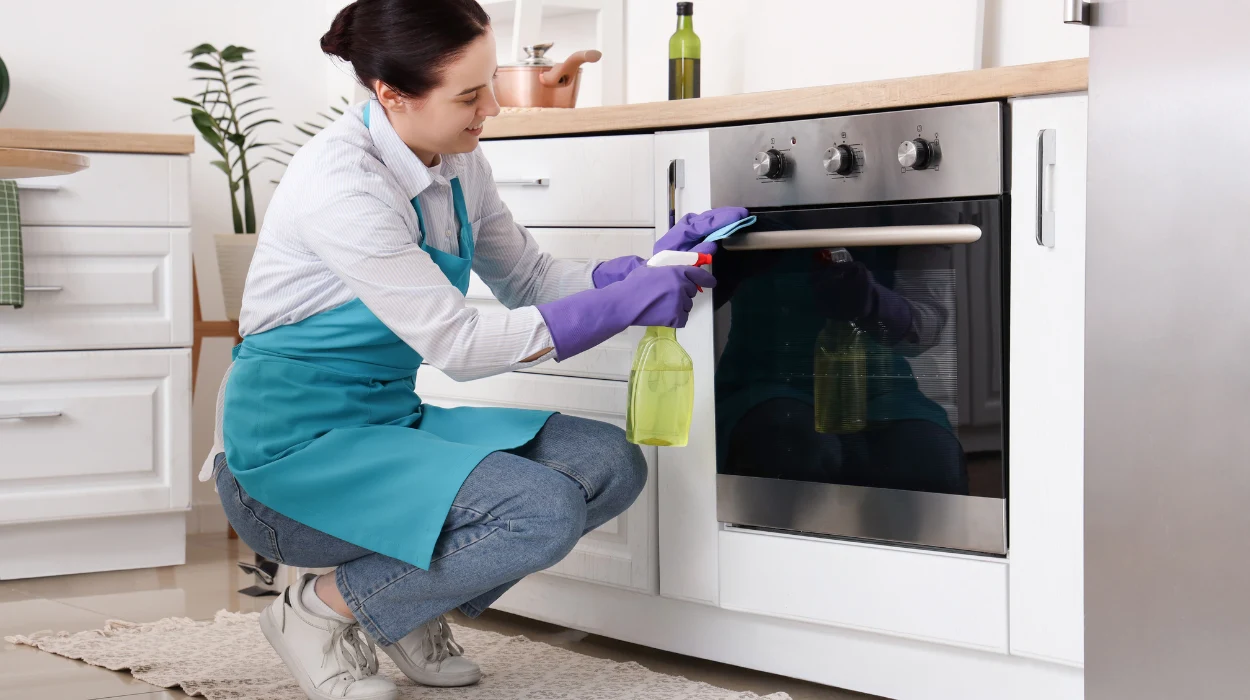
Professional oven restoration can bring your cooker back to a near-original condition, removing years of grease, carbon deposits, and burnt-on food that routine cleaning simply cannot reach. Oven cleaning services in Farnworth use specialist equipment and industry-grade solutions that go far beyond what any supermarket spray can achieve.
Many homeowners in Farnworth underestimate just how much a neglected oven affects their daily cooking experience. Over time, grease builds up on oven walls, fan elements, door seals, and inner glass panels, creating a layer of carbonised residue that traps heat unevenly and releases fumes during cooking. This gradual decline often goes unnoticed until performance drops noticeably, energy bills creep upward, or a persistent burning smell fills the kitchen each time the oven is switched on. A professional restoration service does not just clean the visible surface but addresses every internal component that accumulates soil over months of use. The process is designed to return both appearance and function to a standard that mirrors the original condition of the appliance.
What Oven Restoration Actually Involves
Oven restoration is not the same as giving your cooker a wipe-down with a damp cloth or applying a foam cleaner overnight. A genuine restoration process involves the full disassembly of removable components, including racks, side runners, fan covers, burner caps, and door panels, so that each part can be treated individually using methods appropriate to its material and level of soiling. The inner cavity walls, roof, and base are pre-treated with targeted solutions before any mechanical cleaning begins, allowing residues to loosen properly rather than being scraped away in a way that risks damaging enamel coatings.
Door glass receives separate treatment because the gap between inner and outer panes often harbours grease that is invisible during normal use yet produces discolouration and streaking that affects visibility. Seals and gaskets are inspected during the process, not simply wiped over, because deteriorated seals allow heat to escape and reduce the efficiency of the appliance significantly. The result of this comprehensive approach is a cooker that not only looks cleaner but heats more efficiently, ventilates properly, and operates without the off-putting smells that accompany a grease-laden interior.
Why Household Cleaning Products Cannot Deliver the Same Outcome
It is tempting to assume that a strong oven cleaner from a supermarket shelf can achieve the same results as a professional service, particularly given the wide range of products marketed for heavy-duty grease removal. However, the reality is that most retail products are formulated as surface treatments rather than deep-penetration solutions, and they are rarely left in contact with the oven long enough to break down carbonised layers built up across many months. Spray-on products also carry their own risks when used without proper training, since caustic compounds can damage rubber seals, discolour chrome trim, and leave chemical residues on heating elements if not fully removed after application.
The physical limitations of DIY cleaning are equally significant because most people do not disassemble the oven before cleaning, meaning large areas of built-up soil behind removable panels and beneath floor plates remain entirely untreated. Understanding the difference between eco-friendly and caustic oven cleaning methods is valuable at this stage, and reviewing the comparison of eco-friendly and caustic oven cleaning approaches can help you make an informed decision about which treatment is appropriate for your appliance and household. Professional technicians are trained not only in the chemistry of cleaning agents but also in the mechanical knowledge required to dismantle and reassemble different oven models safely, which is a skill set that retail products alone cannot replicate.
The Step-by-Step Professional Cleaning Process
Initial Assessment and Component Removal
Every professional oven clean begins with a structured assessment of the appliance before any product is applied or any component is removed. The technician examines the make and model of the oven, notes any pre-existing damage such as chipped enamel or worn seals, and identifies the most heavily soiled areas that will require extended treatment time. This stage is important because different oven types, whether fan-assisted, conventional, range, or multi-fuel, have different internal configurations, and applying a one-size-fits-all approach without this initial review increases the risk of component damage.
Once the assessment is complete, all removable parts are taken out methodically, labelled mentally by position, and set aside for individual treatment in a portable dip tank or specialist cleaning solution. Removing components before cleaning is not simply a procedural formality but a practical necessity, because grease trapped beneath oven floor panels and behind side runners is one of the most common sources of smoke and burning smells during cooking.
Dipping, Soaking, and Targeted Treatment
Removed components are submerged in a heated dip tank containing a biodegradable cleaning solution that is specifically formulated to dissolve carbonised grease without corroding metal surfaces. The soaking period varies depending on the severity of soiling, typically ranging from thirty minutes for moderately used parts to several hours for heavily carbonised racks and fan covers that have not been cleaned in a year or more. While components are soaking, the oven cavity itself is treated with a specialist solution applied directly to the walls, roof, and base, where it is allowed to dwell and penetrate the layers of baked-on grease before any wiping or scrubbing takes place.
Door glass, including the inner pane that sits between the two layers of the door assembly, is treated with a non-abrasive compound that dissolves grease without scratching the surface or leaving streaks that reduce transparency. This targeted, component-by-component approach is what distinguishes professional oven cleaning services in Farnworth from any domestic cleaning routine, and it is the reason why the results are so noticeably different from what can be achieved at home.
Reassembly, Final Polish, and Quality Check
Once all components have been cleaned to the required standard, they are rinsed thoroughly to remove all traces of cleaning solution before being dried and returned to their original positions within the oven. The reassembly stage requires as much care as the disassembly because parts that are refitted incorrectly can affect airflow, heat distribution, and the safe operation of the appliance. After reassembly, the technician performs a functional test by switching the oven on and observing its behaviour during a short heating cycle, checking for any residual smells, smoke, or performance anomalies that would indicate incomplete cleaning or a component issue that was not apparent before work began.
A final visual inspection and polish of external surfaces, including the control panel, door exterior, and hob area where applicable, brings the cooker to a finished standard that reflects the level of care invested throughout the process. If you are considering professional oven cleaning in Farnworth ahead of a property move or inspection, this final stage ensures that your appliance presents in the best possible condition.
How Frequently Should Oven Cleaning Be Scheduled
The appropriate frequency for professional oven cleaning depends on how often the oven is used and the type of cooking it is regularly subjected to. A household that cooks from scratch daily and frequently roasts meat, bakes at high temperatures, or uses the grill setting will accumulate grease and carbon deposits at a considerably faster rate than a household where the oven is used two or three times per week for lighter meals. As a general principle, professional cleaning is recommended every six to twelve months for regular domestic use, but households with intensive cooking habits or commercial-grade range cookers may benefit from scheduling a clean every three to four months to prevent heavy soiling from becoming entrenched.
Beyond the aesthetic benefit, regular cleaning also extends the operational life of the appliance by preventing carbonised deposits from interfering with fan motors, heating elements, and thermostat sensors that regulate temperature. Allowing soiling to build up beyond a manageable threshold not only makes the eventual cleaning process more labour-intensive but also increases the risk of component damage caused by heat concentration around blocked ventilation points.
The Effect of a Clean Oven on Cooking Results
A professionally restored oven does more than look presentable; it also performs with a consistency and efficiency that a grease-laden appliance simply cannot match. When the interior walls, floor, and roof of an oven are coated in carbonised residue, the reflective surface that is designed to distribute radiant heat evenly is compromised, leading to uneven cooking temperatures and the need for longer preheat times to reach the set temperature. Clean heating elements and fan assemblies operate without the insulating effect of baked-on grease, which means energy is transferred to the food more directly and the thermostat does not need to work as hard to maintain a stable temperature throughout the cooking cycle.
The absence of residual grease in a clean oven also eliminates the smoke and burning smells that cause discomfort during cooking and can trigger smoke alarms, making the kitchen environment noticeably more pleasant for the entire household. For anyone who cooks regularly or takes quality of results seriously, the performance difference between a clean oven and a heavily soiled one is practical and tangible rather than merely aesthetic.
What to Look for When Choosing a Professional Oven Cleaning Service
Selecting an oven cleaning service involves more than comparing prices, and understanding what distinguishes a competent provider from a basic one will help you make a confident decision. A reputable technician should be able to explain the products they use, confirm whether those products are safe for use around children and pets after the treatment is complete, and provide a clear outline of what the service covers before any work begins. Experience with a wide range of oven types is also an important consideration, particularly if you own a range cooker, a combination microwave oven, or an induction hob model where the cleaning requirements differ significantly from a standard single oven.
Insurance coverage and a professional approach to property protection, including the use of floor coverings and careful handling of kitchen surfaces adjacent to the appliance, are indicators of a service provider who takes their work seriously. If you are in the process of weighing up your options and want guidance on which oven cleaning solution is right for your home, comparing the available service types before booking can save you both time and money. Bee Cleaning Services Manchester brings trained technicians with the equipment, knowledge, and professional standards that Farnworth residents can rely on for consistent, high-quality results.
Oven restoration is a practical investment in both the performance of your appliance and the quality of your kitchen environment, and professional results go well beyond anything that can be achieved through domestic cleaning alone. Whether your cooker has years of accumulated grease or simply needs a thorough reset before you begin a new routine, the process used by trained technicians is precise, effective, and tailored to your specific appliance. Bee Cleaning Services Manchester provides oven cleaning services in Farnworth that are carried out to a professional standard, using safe, proven methods that deliver a visible and lasting improvement to your cooker’s condition and performance.
How did I make my oven look brand new again?
Professional oven restoration involves full disassembly, dip-tank soaking of components, and targeted treatment of the cavity, door glass, and seals. This process removes years of carbonised grease and burnt-on residue that domestic sprays cannot reach, leaving your cooker in near-original condition.
Should I repair a 15-year-old oven?
If the oven heats evenly, the seals are intact, and repair costs fall below half the price of a replacement, continued use with professional cleaning and minor maintenance is a reasonable choice. However, if heating elements or thermostats are failing repeatedly, investing in a new appliance may be more cost-effective long term.
What is the 50/50 rule for appliances?
The 50/50 rule suggests that if a repair costs more than 50 percent of the appliance’s current replacement value and the unit is more than halfway through its expected lifespan, replacement is generally the smarter financial decision. For ovens in reasonable working order, a professional clean is far more affordable than either option.
What colour kitchen appliances are in for 2026?
Matte black, brushed steel, and warm cream tones are leading kitchen appliance trends for 2026, moving away from high-gloss finishes toward textures that conceal fingerprints and complement natural material kitchens. Slate grey and earthy terracotta accents are also gaining popularity in modern kitchen design.
How to quickly clean a very dirty oven?
For a heavily soiled oven, remove the racks, apply a baking soda and water paste across all interior surfaces, and leave it overnight before wiping clean. For genuinely ingrained grease and carbon deposits, booking oven cleaning services in Farnworth with Bee Cleaning Services Manchester will deliver a far faster and more thorough result than any home remedy.