
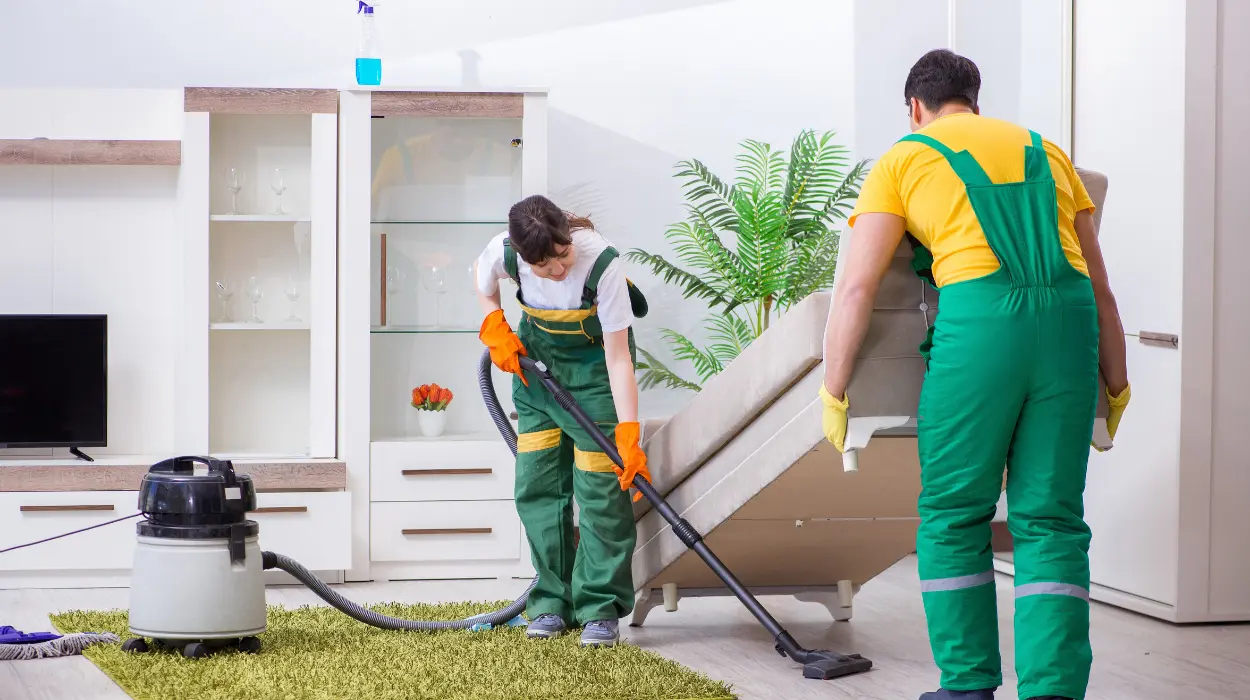
Eco-friendly carpet cleaning products are genuinely effective at removing dirt, stains, and allergens when applied with proper technique and professional equipment. Modern plant-based and biodegradable formulas have advanced significantly and now deliver results that closely match conventional chemical-based cleaners in most residential and commercial environments.
Why the Shift Toward Green Cleaning Is Gaining Ground
Carpet Cleaning Services in Farnworth are increasingly moving toward environmentally responsible cleaning solutions, and this change is driven by both practical and health-related reasons. Homeowners and businesses are becoming more aware of the chemicals being introduced into their indoor environments, particularly in spaces where children and pets spend time regularly. Traditional carpet cleaning products often contain phosphates, synthetic surfactants, and volatile organic compounds that linger in the air long after a clean.
The growing demand for safer alternatives has pushed product manufacturers to invest in more effective green formulations. Plant-derived enzymes, citrus-based degreasers, and biodegradable surfactants are now widely used in professional-grade eco products. These ingredients break down organic matter in carpet fibres without leaving behind harmful residue. The result is a cleaner that is both environmentally conscious and capable of handling real-world soiling.
What Classifies a Carpet Cleaning Product as Eco-Friendly?
Not every product marketed as “green” or “natural” meets the same standard, which makes it important to understand what the classification actually means in practice. A genuinely eco-friendly carpet cleaning product must be free from synthetic dyes, chlorine, formaldehyde, and phosphates, which are common in conventional products. It should be biodegradable, meaning it breaks down safely in water systems without causing harm to aquatic life or soil quality.
Third-party certifications such as the EPA Safer Choice label, EU Ecolabel, or Leaping Bunny accreditation provide verifiable benchmarks. The pH balance also matters, since products that are too acidic or too alkaline can damage carpet fibres over repeated use. A well-formulated eco product maintains a balanced pH while still achieving the surfactant action needed to lift embedded soil. When procured and used by trained professionals, these products perform reliably across a wide range of carpet types and pile densities.
How Plant-Based Formulas Actually Clean Carpet Fibres
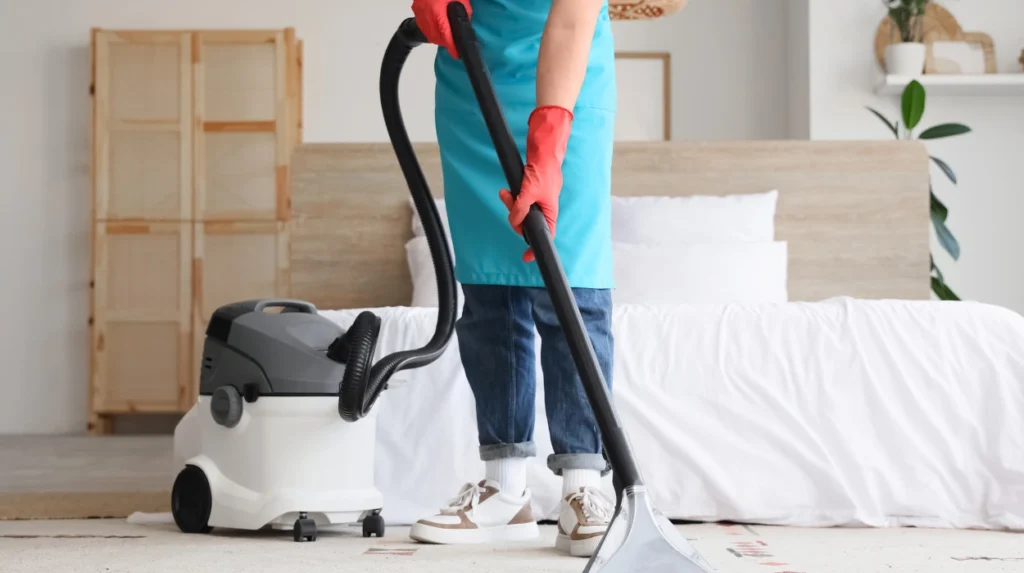
Understanding how eco-friendly products work helps explain why they are so effective when used correctly. Most green carpet cleaners rely on enzymatic or surfactant-based chemistry rather than harsh bleaching agents or petrochemical solvents. Enzymes target specific types of organic soiling, including proteins from food spills and bodily fluids, lipids from grease, and starches from starchy food residues. Each enzyme type catalyses the breakdown of its target molecule, making the dirt water-soluble and easier to extract. Surfactants reduce surface tension between water and oil-based stains, lifting the soil away from the carpet fibre rather than simply masking it with fragrance or whitening agents.
This mechanism is more targeted and less abrasive than broad-spectrum chemical cleaners. When combined with hot water extraction or low-moisture encapsulation, the cleaning action is thorough and leaves the carpet genuinely clean rather than superficially treated.
To understand why professional-grade methods go further than regular household cleaning, it is worth exploring how vacuuming differs from professional carpet cleaning, where the distinction in depth and technique becomes clear.
Comparing Eco-Friendly and Chemical-Based Carpet Cleaners
One of the most common concerns among consumers is whether switching to an eco-friendly product means accepting a lower level of cleanliness. In controlled testing and field application, green products consistently perform well on light to moderate soiling, which accounts for the majority of everyday household and office carpet cleaning situations. For heavily embedded soiling, some enzymatic products require a longer dwell time than chemical alternatives, meaning the cleaner needs to sit on the surface for several minutes before agitation and extraction.
Chemical cleaners can act faster in such cases due to more aggressive formulations, but they achieve this speed by introducing compounds that may remain active in the fibres after cleaning. Many professional carpet cleaners report that eco-friendly products maintain carpet quality over time more effectively, as they cause less breakdown of synthetic and natural fibres. The trade-off for slightly longer treatment times is a carpet that stays cleaner for longer, experiences less colour fading, and does not off-gas into the indoor air. For most applications, the performance difference between green and chemical products is minimal when the correct product is selected for the specific soiling type.
Key Ingredients Found in Professional Green Carpet Products
Professional-grade eco carpet cleaning solutions use a specific combination of ingredients that are both effective and safe for indoor use. Citric acid derived from citrus fruit is commonly used to break down mineral deposits and light stains, particularly in hard water areas like Greater Manchester. Sodium bicarbonate, a naturally occurring compound, acts as a mild abrasive and deodoriser, neutralising acidic odours from pet accidents and food spills. Coconut-derived surfactants provide effective soil suspension without the environmental persistence associated with synthetic alternatives.
Some formulations also incorporate hydrogen peroxide at low concentrations for targeted stain treatment, particularly on organic staining. Thymol, extracted from thyme, is used in some eco products as a natural antimicrobial agent that addresses bacteria and mould in damp carpet conditions. Each of these ingredients has a defined function and is selected because it performs without introducing toxicological risk to occupants. Knowing what goes into a cleaning product is just as important as knowing what comes out of your carpet after the clean.
When Eco-Friendly Products Deliver the Best Results
The effectiveness of any cleaning product, green or otherwise, depends significantly on how and when it is applied. Eco-friendly carpet cleaning products perform best when they are used as part of a routine maintenance programme rather than as a reactive measure for extreme soiling. Regular professional cleaning at recommended intervals, typically every six to twelve months depending on foot traffic, ensures that soiling does not reach a level where stronger intervention becomes necessary.
Pre-treatment protocols, where the product is applied to problem areas and allowed to dwell before extraction, improve performance on stubborn stains. Temperature also plays a role, since warm water activates enzymatic cleaners more effectively than cold water. Professional technicians understand these variables and adjust their method accordingly to get the best result from an eco formulation. For households with allergy sufferers or respiratory conditions, the additional benefit of not introducing chemical residues into the carpet environment makes this approach particularly valuable.
The Importance of Professional Equipment in Green Cleaning
The product alone does not determine the outcome of a carpet clean. Equipment quality and operator technique are equally important factors in achieving a thorough result. Professional hot water extraction machines generate significantly more suction and water temperature than domestic carpet cleaners, which means they can rinse and extract eco-friendly solutions more completely. Low-moisture encapsulation systems, where a cleaning polymer surrounds soil particles and is then vacuumed away once dry, are also highly compatible with green chemistry.
These methods minimise the risk of over-wetting, which can lead to mould growth in the carpet underlay if water is not fully extracted. Rotary agitation tools help work eco-friendly solutions deeper into the pile before extraction, improving overall cleaning depth. When Bee Cleaning Services Manchester applies professional-grade equipment in combination with biodegradable cleaning products, the results reflect both the capability of the products and the standard of the process behind them.
For those considering whether professional cleaning is the right step for their property, reviewing professional carpet cleaning for your home or office provides useful guidance on what a full-service clean involves and what outcomes to expect.
Health and Indoor Air Quality Benefits of Eco Cleaning

One of the strongest arguments for eco-friendly carpet cleaning products is the positive impact on indoor air quality, which is especially significant given that modern homes and offices are often well-insulated and have limited natural ventilation. Conventional carpet cleaning chemicals can release volatile organic compounds during and after application, contributing to indoor air pollution that, in some cases, persists for hours. This is particularly concerning in offices, nurseries, healthcare environments, and homes where vulnerable individuals spend extended periods.
Eco-friendly formulations, by contrast, are designed to minimise airborne chemical release. Biodegradable surfactants and plant-based solvents do not produce the same off-gassing profile as petroleum derivatives. Carpets cleaned with green products also tend to be safe to use again sooner after the clean, as there are no residual chemical compounds that need to fully dry and dissipate. This makes eco-friendly professional cleaning a practical choice for occupied buildings where downtime needs to be kept short.
Are There Situations Where Eco Products Have Limitations?
While eco-friendly carpet cleaning products handle the majority of residential and commercial cleaning tasks effectively, there are specific situations where limitations exist and should be acknowledged honestly. Severe pet staining that has penetrated through the carpet into the underlay may require multiple treatment rounds with enzymatic products to fully neutralise the odour at the source. Some synthetic dye-based stains, particularly from certain wine types or ink, may not respond as fully to green chemistry as they do to targeted solvent-based spot treatments.
Fire or flood damage restoration scenarios often require a different product category altogether, as the scale and urgency of the contamination exceed what routine eco products are designed for. In these cases, a professional assessment is necessary to determine the appropriate treatment path. Bee Cleaning Services Manchester takes a tailored approach to each carpet cleaning situation, selecting the most appropriate products based on the specific condition of the carpet, the type of soiling present, and the sensitivity of the environment.
Eco-friendly carpet cleaning products have moved well beyond the early stage of simply being a “better for the environment” compromise. They now represent a reliable, health-conscious, and technically capable category of cleaning solutions suitable for most domestic and commercial carpet care needs. The key to their effectiveness lies in choosing the right formulation for the specific cleaning task, applying it with appropriate dwell time, and extracting it thoroughly with professional equipment.
Understanding the full scope of Carpet Cleaning Services in Farnworth available in your area is a practical starting point for anyone looking to maintain their carpets responsibly. Bee Cleaning Services Manchester combines industry-grade equipment with environmentally responsible products to deliver professional carpet cleaning outcomes that protect both the carpet and the people living or working in the space.
Can new carpet smell cause headaches?
Yes, new carpet releases volatile organic compounds (VOCs) from synthetic fibres and adhesives, which can trigger headaches, nausea, and eye irritation. Using eco-friendly carpet cleaning products after installation helps reduce chemical off-gassing and improves indoor air quality significantly for sensitive individuals.
What is the most effective method of carpet cleaning?
Hot water extraction, commonly called steam cleaning, is widely considered the most effective method. It penetrates deep into carpet fibres, loosens embedded dirt, and removes allergens thoroughly. When combined with eco-friendly cleaning solutions, it delivers a deep clean without leaving harmful chemical residue behind.
What is the best homemade carpet cleaner?
A mixture of white vinegar, warm water, and a small amount of dish soap works effectively on light stains. Adding baking soda before application helps neutralise odours naturally. However, homemade solutions lack the enzymatic strength of professional eco-friendly products for deeper or more stubborn carpet soiling.
How to clean a really filthy carpet?
Start by dry vacuuming thoroughly to remove loose debris, then apply a pre-treatment solution to heavily soiled areas. Allow adequate dwell time before agitating with a brush. Professional hot water extraction with biodegradable cleaning products is the most reliable approach for restoring seriously dirty carpets effectively.
How to deodorize carpet without baking soda?
White vinegar diluted with water, sprayed lightly and left to dry, neutralises odours naturally without baking soda. Plant-based enzymatic sprays also break down odour-causing bacteria at the source. For persistent smells, professional eco-friendly carpet cleaning removes embedded organic matter that household remedies cannot fully reach.
Sonnet 4.6
Extended