


Construction Cleaning Services in Farnworth and across Greater Manchester are most effectively delivered through specialist contract providers rather than in-house teams. For project managers and site supervisors, understanding the full scope of each option is essential before committing to an approach that directly affects project timelines, compliance standards, and final handover quality.
Scope of Post-Construction Cleaning
Post-construction cleaning is a specialist discipline that differs significantly from routine commercial or domestic cleaning. After a build, fit-out, or major renovation, construction sites accumulate fine dust, plaster residue, adhesive, grout haze, paint overspray, and debris across every surface.
The cleaning must be systematic, using industrial-grade equipment and appropriate chemical solutions suited to each material type and finish. Depending on the project scale, multiple cleaning phases may be required, including rough clean, fine clean, and sparkle clean stages, each preparing the site for a different level of occupancy or inspection. Getting this process right is critical because poor post-construction cleaning can delay handover, breach health and safety requirements, and permanently damage finishes that took weeks to install. Understanding this complexity is what makes the choice between in-house and contract cleaners a genuinely consequential decision for any site team. The standard required is high, and the consequences of falling short are real.
What Does an In-House Construction Cleaning Team Actually Mean?
An in-house cleaning team consists of employees hired directly by the construction company or the main contractor to manage site cleaning tasks as part of their regular workload. These workers are on the business payroll, managed through the company’s own HR and operational structure, and are often assigned across multiple site duties rather than cleaning exclusively. On smaller, long-duration projects where site conditions are reasonably consistent, there can be practical appeal to this model because the team is immediately available and familiar with the site layout and access arrangements.
However, it is important to distinguish between a general labourer performing basic tidying and a specialist cleaner trained in post-construction deep clean protocols, because these are not the same role. Treating them interchangeably is a common source of poor outcomes on sites where a formal handover standard is expected. The in-house approach works best when cleaning needs are light, ongoing, and not tied to a specific inspection deadline or compliance requirement.
The Advantages of Keeping Cleaning In-House
The primary advantage of in-house cleaners is immediate availability and direct supervision, which can be genuinely useful during the ongoing phases of a construction project before formal completion. When a site manager needs debris cleared between trades or dust suppression maintained in areas where occupied work continues nearby, having staff already on-site avoids any delay in mobilising an external team. In-house cleaners tend to develop familiarity with site-specific hazards, access points, and material sensitivities because they work on the site continuously and understand its evolving state.
For businesses managing a permanent, recurring cleaning workload across multiple sites they own or operate, in-house staffing can reduce per-unit costs over a sustained period. There is also an element of direct accountability, since the employees report to the company’s own management structure rather than a third-party provider. These advantages are real but relatively limited in scope and do not extend reliably to the formal cleaning phases required at project completion.
The Limitations That In-House Teams Typically Face
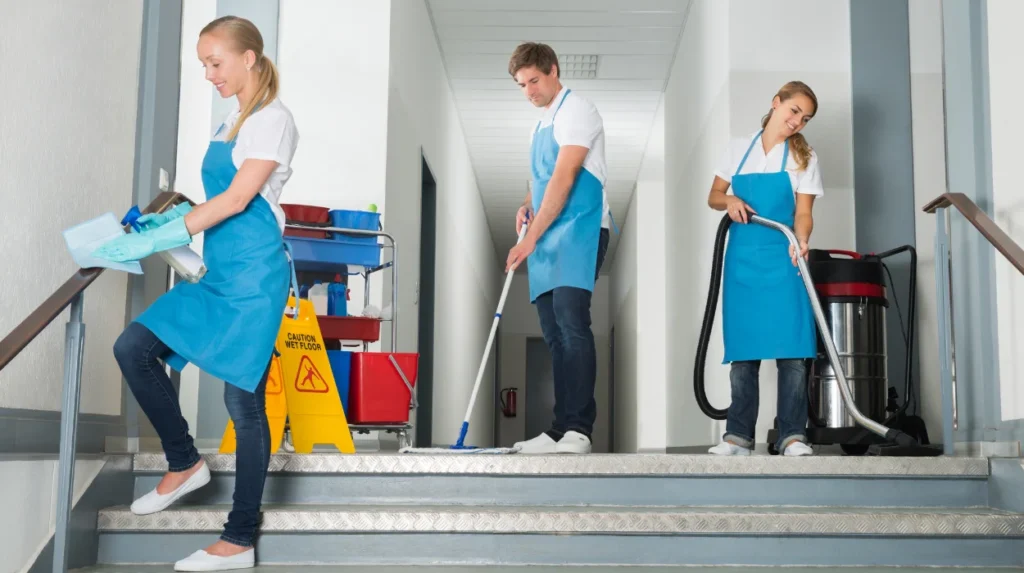
The most significant limitation of in-house construction cleaners is the gap between general cleaning competency and the specialist skills required for post-construction site preparation at handover standard. Fine construction dust, including silica particles from concrete and masonry work, requires HEPA-filtered vacuum equipment and specific PPE protocols that general site workers are rarely trained to apply correctly. In-house teams typically lack the industrial vacuum systems, rotary scrubbing machines, and chemical formulations needed to achieve the finish required for client handover or building certification.
Managing a permanent cleaning workforce also introduces fixed labour costs, employer National Insurance contributions, equipment investment, and ongoing training obligations that many contractors prefer to avoid entirely. There is also a scalability problem: if the project intensifies or the cleaning phase is larger than anticipated, an in-house team has no flex capacity to absorb the additional scope. Overtime becomes expensive, quality drops under time pressure, and the site handover schedule is placed at risk as a result. These are not theoretical concerns; they are common outcomes on projects that rely solely on internal cleaning resource.
Why Contract Construction Cleaners Are the Industry Standard
Contract construction cleaning companies bring dedicated expertise, purpose-built equipment, and a workforce trained specifically for post-construction environments across all types of build. Unlike general facilities cleaners, specialist construction cleaning operatives understand the different phases of a build clean, how to handle residues from specific trades, and what standard is required for different handover types, whether residential, commercial, retail, or industrial. Contract providers can mobilise at short notice, scale their team to match project scope, and supply their own materials without any additional cost burden to the client.
They carry professional indemnity and public liability insurance as part of their standard operating model, which reduces risk exposure for the main contractor significantly. They also bring documented quality assurance processes, which matter increasingly as clients and building control teams expect formal records of cleaning activities to accompany the handover pack. For contractors evaluating post-construction cleaning services in Farnworth, the contract model is consistently the more structured, compliant, and accountable option across every project type.
Equipment, Products, and Technical Capability
One of the clearest differentiators between in-house and contract cleaning is the level of equipment available and the training required to operate it safely. Contract providers invest in industrial HEPA vacuum systems capable of capturing fine silica dust at the filtration standard required by health and safety regulations, along with rotary scrubbing machines, specialist tile and grout cleaning solutions, pressure washers calibrated for interior surfaces, and anti-static agents for sensitive environments such as server rooms or laboratory fit-outs. These tools are expensive to purchase and maintain, and they require trained operatives to use them safely and effectively on active construction sites.
In-house teams, even well-intentioned ones, typically work with consumer-grade or light commercial equipment that cannot achieve the same level of coverage, dust removal, or surface finish. On a project where dust contamination or surface damage could trigger a defects claim or delay occupation by weeks, the difference in output between professional and non-specialist cleaning is both measurable and consequential. Choosing contract cleaning is therefore a practical decision rather than simply a preference for outsourcing.
Compliance, Safety, and Handover Documentation
Construction site cleaning operates within a framework of health and safety obligations that many in-house teams are not consistently equipped to fulfil. The Control of Substances Hazardous to Health regulations, the Construction Design and Management framework, and site-specific risk assessments all create requirements that affect how post-construction cleaning is planned, managed, and evidenced. Contract cleaning companies operating at a professional standard will carry current method statements, risk assessments, COSHH data sheets, and operatives who hold relevant CSCS or site safety credentials appropriate to the environment they are entering.
This level of compliance documentation is difficult for in-house teams to produce without specific training and administrative infrastructure that most construction businesses have no reason to maintain. Building handover processes increasingly require the main contractor to demonstrate that the site has been cleaned to a defined and verifiable standard, and a professional contract cleaner can provide the written evidence needed to satisfy that requirement. To understand where these standards apply most critically, it is worth reviewing the types of projects that need construction cleanup across different sectors and build types.
Cost Comparison: Understanding the True Financial Picture
The cost comparison between in-house and contract construction cleaning is frequently misunderstood because in-house cleaning appears cheaper on the surface while carrying hidden costs that accumulate over the duration of a project. A full-time cleaning employee on a construction site costs more than their hourly rate once employer National Insurance contributions, holiday and sick pay entitlements, equipment investment, and compliance training are factored into the total. Contract cleaning is typically priced per phase of work, per square metre, or as a fixed-price package for the entire clean cycle, making it easier to budget accurately from the project planning stage.
The proportional pricing structure of contract cleaning also means that costs scale with project size, rather than being a fixed overhead regardless of the actual workload in any given week. On smaller projects, the cost of a professional contract clean is often comparable to or lower than the equivalent hours of in-house labour, particularly once specialist equipment hire is included in the calculation. For larger and more complex projects, the ability to bring in a full contract team for the final sparkle clean without any long-term employment commitment represents genuine financial efficiency that improves project margin.
Scalability, Flexibility, and Adapting to Project Timing
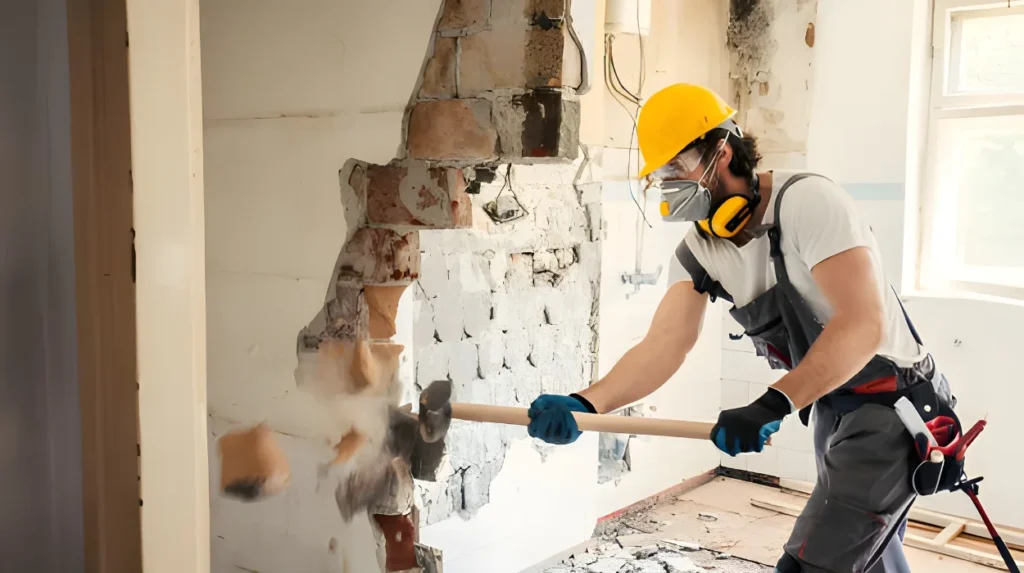
Construction project timelines are notoriously variable, and the cleaning phase is often the one most affected by delays in preceding trades, phased client handovers, or last-minute scope changes that require additional areas to be prepared at short notice. Contract cleaning companies are structured to absorb this variability in ways that in-house teams simply cannot replicate without significant disruption to employment arrangements and budgets. A specialist provider can deploy additional operatives within 24 to 48 hours, extend coverage to newly completed areas, or adjust the scope of work mid-project without requiring renegotiation of any employment agreement.
Bee Cleaning Services Manchester provides exactly this kind of flexible, project-aligned construction cleaning for contractors and developers across Greater Manchester and surrounding areas. The ability to match cleaning resource to the actual shape of the project, rather than its planned shape, is a practical advantage that consistently improves handover outcomes and reduces the risk of timeline slippage. This operational flexibility is one of the most frequently cited reasons why experienced project managers choose contract cleaning over internal staffing for post-construction work.
Making the Right Decision for Your Construction Project
The choice between in-house and contract construction cleaners ultimately depends on the nature, scale, and compliance requirements of the specific project being undertaken. For minor, ongoing site tidying during the active build phase, in-house resource can be a practical and cost-efficient solution that avoids the need to mobilise external providers for low-level tasks. For any formal cleaning phase tied to client handover, building control sign-off, or occupation certification, a specialist contract cleaning provider is the appropriate and significantly lower-risk choice.
The risks associated with inadequate post-construction cleaning, including defect claims, delayed handover, and reputational consequences for the main contractor, are substantially reduced when cleaning is delegated to professionals whose entire business is focused on delivering that standard. Reviewing real results from construction cleaning projects in Farnworth demonstrates the difference that professional contract cleaning makes to handover quality, client satisfaction, and project reputation. Taking this decision seriously at the planning stage, rather than treating it as an afterthought once trades have completed, consistently produces better outcomes for contractors and their clients alike.
Bee Cleaning Services Manchester provides professional Construction Cleaning Services in Farnworth and across the wider Greater Manchester area, combining trained operatives, industrial-grade equipment, and full compliance documentation to support construction teams through every phase of the clean cycle. Whether a project involves a single-phase residential fit-out, a phased commercial development, or a large-scale industrial build, the team delivers the specialist capability and structured approach that in-house solutions rarely match. For contractors and developers who want reliable, compliant, and professionally managed post-construction cleaning, working with a dedicated specialist provider is consistently the more effective, accountable, and cost-transparent path to a successful handover.
What are the disadvantages of contract cleaning?
Contract cleaners may have limited site familiarity, require scheduled mobilisation, and involve third-party coordination. When weighing the pros and cons of hiring in-house vs contract construction cleaners, these factors matter but rarely outweigh the compliance, equipment, and scalability benefits contract providers deliver.
What should a cleaner do in 3 hours?
In 3 hours, a construction cleaner should complete debris removal, surface dusting, window spot-cleaning, and floor sweeping in priority zones. Understanding the pros and cons of hiring in-house vs contract construction cleaners helps ensure the right person handles time-sensitive site tasks efficiently.
What is the 20/10 rule for cleaning?
The 20/10 rule means cleaning for 20 minutes then resting for 10 to maintain focus and productivity. In the context of pros and cons of hiring in-house vs contract construction cleaners, contract teams use structured workflows that far exceed this basic principle on large sites.
What are the duties of a construction cleaner?
A construction cleaner removes debris, vacuums fine dust, cleans windows, wipes surfaces, and prepares sites for handover inspection. The pros and cons of hiring in-house vs contract construction cleaners directly affect whether these duties are completed to the professional standard clients and building control require.
What are the 7S of cleaning?
The 7S of cleaning are Sort, Set, Shine, Standardise, Sustain, Safety, and Spirit. Applying these principles within the pros and cons of hiring in-house vs contract construction cleaners shows why contract providers consistently deliver more structured, compliant, and repeatable post-construction cleaning outcomes across all project types.