


You can successfully wash your window drapes at home by accurately identifying the fabric type, vacuuming surface dust thoroughly, and using gentle spot-testing methods before proceeding with hand or machine washing. Implementing these verified techniques helps remove accumulated allergens and stains effectively without causing structural shrinkage, color bleeding, or fabric degradation.
Curtain fabrics act as giant air filters within residential properties, steadily trapping dust mites, pollen, pet dander, and cooking oils over time. Neglecting regular maintenance not only diminishes the visual appeal of your living space but can also negatively affect indoor air quality. Implementing DIY Curtain Cleaning Services in Oldham Tips That Actually Work allows homeowners to maintain fresh window treatments while preserving the delicate fibers of the material. Before initiating any treatment, it is vital to check the manufacturer care label for specific maintenance instructions, as fabrics like silk, velvet, and brocade usually require specialist care.
Inspecting Fabric Profiles and Pre-Treating Localized Stains
Accurately identifying the composition of your window fabrics prevents permanent damage during the washing process. Cotton and synthetic polyesters are generally resilient enough for home maintenance, whereas linen and wool demand lower water temperatures. Homeowners must examine the seams and headings for hidden structural elements like stiffening tape or metal weights, which should be removed before exposure to water. If the care label is entirely missing or faded, assuming the material is delicate serves as the safest baseline approach to protect the fabric.
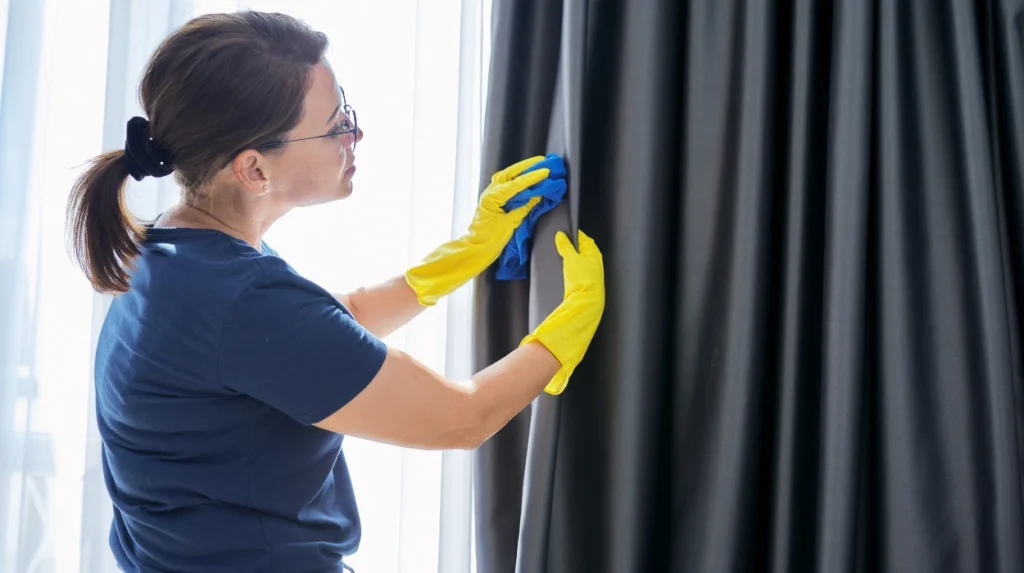
Localized discoloration from water marks, grease, or grease accumulation requires targeted pre-treatment before committing to a full wash cycle. Applying a mild liquid detergent diluted with cool water to an inconspicuous area ensures the dyes remain completely stable. Gently dabbing the solution onto the stain with a soft microfiber cloth avoids the fiber friction that causes pilling or tearing. Allowing the mixture to sit for roughly ten minutes prepares the fabric for subsequent submersions or vacuuming routines.
Safe Vacuuming Routines and Machine Washing Guidelines
Removing loose surface debris before introducing moisture prevents dirt from settling deep into the weave of the textile. Utilizing a vacuum cleaner fitted with a clean upholstery attachment allows for the gentle extraction of dust from the top pleats down to the hem. Setting the machine to low suction prevents the delicate fabric from pulling into the nozzle and stretching out of shape. Executing this step every two weeks drastically extends the time required between comprehensive wet washes.
When processing machine-washable drapes, selecting a dedicated delicate or wool cycle remains critical for avoiding fabric friction. Homeowners should utilize cold water along with a mild, bleach-free liquid laundry detergent to preserve the vibrant colors. Keeping the load capacity low by washing panels individually or in pairs ensures adequate water circulation and uniform cleaning performance. Avoiding high-speed spin cycles protects structural stitching and reduces deep creasing across the entire panel surface.
Essential Hand Washing Techniques for Delicate Window Materials
Fragile materials like sheer voiles and lightweight cotton blends respond best to careful hand immersion. Filling a clean bathtub or large laundry basin with cool water and a small amount of neutral detergent creates a safe washing environment. Submerging the panels fully and gently agitating them by hand simulates washing action without the stressful mechanical pulling of a machine drum. Soaking the textiles for fifteen minutes allows the soap molecules to break down bound grease and soot effectively.
Rinsing the soap away requires draining the basin and refilling it with clean, cold water several times until no suds appear. Squeezing the water out gently without twisting or wringing prevents the delicate internal fibers from snapping or warping permanently. Pressing the wet panels flat against the clean tub walls forces out excess weight safely before moving to the drying stage. This mindful approach ensures that lightweight drapes retain their original shape and hanging length perfectly.
Proper Drying Protocols and Crease Removal Processes
Drying drapes correctly prevents the formation of mold, mildew, and stubborn, deep-set wrinkles that damage visual quality. Hanging wet panels outdoors on a sturdy clothesline in a shaded area protects the dyes from fading under harsh ultraviolet sunlight. If outdoor space is unavailable, placing them over a padded shower rod inside a well-ventilated bathroom works efficiently. Ensuring the weight is distributed evenly prevents the top headers from stretching out or sagging unevenly.
Ironing should occur while the fabric remains slightly damp to facilitate smooth crease removal without applying excessive heat. Setting the iron to the specific fabric requirement and working exclusively on the reverse side protects the public-facing finish. For large setups, utilizing a handheld garment steamer while the panels are rehung on their tracks provides professional flattening results. Allowing the drapes to air dry completely while hanging naturally restores their crisp shape and uniform pleat patterns.
When to Transition from Home Solutions to Professional Care

While home maintenance processes work beautifully for standard fabrics, certain structural designs present significant risks for domestic washing machines. Multi-layered drapes featuring heavy blackout thermal backings can experience delamination or cracking when exposed to water or friction. Large, weighted theatrical panels often absorb so much water that they exceed domestic machine weight limits, potentially damaging household appliances. Recognizing these structural limitations saves homeowners from costly fabric replacements and mechanical repair bills.
When facing stubborn oil stains, structural issues, or fragile fabrics, choosing specialized professional assistance preserves your home investments. Utilizing an expert curtain cleaning services in oldham provides access to specialized dry extraction methods that entirely eliminate the risk of fabric shrinkage. Professional technicians utilize advanced truck-mounted steam systems that lift deep soils while protecting delicate fibers and tracking mechanisms. For comprehensive home care, integrating this with specialized carpet cleaning services in oldham terraced houses keeps the entire room environment clean.
Careful tension management during the drying phase prevents the fiber relaxation that leads to vertical fabric shrinkage.
Strategic Maintenance Habits for Long Lasting Fabrics
Establishing consistent upkeep routines drastically minimizes the need for deep, moisture-based intervention over the lifespan of the textile. Shaking out the panels during weekly cleaning schedules dislodges heavy airborne particulates before they can bind to the fibers. Rotating panels between windows exposed to direct sunlight and shaded walls balances out slow fabric color fading across your home. Maintaining clean window sills and glass panes prevents the transfer of external soot and moisture directly onto the fabric borders.
For long term preservation, balancing home care with expert solutions ensures your window treatments stay pristine for years. Trusted providers like Bee Cleaning Services Manchester deliver precision care tailored specifically to complex residential textile weaves. Their advanced equipment removes deep pollutants safely, ensuring your home remains vibrant, welcoming, and free from airborne environmental irritants.
Frequently Asked Questions
How can I safely wash curtains with blackout linings at home?
Blackout linings should generally never be submerged in a washing machine because the internal waterproof compound can peel, melt, or separate. The safest home approach is to vacuum the front fabric thoroughly and spot-clean local marks with a damp cloth. If the lining is heavily soiled, it requires professional dry treatment to avoid destroying the thermal layer.
How often should window fabrics be deep cleaned to maintain air quality?
Window fabrics should undergo a thorough deep cleaning at least once every six to twelve months to maintain healthy indoor air. Households with indoor pets, active smokers, or residents suffering from respiratory allergies benefit from cleaning them every four months. Regular bi-weekly vacuuming helps extend these windows by removing loose environmental debris before it settles.
Can I use a home tumble dryer for heavy cotton draperies?
Using a domestic tumble dryer for heavy draperies is highly risky because the high heat causes rapid fiber contraction and shrinkage. The mechanical tumbling action can also distort the headers, hooks, and pleats, leaving permanent structural wrinkles. It is always best to air-dry the fabric naturally by hanging it flat across a line.
What causes curtains to shrink during domestic washing cycles?
Fabric shrinkage happens when hot water or high spin friction triggers a relaxation of the tightly spun yarns within the textile. Natural fibers like wool, linen, and pure cotton are highly sensitive to these shifts and can lose significant length. Using cold water, gentle cycles, and air drying prevents this structural tension from releasing.
How do I remove stubborn mold spots from sheer window voiles?
Mildew spots on sheer voiles can be treated by soaking the affected hem in a mixture of cool water and white vinegar. Avoid using harsh chemical bleaches, which weaken thin synthetic threads and cause yellowing over time. If the mold covers a large area, professional hot water extraction is required to sanitize the fabric.