


Specialist Equipment Used in After Builders Cleaning Oldham plays a crucial role in removing construction dust, plaster residue, paint marks, and debris after renovation work. Professional cleaners use industrial-grade tools because standard household equipment often cannot achieve the level of cleanliness required after building projects.
Whether a property has undergone a minor refurbishment or a complete renovation, the right cleaning-equipment helps restore a safe, hygienic, and move-in-ready environment.
Why Specialist Equipment Matters After Building Work
After construction or renovation projects, fine dust settles into corners, ventilation points, skirting boards, flooring joints, and window frames. Standard domestic vacuums are often unable to capture microscopic particles, which can continue circulating through the property long after builders have finished. Professional after-builders cleaning therefore relies on specialist equipment designed specifically for post-construction environments. These tools improve efficiency, protect surfaces, and help achieve a higher standard of cleanliness. Professional cleaning teams across Greater Manchester commonly use industrial-grade vacuums, dust extraction systems, and specialist cleaning solutions for this purpose.
Industrial HEPA Vacuum Cleaners
One of the most important tools used in After Builders Cleaning in Oldham is the industrial HEPA vacuum cleaner. Building work generates extremely fine particles from plaster, drywall, wood, and concrete. These particles can remain airborne for extended periods and settle repeatedly across surfaces. HEPA filtration systems are specifically designed to capture microscopic dust rather than simply redistributing it throughout the property. Professional cleaners typically perform multiple vacuuming passes because construction dust often resettles after initial removal.
Industrial vacuums also provide greater suction power than domestic models. This allows cleaners to remove debris from carpets, hard floors, staircases, skirting boards, and difficult-to-reach areas. The result is a more thorough clean and improved indoor air quality following renovation work.
Commercial Dust Extraction Systems
Construction dust presents one of the biggest challenges after any refurbishment project. Commercial dust extraction systems are designed to tackle large volumes of airborne particles efficiently. These machines reduce dust migration during cleaning and help accelerate the restoration process.
Professional cleaning teams often combine dust extraction equipment with HEPA vacuum systems to create a comprehensive dust removal strategy. This approach is particularly important in newly renovated kitchens, bathrooms, loft conversions, and extensions where plaster dust tends to accumulate heavily. Effective dust extraction reduces the likelihood of dust returning to cleaned surfaces shortly after the service has been completed.
Rotary Floor Cleaning Machines
Renovation projects frequently leave floors covered with dust, grout residue, paint splashes, adhesive marks, and footprints. Rotary floor cleaning machines help restore hard flooring surfaces without causing unnecessary damage. These machines use controlled mechanical action to remove stubborn contamination while maintaining the condition of the floor.
Different floor materials require different cleaning approaches. Vinyl, laminate, tile, stone, and sealed hardwood surfaces each respond differently to cleaning chemicals and machine settings. Professional operators select the correct pads, brushes, and cleaning solutions to ensure effective cleaning while protecting the flooring finish. Rotary machines can significantly improve cleaning consistency across large surface areas.
Professional Steam Cleaning Equipment
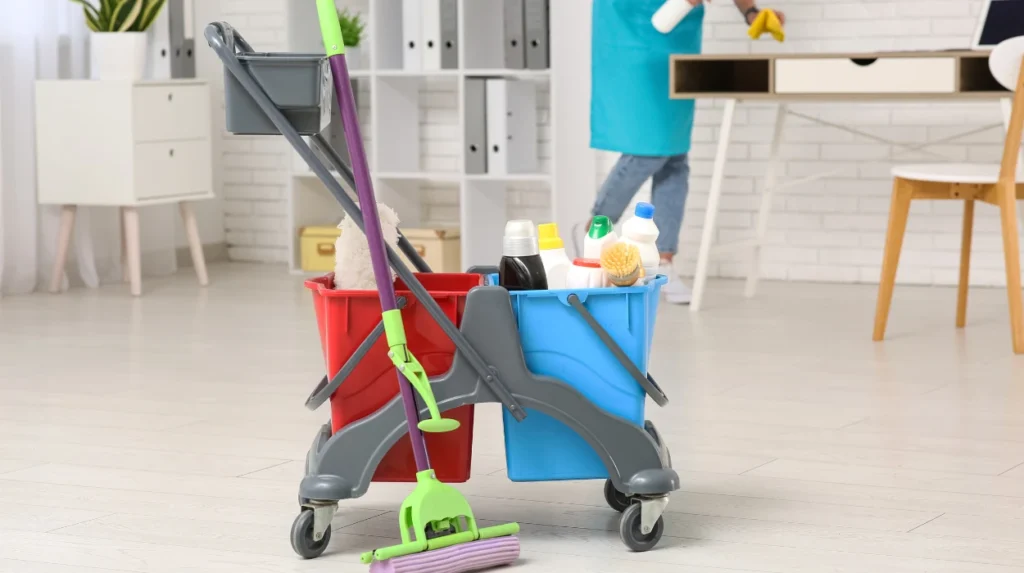
Steam cleaning equipment is frequently used during after-builders cleaning because it can remove dirt and residues without relying heavily on chemicals. High-temperature steam helps loosen grime, dissolve adhesive residues, and sanitize surfaces affected by renovation work.
Steam cleaners are particularly useful for kitchens, bathrooms, tiled areas, and fixtures where dust and construction residues collect in narrow spaces. The combination of heat and moisture allows cleaners to access difficult areas that may otherwise require extensive manual scrubbing. When used correctly, steam cleaning can improve hygiene standards while reducing chemical exposure within the property.
Specialist Window Cleaning Tools
Windows often require significant attention after construction work. Dust, paint splatters, silicone residue, adhesive marks, and protective film remnants commonly affect newly installed or renovated windows. Professional window cleaning equipment helps remove these contaminants safely and effectively.
Specialist tools may include professional scrapers, extension poles, microfibre systems, purified water equipment, and non-abrasive cleaning solutions. Proper techniques are essential because incorrect cleaning methods can scratch glass or damage window frames. A professional approach ensures windows are left clear, streak-free, and ready for occupancy.
Surface-Specific Cleaning Equipment
Modern renovation projects often involve a variety of materials including glass, stainless steel, natural stone, ceramic tiles, painted surfaces, and composite worktops. Each material requires different cleaning methods and equipment.
Professional cleaning teams carry a range of tools designed for specific surfaces. These may include microfibre systems, specialist scrapers, soft brushes, detailing tools, and non-abrasive applicators. Using the correct cleaning-equipment helps prevent scratches, staining, or surface deterioration while ensuring thorough residue removal. This level of detail is particularly important in newly refurbished properties where finishes must remain in excellent condition.
Air Movers and Drying Equipment
After intensive cleaning, certain areas may require controlled drying. Air movers and commercial drying equipment help accelerate moisture evaporation and reduce drying times. These machines are especially useful following floor cleaning, steam cleaning, or detailed bathroom and kitchen restoration work.
Faster drying improves efficiency and allows properties to become ready for occupation sooner. Commercial drying equipment also helps minimise the possibility of moisture-related issues developing after cleaning has been completed.
Safety Equipment Used During After Builders Cleaning
Professional after-builders cleaning involves more than cleaning tools alone. Safety equipment is equally important when dealing with construction dust and renovation residues. Cleaners frequently use protective gloves, respiratory masks, eye protection, and specialised footwear during the cleaning process.
Fine construction dust can contain particles that irritate the respiratory system and eyes. Appropriate protective equipment helps maintain safety while allowing cleaners to work effectively in challenging post-construction environments. Professional cleaning standards therefore combine specialist cleaning-equipment with suitable health and safety procedures.
How Professional Equipment Improves Cleaning Results
The difference between standard cleaning and professional after-builders cleaning often comes down to equipment capability. Industrial tools deliver stronger performance, greater efficiency, and more consistent outcomes. They help remove stubborn residues, reduce airborne dust, and improve overall cleanliness levels throughout the property.
This is one reason many property owners choose professional After Builders Cleaning in Oldham following renovations. Specialist equipment enables cleaning teams to tackle challenges that standard household products are not designed to address. The result is a cleaner, safer, and more presentable environment ready for occupancy.
Specialist Equipment Used in After Builders Cleaning Oldham includes industrial HEPA vacuums, commercial dust extraction systems, rotary floor machines, steam cleaners, window cleaning tools, and surface-specific equipment. Each tool serves a specific purpose in removing construction dust, debris, and renovation residues safely and effectively.
Bee Cleaning Services Manchester understands the importance of using professional-grade equipment during After Builders Cleaning in Oldham. By combining specialist tools with experienced cleaning methods, properties can be restored to a high standard following renovation and construction projects.
For those ready to compare professional renovation cleanup options, explore our guide on booking renovation cleanup services online.
Frequently Asked Questions
What equipment is best for removing builders dust?
Industrial HEPA vacuum cleaners are considered the most effective solution for builders dust. They capture fine particles that ordinary household vacuums often fail to remove. Many professional cleaning companies also use dust extraction systems for additional control.
Can normal household vacuums clean construction dust?
Household vacuums may remove larger debris, but they are generally not designed for large volumes of fine plaster or construction dust. Professional-grade HEPA systems provide significantly better filtration and dust containment.
Why do cleaners use steam cleaners after renovations?
Steam cleaners help remove residue, grease, adhesive marks, and embedded dirt without excessive chemical use. They are particularly useful for kitchens, bathrooms, tiles, and detailed surface cleaning.
How many cleaning stages are usually required after building work?
Most professional after-builders cleaning projects involve multiple stages including debris removal, dust extraction, surface cleaning, detailing, and final inspection. Additional cleaning passes may be needed where dust continues to settle.
Is specialist equipment necessary for small renovation projects?
Even small refurbishments can produce significant amounts of dust and debris. Specialist equipment often delivers faster and more thorough results, particularly when plastering, sanding, tiling, or painting work has been completed.