

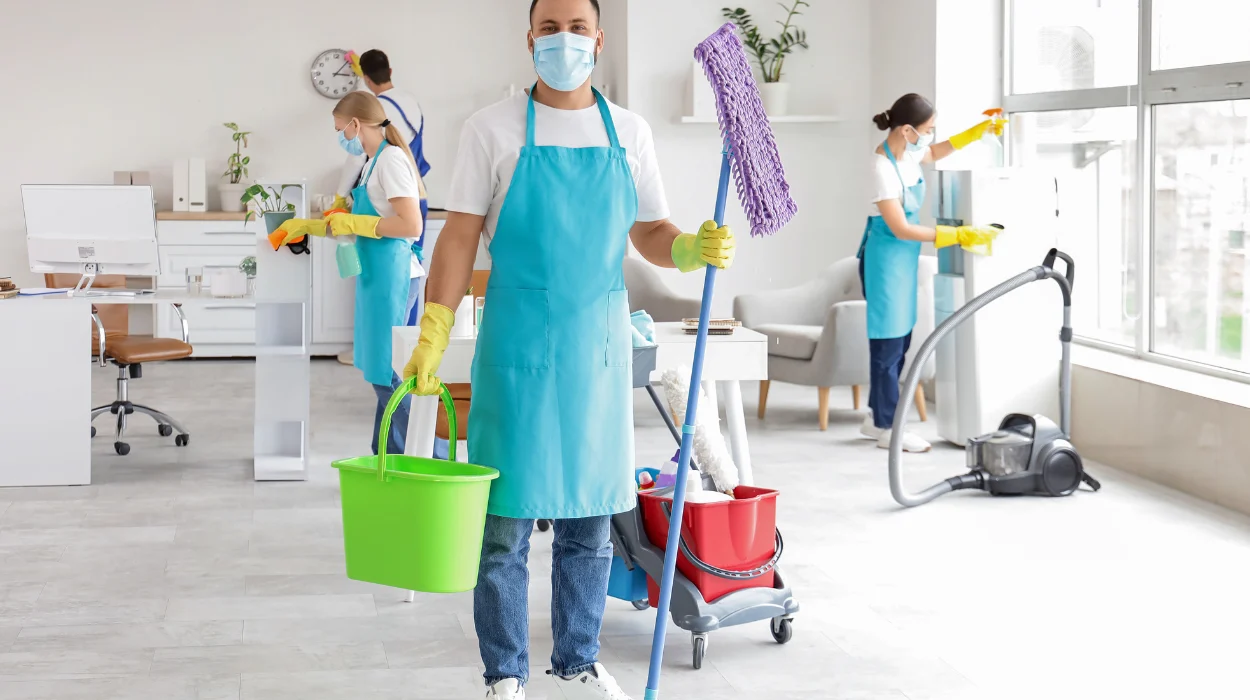
It covers routine cleaning, hygiene maintenance, waste removal, floor care, restroom sanitisation, and high-touch surface disinfection using professional cleaning-equipment and planned cleaning schedules.
A professional office cleaning programme is designed to maintain a healthy, organised, and presentable workplace rather than simply making an office look tidy. Understanding the scope of commercial cleaning helps business owners compare cleaning contracts, identify what is included, and recognise when additional services may be required. A clear cleaning specification also reduces misunderstandings because every task is assigned to a defined schedule instead of relying on vague descriptions. Modern commercial cleaning contracts generally separate daily, weekly, and periodic services to ensure consistent standards throughout the workplace.
Why Is Commercial Office Cleaning Different from Regular Cleaning?
Commercial office cleaning focuses on maintaining workplaces that receive continuous employee and visitor traffic throughout the day. Unlike domestic cleaning, commercial services follow structured schedules, risk assessments, hygiene procedures, and quality inspections to keep offices safe and professional. Cleaning frequencies are usually based on occupancy, building size, and business operations rather than personal preferences. This systematic approach ensures every work area receives appropriate attention without disrupting normal business activities.
Most commercial offices include reception areas, meeting rooms, kitchens, washrooms, corridors, shared workstations, and storage areas. Each location requires different cleaning methods because contamination levels and daily usage vary considerably. High-touch points such as door handles, lift buttons, shared desks, keyboards, and light switches require more frequent disinfection than decorative furniture or shelving. Professional cleaning teams normally work from top to bottom and follow room-by-room procedures to improve efficiency and avoid cross-contamination.
What Areas Are Normally Included in Commercial Office Cleaning?
Reception and Waiting Areas
Reception areas create the first impression for visitors and clients. Daily cleaning generally includes vacuuming entrance mats, removing litter, dusting reception desks, polishing glass surfaces, disinfecting door handles, and maintaining seating areas. These visible spaces often receive the highest foot traffic, making routine maintenance essential for cleanliness and workplace presentation. Floor care is also scheduled according to traffic levels to minimise dirt accumulation throughout the building.
Office Workspaces
Individual offices and open-plan workspaces require regular dust removal, emptying waste bins, sanitising shared desks where permitted, vacuuming carpets, and cleaning hard floors. Professional cleaners usually avoid disturbing confidential documents while ensuring visible surfaces remain clean. Shared printers, telephones, meeting tables, and communal equipment are disinfected because they experience repeated daily contact from multiple employees.
Kitchens and Break Rooms
Staff kitchens require hygiene standards that prevent unpleasant odours and bacterial growth. Typical cleaning includes wiping worktops, disinfecting sinks, cleaning cupboard fronts, removing rubbish, mopping floors, and sanitising appliances that are included within the agreed cleaning scope. Refrigerators and internal microwave cleaning may be scheduled periodically depending on the contract specification.
Washrooms
Washroom cleaning remains one of the highest priorities in every commercial office. Toilets, sinks, mirrors, dispensers, partitions, and floors require regular cleaning and sanitisation using suitable products. Soap dispensers, paper towels, and toilet tissue are also checked during scheduled visits to maintain hygiene standards for employees and visitors.
What Cleaning Equipment Is Used During Commercial Office Cleaning?
Professional cleaners use commercial-grade cleaning-equipment because it delivers better performance, improves hygiene, and increases efficiency across different office environments. Rather than relying on household products, commercial teams select equipment according to flooring, furniture materials, office layout, and health requirements. This ensures every surface is cleaned safely while reducing the risk of cross-contamination. A structured equipment system also helps maintain consistent cleaning standards during every scheduled visit.
Floor Cleaning Equipment
Carpeted offices are usually maintained with commercial vacuum cleaners fitted with HEPA filtration to capture fine dust and airborne particles. Hard floors require microfibre flat mops, scrubber dryers, or rotary machines depending on the floor finish and traffic volume. Entrance mats are vacuumed thoroughly because they trap dirt before it spreads throughout the building. Periodic floor polishing or machine scrubbing may also be scheduled to extend the life of flooring materials.
Surface Cleaning Equipment
Microfibre cloths, extendable dusters, glass cleaning tools, colour-coded buckets, trigger spray bottles, and non-abrasive pads are commonly used for desks, reception counters, meeting rooms, and glass partitions. Colour-coded cloth systems reduce the possibility of transferring bacteria between kitchens, washrooms, and office workspaces. This organised approach improves hygiene while protecting sensitive office equipment and finished surfaces from damage.
Washroom Cleaning Equipment
Washrooms require dedicated cleaning tools that are never used elsewhere in the office. Toilet brushes, disinfectant sprayers, grout brushes, disposable cloths, and sanitising products are selected specifically for high-risk hygiene areas. Keeping separate equipment for washrooms supports infection control and maintains consistent cleaning quality across the workplace.
How Often Should Commercial Offices Be Cleaned?
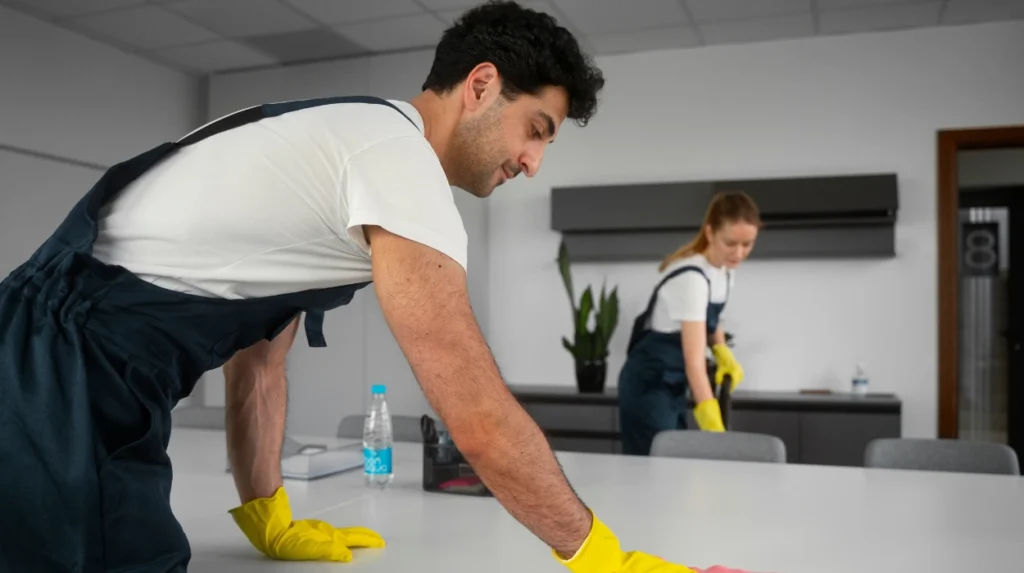
There is no single cleaning schedule that suits every workplace. The required frequency depends on employee numbers, visitor traffic, office layout, and the type of business activities taking place. Busy offices often require daily cleaning, while smaller workplaces may operate effectively with several scheduled visits each week. A written cleaning schedule helps ensure every task is completed at the correct interval rather than only when visible dirt appears.
Daily Cleaning Tasks
Daily cleaning generally includes emptying bins, vacuuming high-traffic areas, sanitising washrooms, wiping kitchen worktops, disinfecting high-touch surfaces, and checking consumable supplies. These routine activities prevent dirt from accumulating and help maintain a consistently professional working environment throughout the week.
Weekly and Periodic Cleaning
Weekly services often include detailed dusting, internal glass cleaning, furniture polishing, and more thorough floor maintenance. Monthly or periodic cleaning may involve carpet extraction, high-level dust removal, upholstery cleaning, deep kitchen cleaning, and specialist floor restoration. Separating routine and periodic tasks creates a balanced maintenance programme while avoiding unnecessary costs.
Why Does a Written Cleaning Scope Matter?
One of the biggest causes of disagreement between businesses and cleaning contractors is an unclear scope of work. A professional office cleaning contract should specify every cleaning area, each required task, service frequency, inspection standards, and any exclusions. This allows businesses to compare quotations fairly while ensuring expectations remain consistent throughout the contract period.
How Can Businesses Measure the Quality of Commercial Office Cleaning?
A commercial cleaning service should deliver measurable results rather than relying on appearance alone. Businesses can evaluate cleaning quality through inspection checklists, supervisor reviews, employee feedback, and scheduled audits. High-touch surfaces, washrooms, reception areas, kitchens, and floors should consistently meet the agreed cleaning standards. A documented quality process also helps identify areas that require additional attention before they become recurring issues.
Many businesses review completed cleaning against a written specification instead of making subjective judgments. This approach ensures that waste removal, floor maintenance, sanitisation, and supply replenishment are completed according to the agreed schedule. Quality inspections also provide accountability because both the client and cleaning provider understand exactly what should be delivered during each visit.
Why Should Businesses Consider Professional Office Cleaning Instead of Managing Everything In-House?
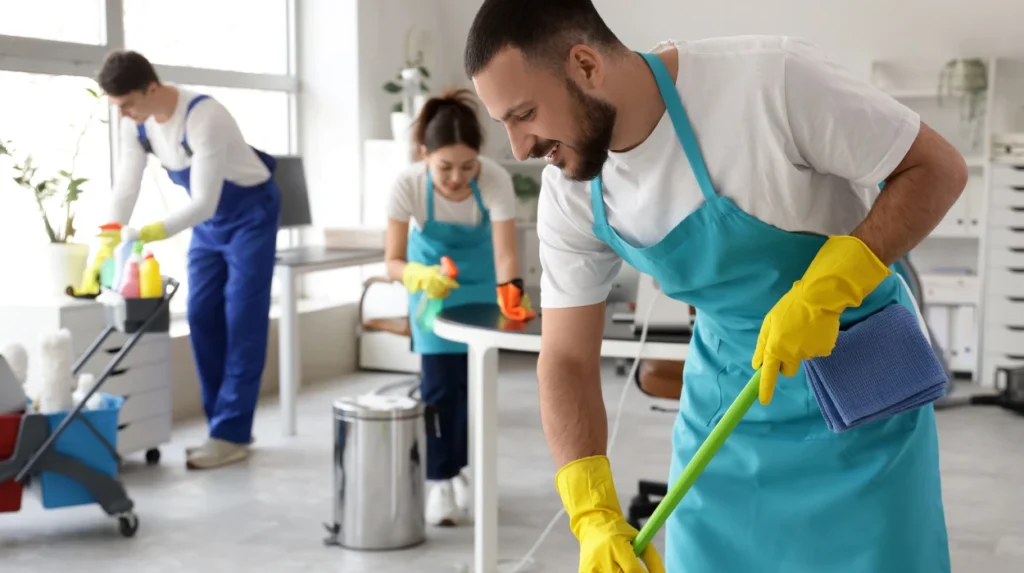
Managing office cleaning internally may appear straightforward, but maintaining consistent standards requires trained staff, suitable cleaning-equipment, structured schedules, and ongoing supervision. Professional commercial cleaners follow documented cleaning procedures that reduce the likelihood of missed tasks while ensuring every area receives the correct level of attention. This organised approach allows businesses to focus on their core operations without managing day-to-day cleaning responsibilities.
Businesses comparing cleaning options may also benefit from learning about the differences between internal cleaning teams and outsourced providers. For a detailed comparison, read In-House Cleaner vs Professional Office Cleaning Company: Pros and Cons.
Companies looking for dependable OfficeCleaning Services in Oldham often prefer providers with structured cleaning programmes, trained staff, and transparent service schedules. Bee Cleaning Services Manchester delivers commercial cleaning solutions designed around workplace hygiene, practical maintenance, and consistent cleaning quality for offices of different sizes.
A professional commercial cleaning programme covers workspaces, reception areas, kitchens, washrooms, floors, waste management, and high-touch surface cleaning using suitable cleaning-equipment and planned maintenance schedules. When every task is documented and completed consistently, businesses benefit from a cleaner, healthier, and more professional working environment.
Many organisations looking for Office Cleaning Services in Oldham choose providers that offer detailed cleaning schedules instead of general promises. Bee Cleaning Services Manchester follows structured commercial cleaning processes so businesses understand exactly what services are included and how frequently they will be completed. This transparent approach helps maintain workplace hygiene while supporting consistent service quality.
Frequently Asked Questions
What is included in commercial office cleaning?
Commercial office cleaning normally includes dusting, vacuuming, floor cleaning, washroom sanitisation, kitchen cleaning, waste removal, and disinfecting high-touch surfaces. Some contracts also include periodic deep cleaning and carpet maintenance. The exact scope depends on the cleaning schedule and workplace requirements. A written specification helps ensure every task is completed consistently.
How often should an office be professionally cleaned?
Most busy offices benefit from daily cleaning, while smaller workplaces may require cleaning several times each week. Reception areas, kitchens, and washrooms usually need more frequent attention than meeting rooms or storage areas. Cleaning frequency should reflect occupancy and foot traffic rather than a fixed timetable.
What cleaning equipment do professional office cleaners use?
Professional cleaners commonly use commercial vacuum cleaners, microfibre cloths, flat mops, scrubber dryers, glass cleaning tools, disinfectant sprayers, and colour-coded cleaning systems. The equipment is selected according to flooring types, surface materials, and hygiene requirements to deliver consistent cleaning quality.
What areas are most important during office cleaning?
Reception areas, employee workstations, kitchens, washrooms, meeting rooms, corridors, and frequently touched surfaces require the highest priority. Door handles, keyboards, light switches, shared printers, and lift buttons should be cleaned regularly because they are touched throughout the working day.
How do businesses choose a professional office cleaning company?
Businesses should compare cleaning specifications, service frequency, staff training, inspection procedures, insurance, and communication processes instead of looking only at price. A detailed cleaning scope makes quotations easier to compare and helps maintain consistent service standards over time.