


Cleaning services cost depends on the size of the property, the level of post-construction debris, and the specialist cleaning-equipment required. Understanding these factors helps property owners and contractors budget accurately before booking a professional cleaning service.
Construction cleaning is different from routine housekeeping because it involves removing fine construction dust, paint splashes, adhesive residue, plaster particles, and building waste without damaging newly installed finishes. Professional teams follow a structured process that prepares the property for inspection, occupancy, or handover. Bee Cleaning Services Manchester provides Construction Cleaning Services in Oldham using systematic cleaning methods suitable for residential and commercial projects. Professional builders cleaning normally follows staged procedures that remove debris first, followed by detailed cleaning and finally a presentation-ready finish.
Why does cleaning services cost vary after construction work?
The cost of post-construction cleaning is determined by the amount of contamination, the condition of surfaces, access requirements, and the time needed to achieve a safe and presentable finish. Every project creates different cleaning challenges, making fixed pricing unsuitable for many properties.
Unlike standard domestic cleaning, construction cleaning requires additional labour because fine dust settles into ventilation grilles, window frames, electrical fittings, cupboards, and newly installed fixtures. Several cleaning stages are often necessary because dust continues to settle even after the first clean. Professional cleaners therefore inspect each room before preparing a quotation instead of relying only on floor area measurements.
Another important factor is the type of building work completed. A kitchen refurbishment usually produces less debris than a full property renovation or commercial fit-out. The amount of plaster dust, silicone residue, paint overspray, protective film, and packaging waste directly affects the cleaning schedule. Larger projects often require specialist equipment that removes microscopic dust without damaging finished materials.
How does cleaning-equipment affect the overall cleaning price?
Professional cleaning-equipment improves cleaning quality while reducing the risk of damaging newly installed materials. Although specialist equipment increases operational costs, it also produces more consistent results on construction sites.
Industrial HEPA-filter vacuums capture fine plaster and concrete dust that ordinary domestic vacuum cleaners cannot safely remove. Microfibre systems, extension poles, floor scrubbers, glass cleaning tools, and specialist residue removers are selected according to the surface being cleaned. These tools reduce cross-contamination and improve efficiency throughout the cleaning process.
Using unsuitable equipment may spread dust instead of removing it. Professional cleaners normally work from higher surfaces downward so airborne particles do not contaminate areas that have already been cleaned. This structured sequence is widely recognised as an effective approach for post-construction cleaning because fine dust settles repeatedly during the cleaning process.
Bee Cleaning Services Manchester uses professional cleaning methods suitable for newly completed residential properties, offices, retail units, and refurbishment projects where construction residues require specialist treatment.
Which property factors influence construction cleaning quotations?
Every building presents different cleaning requirements, so professional quotations usually consider several practical factors instead of using one standard rate.
Property size remains one of the biggest influences because larger floor areas require additional labour and equipment. However, accessibility also matters. Multi-storey properties, restricted access areas, high ceilings, internal glazing, and extensive joinery increase cleaning complexity even when the overall floor space is moderate.
The amount of remaining construction material also changes the cleaning schedule. Projects that still contain packaging waste, timber offcuts, protective coverings, or heavy dust require additional preparation before detailed cleaning begins. Professional cleaners may also perform multiple inspection passes to ensure surfaces remain free from resettled dust before project handover.
Many contractors also schedule separate builders cleans and sparkle cleans because each stage serves a different purpose within the construction programme. Completing the correct cleaning stage at the appropriate time helps reduce delays during inspections and final handovers.
Does labour have the biggest impact on cleaning services cost?
Labour is usually the largest part of cleaning services cost because post-construction cleaning requires trained operatives, careful inspection, and detailed finishing work. Unlike regular cleaning, every room must be checked repeatedly to ensure construction dust, debris, and residue have been completely removed before handover. Labour commonly represents the majority of the overall project cost.
Professional construction cleaners follow a logical sequence rather than cleaning random areas. They begin by removing loose debris, vacuuming fine dust with industrial HEPA-filter equipment, wiping all horizontal and vertical surfaces, cleaning internal glazing, and finishing with detailed polishing. This process reduces the risk of dust spreading back onto newly cleaned surfaces and improves the final presentation of the property.
Properties with multiple rooms, fitted kitchens, built-in wardrobes, staircases, and extensive glazing naturally require more working hours. The amount of detailing also increases when contractors must remove paint spots, silicone residue, adhesive marks, and protective film without damaging new finishes. For this reason, labour requirements vary considerably between projects even when two buildings have similar floor areas.
Why are staged construction cleans often recommended?
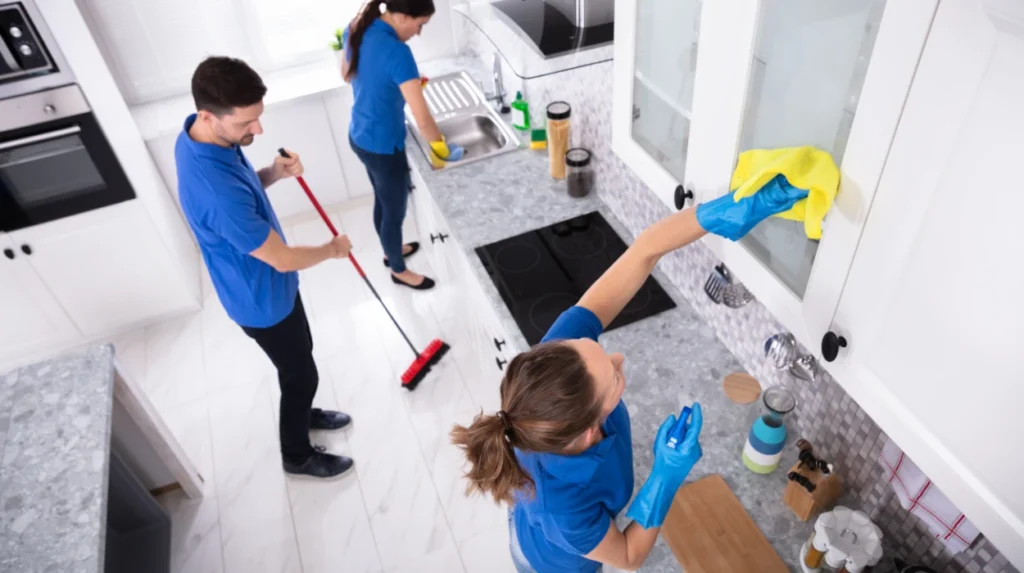
Professional contractors frequently divide post-construction cleaning into separate stages because building work rarely finishes all at once. A phased approach keeps the site cleaner throughout the project and helps prevent dust from accumulating before the final inspection. Industry guidance commonly separates the work into a builders clean, a sparkle clean, and a final touch-up before handover.
The initial builders clean removes heavy debris, packaging materials, plaster dust, and leftover construction waste. Once all major trades have completed their work, the sparkle clean focuses on glass, sanitary fittings, fixtures, flooring, internal doors, and decorative finishes. Finally, a light handover clean removes fingerprints and any dust that has settled after the previous cleaning stage.
This staged process helps contractors, developers, landlords, and property owners achieve a cleaner environment before occupation. It also supports smoother snagging inspections because defects and remaining contamination are easier to identify when surfaces are properly cleaned. Bee Cleaning Services Manchester carries out Construction Cleaning Services in Oldham using structured cleaning procedures that match the condition and completion stage of each project.
What should you compare before accepting a cleaning quotation?
Choosing a quotation based only on price can lead to unexpected costs later. A professional quotation should clearly explain the cleaning scope, equipment included, waste removal arrangements, and any additional services that may be required after inspection. Detailed quotations reduce misunderstandings and help clients compare services fairly.
It is also worth checking whether the quotation covers high-level dust removal, internal glazing, adhesive removal, floor finishing, and the cleaning of newly installed fixtures. Some companies include these services within the original quotation, while others price them separately depending on the condition of the property. Understanding these details allows property owners to make informed decisions instead of comparing prices alone.
Before booking professional cleaners, many clients also benefit from reading more about professional construction cleaning solutions and how they contribute to safer project handovers.
How can property owners reduce cleaning services cost without lowering quality?
Reducing cleaning services cost does not always mean choosing the cheapest quotation. The best approach is to prepare the property before cleaners arrive, schedule the work after all trades have finished, and request a detailed scope of work. These steps help minimise repeat visits and improve overall efficiency. Professional guidance recommends completing construction activities before the final clean to avoid unnecessary re-cleaning.
Removing leftover building materials, packaging, and tools before the cleaning team arrives allows cleaners to focus on specialist tasks rather than site preparation. Clients should also report areas with heavy paint residue, grout haze, or adhesive marks in advance so the correct cleaning-equipment and products can be allocated. This reduces delays and helps produce a more accurate quotation.
Scheduling the clean after decorating, flooring, and joinery work has been completed also prevents fresh dust from settling on newly cleaned surfaces. For larger developments, phased cleaning can be more cost-effective than repeating a full property clean several times during construction. Bee Cleaning Services Manchester plans Construction Cleaning Services in Oldham according to project progress, helping contractors and property owners prepare buildings for inspection and occupation.
What should a professional construction cleaning service include?

A professional construction cleaning service should provide far more than basic dust removal. The objective is to deliver a property that is clean, safe, and ready for practical completion or occupancy. A detailed cleaning specification also ensures that clients understand exactly what is included before work begins.
Typical construction cleaning includes removing fine dust from walls, ceilings, skirting boards, internal doors, window frames, and ventilation areas. Floors are vacuumed and cleaned using appropriate methods for each surface, while kitchens, washrooms, and newly installed fixtures receive detailed attention. Paint splashes, adhesive residue, protective films, and stickers are removed carefully to protect finished materials.
Professional teams also complete a final quality inspection before handover. This final review helps identify any remaining dust or marks that may affect the appearance of the property. By following a structured process and using suitable cleaning-equipment, Bee Cleaning Services Manchester delivers reliable construction cleaning solutions that support smooth project completion and a professional presentation.
Understanding cleaning services cost helps property owners, landlords, developers, and contractors make informed decisions before arranging post-construction cleaning. Costs are influenced by the property’s size, the amount of construction residue, labour requirements, specialist cleaning-equipment, and the level of detailing needed to prepare the building for occupation. Comparing quotations based on the cleaning scope rather than price alone provides a clearer picture of the value and quality offered. A structured construction cleaning process also helps reduce delays during inspections and supports a professional project handover.
Bee Cleaning Services Manchester delivers professional Construction Cleaning Services in Oldham using systematic cleaning methods that remove construction dust, debris, paint residue, and finishing materials while protecting newly installed surfaces. By using suitable equipment, experienced operatives, and a planned cleaning sequence, professional construction cleaning helps properties reach a clean, safe, and presentable standard for clients, contractors, and future occupants.
Frequently Asked Questions
How much does cleaning services cost after building work?
There is no fixed price because every construction project creates a different level of dust, debris, and residue. The final cost depends on the property’s size, accessibility, labour requirements, and the amount of specialist cleaning needed. Professional companies usually provide a site assessment before preparing an accurate quotation.
What is included in a professional construction cleaning service?
A professional construction clean typically includes removing construction dust, vacuuming and mopping floors, cleaning internal windows, wiping walls and skirting boards, removing paint splashes and adhesive residue, cleaning kitchens and bathrooms, and carrying out a final quality inspection before handover.
Why is construction cleaning more expensive than regular cleaning?
Construction cleaning requires specialist cleaning-equipment, experienced operatives, and significantly more labour than routine cleaning. Fine plaster dust, paint residue, stickers, protective films, and building debris require careful removal to avoid damaging newly installed surfaces.
How long does construction cleaning usually take?
The cleaning time depends on the property’s size, the extent of the building work, and the amount of dust and debris present. Small renovation projects may take several hours, while larger commercial or full-property refurbishments may require one or more days and multiple cleaning stages.
What cleaning-equipment is used during construction cleaning?
Professional cleaners commonly use HEPA-filter industrial vacuum cleaners, microfibre cloth systems, floor scrubbers, glass cleaning tools, extension poles, and specialist products for removing paint, grout haze, and adhesive residue. These tools help achieve a safe, dust-free finish.