


Questions to Ask Before Hiring a Residential Cleaner in Oldham should focus on what is included, who will enter your home, what cleaning-equipment is supplied, pricing, and how quality is managed. Asking these questions before booking helps Oldham homeowners compare cleaning services on value, reliability, safety, and cleaning standards rather than price alone.
Why Should You Ask Questions Before Hiring a Residential Cleaner?
The right questions establish the exact service scope, expected results, costs, equipment, scheduling arrangements, and responsibility for accidental damage before cleaning begins. This prevents misunderstandings and makes it easier to compare professional cleaners on consistent criteria.
Hiring a residential cleaner means giving another person access to your private living environment, so the decision involves more than finding someone who can vacuum and mop. Homeowners should understand what work will actually be completed, how long the appointment is expected to take, and whether the quoted price covers products and equipment.
Recent homeowner discussions frequently raise practical concerns about what cleaners include, how long appointments take, whether equipment is supplied, and what happens when something is damaged. These are useful comparison points because a low hourly rate may not represent the lowest overall cost if the customer must supply specialist products, equipment, or additional labour.
For Oldham households, the initial conversation should therefore establish the home’s size, number of bedrooms and bathrooms, flooring types, pets, priority areas, cleaning frequency, and whether the property requires standard or deep cleaning. A professional cleaner should be able to explain the service clearly rather than leaving the homeowner to guess what is included.
What Cleaning Tasks Are Included in the Standard Service?
A standard residential cleaning service normally covers routine tasks such as dusting, vacuuming, mopping, kitchen surface cleaning, bathroom cleaning, and general surface maintenance, but exact inclusions vary between providers and should be confirmed before booking.
The word “cleaning” can describe very different levels of work. A routine residential appointment may focus on visible surfaces and high-use rooms, while a deep clean can involve accumulated grease, limescale, skirting boards, internal appliance areas, detailed bathroom cleaning, and other neglected surfaces.
Ask for a written or clearly explained cleaning checklist before agreeing to the service. This should identify which rooms are covered and whether tasks such as internal oven cleaning, inside cupboards, window cleaning, carpet treatment, upholstery cleaning, or moving furniture are included.
It is also useful to ask whether the cleaner works through every room systematically or prioritises selected areas within a fixed appointment. This distinction matters when a property needs intensive attention in the kitchen and bathrooms but only routine maintenance elsewhere.
A clearly defined scope protects both sides. The homeowner knows what result to expect, while the cleaning team can allocate labour and cleaning-equipment appropriately. Industry discussions repeatedly highlight that unclear expectations about included tasks are a common source of dissatisfaction.
Does the Cleaner Bring Their Own Cleaning-Equipment?
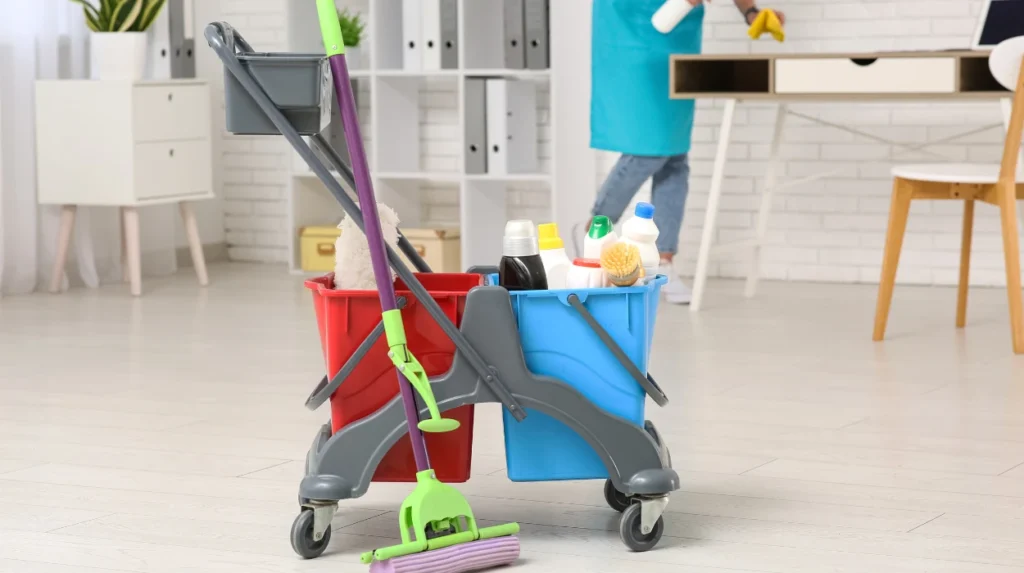
Ask whether the cleaner supplies professional cleaning-equipment, chemicals, cloths, vacuum systems, mops, brushes, and specialist tools, because equipment responsibilities can affect both the final price and the quality of the cleaning result.
Equipment is an important comparison factor that homeowners sometimes overlook. A domestic cleaner may work with the customer’s vacuum cleaner and household products, while a professional cleaning company may arrive with commercial-grade equipment selected for different surfaces and cleaning requirements.
The question should not simply be “Do you bring equipment?” Instead, ask what equipment is included and whether there are additional charges for specialist tools. For example, carpet extraction, steam cleaning, high-reach dusting, upholstery treatment, or intensive kitchen degreasing may require equipment beyond ordinary vacuuming and mopping.
Cleaning products also matter. Homeowners should tell the provider about delicate surfaces, pets, children, allergies, natural stone, wooden flooring, or other materials that may require particular cleaning methods. The correct product and application method can reduce the risk of staining, residue, or surface damage.
A professional cleaning provider should also explain whether its team is trained to use the equipment supplied. Equipment alone does not guarantee a better result. Correct chemical selection, surface identification, dwell time, mechanical action, and safe handling are equally important.
How Is the Cleaning Price Calculated?
Residential cleaning prices can be based on hourly labour, property size, room count, service type, or a fixed quotation, so homeowners should confirm exactly what the price covers before accepting a booking.
Price comparisons become difficult when one cleaner quotes by the hour and another provides a fixed price for the entire property. An hourly quote can provide flexibility, but the final cost depends on how much work can realistically be completed within the booked time.
A fixed quotation can make budgeting easier when the cleaning scope is clearly defined. However, homeowners should ask whether the price can change if the property requires substantially more work than initially described. This is particularly relevant for heavily soiled homes, larger properties, or one-off deep cleaning.
The property condition should be discussed honestly. Built-up grease, extensive limescale, pet hair, heavy dust, clutter, and neglected areas can increase the amount of labour required. A reliable quotation should reflect the actual cleaning requirement rather than promising an unrealistic result at an unusually low price.
It is also sensible to ask whether cleaning products, equipment, travel, VAT where applicable, and specialist treatments are included. Comparing the complete service cost gives a more accurate picture than comparing headline hourly rates alone.
Is the Cleaner Insured and Properly Vetted?
Insurance and vetting provide important safeguards when someone is entering a private home, particularly when the cleaner may handle valuable possessions, keys, appliances, chemicals, or specialist equipment during the appointment.
Homeowners should ask whether the cleaning company carries appropriate public liability insurance and what its procedure is if accidental damage occurs. The question does not imply that damage is expected. It establishes how responsibility is handled if an unexpected incident happens.
Vetting is equally important. Ask how cleaners are recruited, whether identity and employment documentation are checked, and whether references or background checks form part of the recruitment process. A structured cleaning company can provide a clearer management process than an informal arrangement where the homeowner is responsible for conducting all checks.
Security should also be considered when recurring cleaning is arranged. Discuss who will attend the property, whether the same team is normally assigned, and how keys or access codes are managed if the homeowner is not present.
Bee Cleaning Services Manchester’s approach to professional residential cleaning can be compared with the broader considerations of vetted and insured house cleaning support, particularly when security and accountability are important factors in the decision.
What Happens If the Cleaner Cannot Attend?
A reliable residential cleaning arrangement should have a clear cancellation, rescheduling, and replacement process so that one cleaner’s absence does not automatically interrupt the homeowner’s cleaning schedule.
This question becomes particularly important for recurring weekly or fortnightly cleaning. An independent cleaner may have limited capacity if they become ill, take annual leave, or experience an emergency. A larger cleaning provider may have additional staff who can provide replacement cover, although this should always be confirmed rather than assumed.
Ask how much notice is normally provided for cancellations and whether the customer is charged when the cleaner cancels. Also clarify the process for public holidays, severe weather, access problems, or situations where the homeowner needs to change the appointment.
Consistency matters because residential cleaning becomes more efficient when the team understands the property’s layout and cleaning priorities. However, replacement staff should also receive clear instructions and access to the relevant cleaning checklist.
This is especially important for homeowners who depend on regular cleaning because of demanding work schedules or household responsibilities. Reliability is therefore part of the service value, not simply an administrative detail.
Can You Request Specific Cleaning Priorities?
A good residential cleaning arrangement allows homeowners to identify priority areas, surfaces, and tasks so available cleaning time is directed toward the parts of the property that matter most to the household.
Not every home has the same cleaning priorities. One household may need detailed bathroom cleaning, another may prioritise kitchen grease and floors, while another may want regular dust removal from bedrooms and living areas.
Before booking, explain which rooms require the most attention and identify any surfaces that need special treatment. This gives the cleaning team useful information before arriving and reduces the possibility of assumptions about what the homeowner expects.
It is also worth explaining areas that should not be touched. Certain decorative items, delicate surfaces, personal documents, electronics, or fragile possessions may require special handling or should remain undisturbed.
A priority-based approach is particularly useful when the appointment has a fixed duration. Rather than attempting too many tasks and completing none to a satisfactory standard, the cleaner can focus available labour on the highest-value cleaning requirements.
Homeowners discussing their first cleaning appointment online commonly raise questions about priorities, rooms covered, timing, and specific household requirements.
How Long Should a Residential Cleaning Appointment Take?
Cleaning time depends on property size, room count, soil level, clutter, cleaning frequency, staffing, and the required service depth, so a realistic time estimate should be based on the home’s actual condition.
A small, regularly maintained property generally requires less labour than a large home that has not been professionally cleaned for several months. Similarly, a routine clean is fundamentally different from a detailed deep clean involving built-up grease, limescale, skirting boards, appliance interiors, and difficult-to-reach areas.
Ask whether the quoted duration represents one cleaner’s working time or the total appointment time for a team. For example, two cleaners working for two hours provide four labour hours, although the property is occupied by the team for only two hours.
The expected duration should also match the agreed checklist. If the scope includes numerous detailed tasks but the allocated time is very short, homeowners should clarify which activities take priority.
For deeper cleaning requirements, the duration may increase considerably. Local information published by Bee Cleaning Services indicates that one-off cleaning prices and durations vary according to property size, condition, and the level of work required.
What Is the Difference Between Regular and Deep Residential Cleaning?
Regular cleaning maintains an existing level of cleanliness, while deep cleaning is designed to remove accumulated dirt from areas that routine cleaning does not normally address during every visit.
A regular clean typically focuses on maintenance. Dusting, vacuuming, mopping, bathroom sanitation, kitchen surface cleaning, and general tidying help prevent everyday dirt from accumulating.
Deep cleaning requires a broader approach. Depending on the agreed scope, it can involve skirting boards, detailed bathroom surfaces, grease removal, neglected corners, internal appliance areas, behind or underneath accessible furniture, and other difficult-to-reach locations.
This distinction should be established before booking because homeowners sometimes expect a routine service to produce a deep-clean result. A professional cleaner can only deliver the appropriate outcome when the required level of cleaning is communicated clearly.
If a home has not been professionally cleaned for an extended period, a deep clean followed by regular maintenance may provide a more practical long-term approach. Once the accumulated dirt is reduced, subsequent routine appointments can concentrate on maintaining the improved baseline.
Which Questions to Ask Before Hiring a Residential Cleaner in Oldham?
The strongest questions cover five decision areas: service scope, equipment, price, security, and reliability. These factors allow homeowners to compare cleaners based on the complete service rather than selecting a provider solely because of a low advertised rate.
Before confirming a booking, ask the provider to explain exactly what is included, which rooms will be cleaned, what equipment is supplied, how the price is calculated, and whether products are included.
Then clarify insurance, vetting, access arrangements, cancellation policies, replacement cover, cleaning duration, and procedures for reporting accidental damage. These questions create a practical framework for evaluating different providers.
The objective is not to make the booking process complicated. It is to remove uncertainty before the cleaner arrives. Clear communication at the beginning normally produces better expectations and a smoother working relationship.
For Oldham homeowners comparing residential cleaning options, this approach also helps distinguish routine maintenance from deep cleaning and identify when professional equipment or additional labour is justified.
How Can You Compare Residential Cleaners Without Choosing on Price Alone?

Compare cleaners by service scope, total cost, equipment, insurance, vetting, reliability, communication, and expected results rather than treating the hourly price as the only measure of value.
A cheaper service may appear attractive initially, but the overall value can change if the homeowner has to provide equipment, purchase specialist products, manage replacements, or accept a narrower cleaning checklist.
Conversely, a higher-priced service may include professional equipment, management, insurance, detailed checklists, and structured quality control. These factors can reduce the amount of work the homeowner needs to manage personally.
The best comparison is therefore based on equivalent specifications. Give each provider the same information about property size, rooms, condition, frequency, pets, priorities, and specialist requirements. Then compare what each quotation actually includes.
This method produces a more meaningful decision because it compares like with like. It also reduces the risk of discovering additional charges or excluded tasks after the appointment has already been booked.
What Should You Do Before the Cleaner Arrives?
Homeowners do not normally need to clean before a professional cleaner arrives, but removing personal clutter and making important areas accessible can allow the cleaning team to spend more appointment time on actual cleaning.
Clothes, toys, paperwork, dishes, and personal belongings can prevent access to surfaces and floors. Putting these items away beforehand does not mean scrubbing or disinfecting the property yourself.
If there are fragile possessions or areas that should not be accessed, identify them before cleaning begins. Pets should also be discussed because some animals may become stressed around unfamiliar people, vacuum cleaners, or cleaning equipment.
Providing clear instructions about priorities can further improve efficiency. If the cleaner knows that the bathroom grout, kitchen surfaces, or downstairs flooring requires particular attention, available labour can be directed accordingly.
Preparation should therefore focus on access and communication rather than doing the cleaning yourself. The purpose of hiring a professional is to transfer the cleaning workload while keeping expectations clear.
Why Does Professional Communication Matter in Residential Cleaning?
Clear communication allows the homeowner and cleaning provider to agree on the property’s condition, cleaning priorities, service scope, access arrangements, equipment requirements, and expected outcome before work starts.
Residential cleaning is highly dependent on individual household requirements. A standard checklist provides structure, but communication allows that checklist to reflect the property’s actual needs.
A professional provider should be able to explain what its cleaners can do, what requires additional time or specialist treatment, and which tasks fall outside the standard service. This transparency makes the decision easier and prevents unrealistic expectations.
Bee Cleaning Services Manchester provides professional cleaning solutions for households that require structured residential cleaning, with the appropriate service approach depending on the property’s condition, cleaning requirements, and agreed scope.
For homeowners in Oldham, the most useful approach is to ask specific questions before booking, compare complete service specifications, and choose a cleaning arrangement that provides the right balance of quality, reliability, safety, and practical value.
Hiring a residential cleaner should begin with clear questions rather than a quick comparison of advertised prices. Understanding the service scope, cleaning-equipment, pricing model, insurance, vetting, scheduling, and expected duration gives homeowners a practical basis for making an informed decision.
The right cleaning arrangement depends on the home’s condition and the level of support required. Routine cleaning is suitable for ongoing maintenance, while deep cleaning is more appropriate when dirt has accumulated in areas that regular visits do not normally cover.
Bee Cleaning Services Manchester provides professional residential cleaning solutions with the focus on clear service expectations and practical cleaning requirements. For homeowners considering professional cleaning in Oldham, asking the right questions before booking is one of the simplest ways to establish a reliable and suitable cleaning arrangement.
Frequently Asked Questions
What should I ask a house cleaner before hiring them?
Ask what is included in the cleaning checklist, how the price is calculated, whether cleaning products and equipment are supplied, and how long the appointment should take. Also ask about insurance, vetting, cancellation policies, and procedures for accidental damage.
Do house cleaners bring their own equipment?
Many professional cleaning companies bring their own cleaning-equipment, products, cloths, vacuum systems, and other tools, but this varies by provider. Confirm exactly what is supplied before booking, especially if specialist cleaning is required.
Should I hire an individual cleaner or a cleaning company?
An individual cleaner can provide a direct and potentially flexible arrangement, while a cleaning company may provide structured management, insurance, vetting, replacement cover, and standardised procedures. The better option depends on the homeowner’s priorities.
How do I know if a cleaner is trustworthy?
Ask how cleaners are vetted and whether the company carries appropriate insurance. You can also clarify how keys, access codes, personal belongings, accidental damage, complaints, and replacement staff are managed before allowing someone into your home.
What should be included in a residential deep clean?
A deep clean generally goes beyond routine dusting, vacuuming, and mopping. Depending on the agreed scope, it may include detailed bathroom cleaning, grease removal, skirting boards, difficult-to-reach areas, appliance interiors, and accumulated dirt that regular cleaning does not address.