
Steam upholstery cleaning can deliver a deep clean for suitable furniture fabrics while helping remove embedded dirt, allergens and odours. The safest method depends on the fabric code, construction, moisture tolerance and condition of the upholstery.
What makes Steam Upholstery Cleaning Oldham suitable for deep upholstery care?
Steam upholstery cleaning is suitable for many water-tolerant upholstery fabrics because controlled heat, cleaning solution and extraction can remove embedded soil while limiting leftover moisture and residue.
Upholstery collects more than visible dust. Body oils, food particles, pet hair, pollen, dust and other contaminants can settle between fibres and beneath the surface. Regular vacuuming removes loose debris, but it cannot provide the same level of fibre extraction as professional equipment. For furniture that receives daily use, a deeper cleaning process can restore freshness without automatically replacing the upholstery.
The important point is that steam cleaning should not mean applying excessive heat or water to every sofa. Professional upholstery cleaning starts with fabric identification and condition assessment. The cleaner then determines whether hot water extraction, low-moisture cleaning, dry cleaning or another treatment is appropriate. This approach reduces the risk of shrinkage, colour bleeding, texture changes and prolonged drying.
Bee Cleaning Services Manchester approaches upholstery cleaning according to the material and cleaning requirement rather than applying one method to every item. Professional equipment, controlled moisture and fabric-specific solutions can provide a more consistent result than unsuitable household cleaning products. The objective is to remove contamination while protecting the structure and appearance of the furniture.
Which upholstery fabrics can usually tolerate steam cleaning?
Synthetic upholstery such as polyester and some tightly woven, colourfast fabrics can often tolerate controlled steam or hot water extraction, provided the manufacturer’s cleaning instructions permit water-based treatment.
Polyester is commonly used for sofas, dining chairs and other frequently used furniture because it is durable and generally more tolerant of moisture than many delicate natural fabrics. Some blended fabrics can also be cleaned with controlled extraction, although the exact fibre composition matters. A fabric that appears similar to another material may still react differently because of its backing, dye or construction.
Before cleaning, professionals should check the manufacturer’s care label or fabric cleaning code. Common upholstery codes indicate whether the material can be cleaned with water, solvent-based products, either method, or neither. The code provides an important starting point, but the physical condition of the furniture also matters.
Colourfastness testing is another important step. A small inconspicuous area can be tested before wider treatment to identify possible dye transfer or colour change. If the fabric responds safely, the selected cleaning process can then be applied progressively rather than saturating the entire item at once.
Which fabrics should not be steam cleaned?
Silk, some velvet, leather, delicate wool, vintage upholstery and fabrics with uncertain construction should not automatically receive steam treatment because heat and moisture can cause distortion, shrinkage, staining or permanent damage.
Delicate upholstery requires a different level of control. Silk can be particularly sensitive to moisture and heat, while some velvet constructions can develop texture changes if treated incorrectly. Wool can also require specialist handling because excessive moisture, heat or agitation may affect its shape and appearance.
Leather is another important exception. Leather upholstery is not treated like a conventional woven fabric because excessive water or heat can affect its finish and conditioning. Specialist leather cleaning and conditioning are normally more appropriate than conventional steam extraction.
Vintage furniture can present additional challenges because its fabric, dyes, padding and backing may not meet the specifications of modern upholstery. In these situations, the safest decision may be a low-moisture or specialist method rather than conventional steam cleaning. When the cleaning code is missing or unclear, testing and professional assessment become especially important.
How does professional steam cleaning work on suitable upholstery?
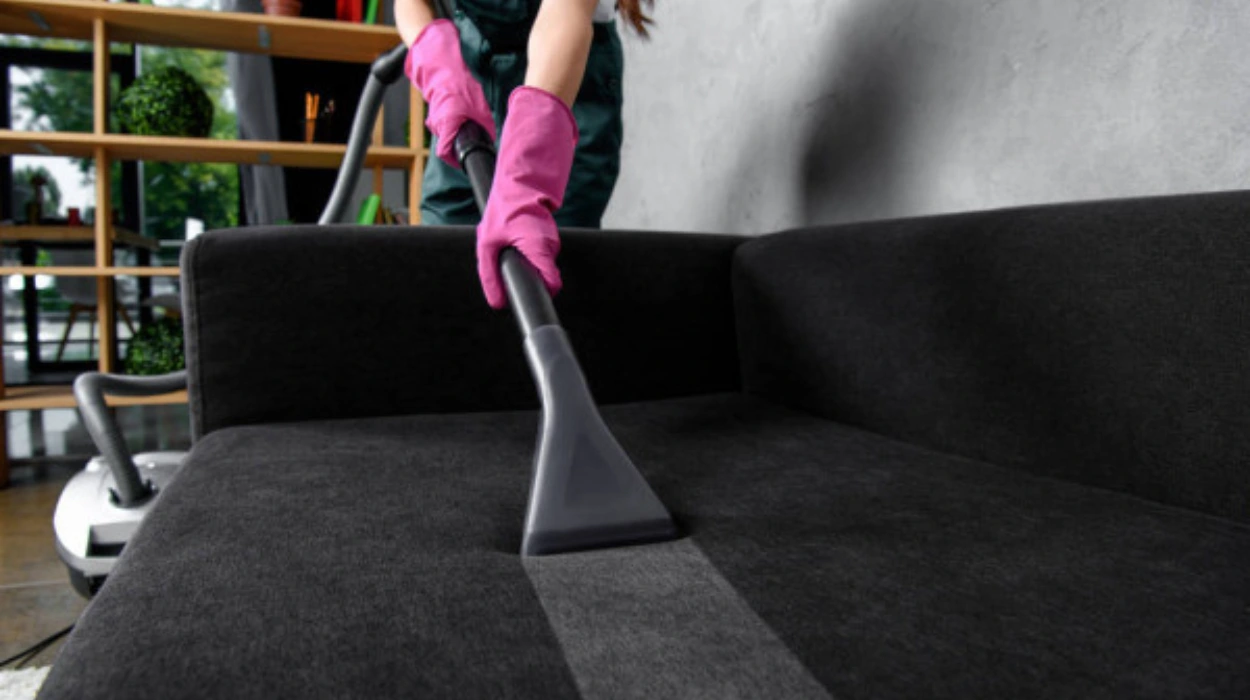
Professional steam-style upholstery cleaning normally combines pre-vacuuming, fabric inspection, targeted pre-treatment, controlled water application and powerful extraction to remove soil without unnecessarily saturating the furniture.
The process begins by removing loose dust and debris with professional vacuum equipment. This reduces the amount of dry soil that could otherwise become wet during extraction. Stains are then assessed individually because grease, food, beverage marks and biological odours may require different pre-treatment approaches.
The cleaning solution is applied according to the fabric and contamination level. Heated water can help loosen embedded soil, while agitation may assist with particularly dirty areas. The extraction stage is critical because the equipment must remove the loosened contamination and as much moisture as possible from the upholstery.
Modern upholstery cleaning equipment can provide stronger extraction than ordinary household machines. This helps shorten drying times and reduces the amount of moisture remaining inside cushions and fabric layers. Professional equipment selection is therefore just as important as the cleaning solution itself.
Does steam cleaning really provide fast drying?
Steam cleaning can provide relatively fast drying when moisture is carefully controlled and strong extraction equipment is used, but drying time still depends on fabric thickness, cushion construction, humidity, airflow and the amount of moisture applied.
Fast drying is not simply a matter of using hotter water. Excessive moisture can increase drying time and create avoidable risks. Effective extraction removes much of the water immediately after cleaning, while good ventilation allows remaining moisture to evaporate.
Dense cushions and thick upholstery can retain moisture longer than lightweight fabrics. Rooms with poor ventilation or high humidity can also slow evaporation. Furniture placed in a closed room after cleaning may therefore take considerably longer to dry than furniture positioned in a well-ventilated environment.
Low-moisture cleaning can be preferable when rapid use is essential or when the fabric cannot safely tolerate significant moisture. This is why professional cleaners should select the cleaning method after assessing the upholstery instead of promising the same drying time for every sofa.
How does cleaning-equipment affect upholstery cleaning results?
Professional cleaning-equipment affects extraction strength, moisture control, cleaning consistency and drying performance, making equipment selection an important part of safe upholstery treatment.
A household vacuum cleaner is useful for routine maintenance but does not provide the same function as professional extraction equipment. Specialist upholstery machines are designed to apply controlled cleaning solution and recover contaminated moisture efficiently.
The right equipment also supports better stain treatment. Upholstery cleaners may use dedicated hand tools, extraction heads and fabric-specific accessories depending on the furniture design. Smaller tools can help technicians work around seams, piping, corners and other difficult areas without unnecessarily wetting surrounding fabric.
Equipment should always support the fabric rather than overpower it. Excessive pressure, heat or moisture can create problems even when the machine is technically capable of delivering a powerful clean. Professional results depend on matching equipment settings to the material being treated.
Can steam cleaning remove stains and odours from sofas?
Steam or hot water extraction can remove many water-soluble soils, embedded particles and some odour sources, but permanent stains, dye damage and contamination inside deep padding may require specialist treatment or may not be completely removable.
Stain removal depends on what caused the mark and how long it has remained in the fabric. Fresh water-based spills are generally easier to treat than old oil-based stains that have penetrated deeply into fibres. Previous DIY cleaning can also complicate treatment if unsuitable products have left residues.
Odour requires similar consideration. Surface deodorising may temporarily mask an unpleasant smell, while extraction can physically remove some of the contaminated material causing it. If odour has penetrated deep into cushion fillings, however, surface cleaning alone may not eliminate the source.
Professional upholstery cleaning should therefore focus on realistic restoration rather than promising that every stain will disappear. The condition of the fibre, previous treatments, dye stability and depth of contamination all influence the final result.
Is steam upholstery cleaning more eco-safe than chemical-heavy cleaning?
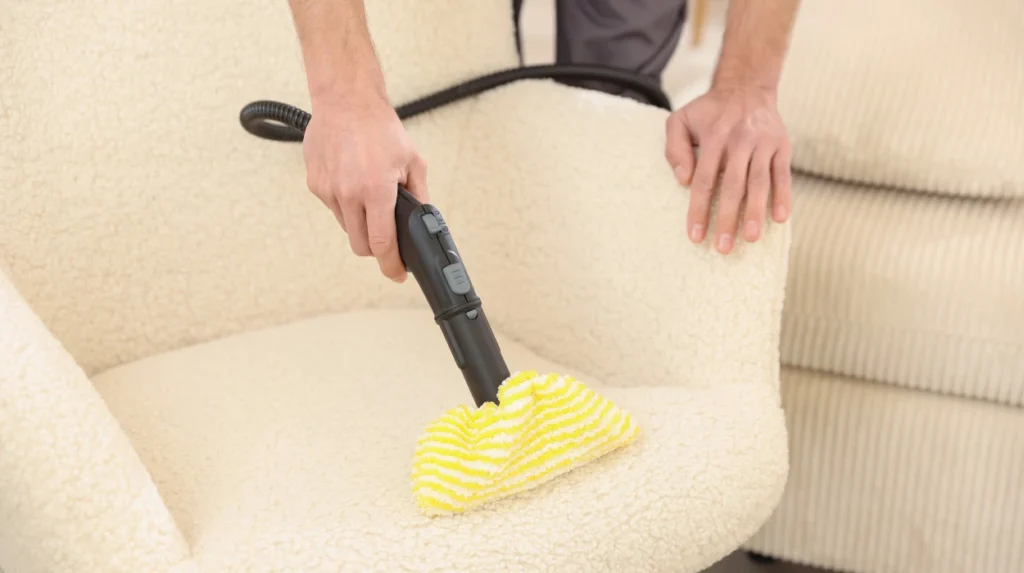
Controlled steam and hot water extraction can reduce reliance on aggressive chemical products, especially when heat and mechanical extraction perform much of the cleaning work, but eco-safe cleaning still depends on responsible product selection and water management.
Steam cleaning uses heat as an important part of the cleaning process, while extraction physically removes loosened dirt. This can reduce the need for excessive chemical application in suitable situations. However, steam should not automatically be described as chemical-free because professional upholstery cleaning may still require carefully selected detergents or pre-treatment products.
Eco-conscious cleaning is better understood as a combination of appropriate products, controlled application, efficient extraction and responsible waste handling. Using more cleaning chemical than necessary does not automatically produce a better result. Excess residue can remain within fibres and may contribute to rapid re-soiling.
For households seeking a lower-impact cleaning approach, the important question is not simply whether steam is used. It is whether the complete process uses suitable products, controlled quantities and equipment that removes moisture and residue effectively.
When should you choose professional upholstery cleaning instead of DIY treatment?
Professional cleaning is preferable when upholstery has deep staining, persistent odours, heavy soil, delicate fabric construction or a cleaning code that requires specialist knowledge and equipment.
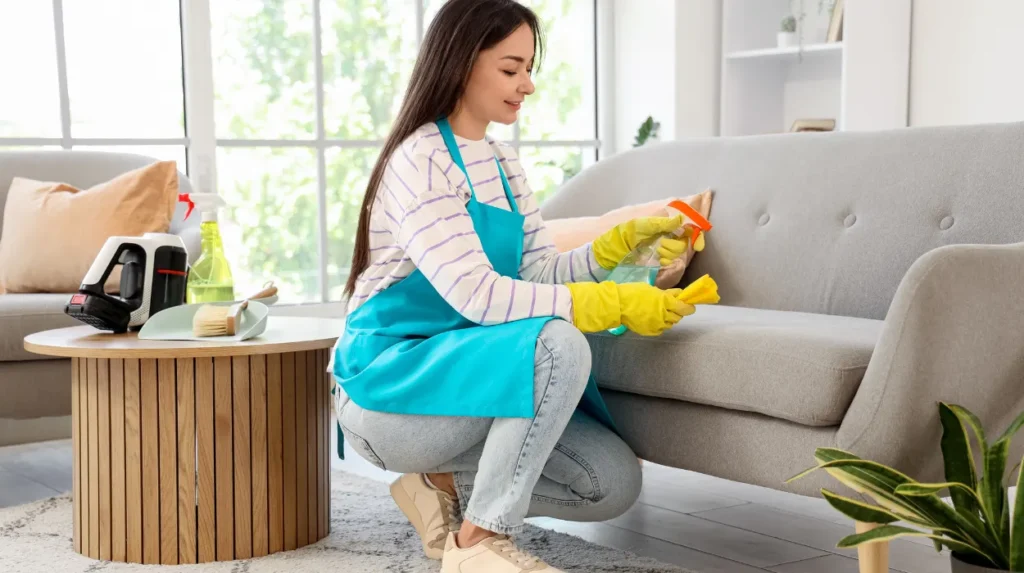
DIY cleaning can be useful for routine vacuuming and carefully managed spot treatment. The risk increases when homeowners apply large quantities of water, household detergent or heat without knowing how the upholstery will react. Shrinkage, dye transfer, watermarking and sticky residue can be difficult to reverse.
Professional cleaning becomes particularly valuable when furniture is heavily used or has not been cleaned for a long period. A structured process can identify the fabric, test the cleaning method and select appropriate equipment before treatment begins.
Bee Cleaning Services Manchester provides professional cleaning solutions through methods selected according to upholstery condition and material requirements. Its approach reflects the wider principle that upholstery should be cleaned according to its construction rather than treated as an ordinary washable surface.
What should you check before booking upholstery cleaning in Oldham?
Before booking, confirm the fabric cleaning code, proposed cleaning method, stain-treatment approach, drying expectations, equipment used and whether the cleaner will inspect and test the upholstery before full treatment.
Ask whether the company can explain why a particular cleaning method is suitable for your furniture. A professional should be able to identify potential risks and explain whether water-based extraction, low-moisture cleaning or another technique is more appropriate.
It is also useful to discuss the furniture’s previous cleaning history. Previous products, stain treatments and unsuccessful DIY attempts can influence how the upholstery responds. Heavy staining should also be described accurately so the cleaner can plan the appropriate treatment.
For homeowners comparing local options, the most useful comparison is not simply price. Consider the cleaning method, fabric knowledge, equipment, extraction capability, drying process and realistic expectations. This gives you a better basis for deciding whether professional upholstery treatment is appropriate.
How can the right cleaning method protect upholstery?
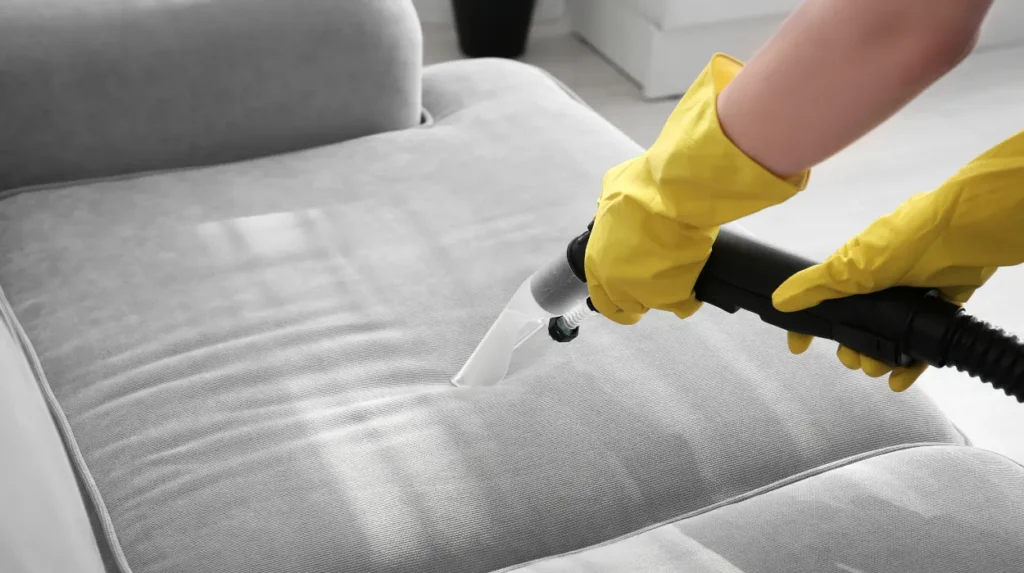
The right cleaning method protects upholstery by controlling heat, moisture, agitation and cleaning chemistry according to the fabric, helping reduce avoidable damage while removing accumulated soil and contaminants.
Furniture represents a significant household investment, so cleaning should support its lifespan rather than create unnecessary wear. Incorrect treatment can affect colour, texture, backing materials and cushion construction. Professional assessment helps identify these risks before cleaning begins.
Regular vacuuming remains important because removing loose soil reduces abrasive particles that can wear fibres over time. Professional deep cleaning can then be used when visible soiling, odours or accumulated contamination indicate that routine maintenance is no longer sufficient.
For Oldham homes, Upholstery Cleaning Services in Oldham can provide a practical option when furniture requires more than surface-level maintenance. The key is to choose a method based on the actual upholstery rather than assuming every sofa should receive steam treatment.
What is the final decision for steam upholstery cleaning?
Steam cleaning can be an effective deep-cleaning method for suitable upholstery, particularly durable, water-tolerant fabrics that can safely undergo controlled extraction. It is not a universal treatment for every material, and delicate fabrics may require dry or low-moisture alternatives.
The strongest approach is therefore assessment first, cleaning second. Fabric codes, fibre composition, colourfastness, construction, stain type and drying conditions should all influence the method. Professional cleaning-equipment can then be selected to deliver controlled moisture and effective extraction.
Bee Cleaning Services Manchester provides professional cleaning solutions for upholstery where method selection, controlled treatment and appropriate equipment are important. A fabric-specific approach offers a more reliable route to cleaner furniture while reducing the risks associated with unsuitable DIY steam cleaning.
FAQs About Steam Upholstery Cleaning Oldham
Can all upholstery fabrics be steam cleaned?
No. Steam cleaning is suitable for many water-tolerant synthetic and tightly woven fabrics, but delicate materials such as silk, some velvet, wool, leather and vintage upholstery may require alternative cleaning methods. Always check the manufacturer’s care instructions before treatment.
What upholstery fabrics are best for steam cleaning?
Polyester and other durable, colourfast synthetic fabrics are often suitable for controlled hot water extraction or steam-style cleaning. The fabric construction, cleaning code and condition should still be assessed before treatment because similar-looking fabrics can react differently to heat and moisture.
Is steam cleaning safe for a sofa?
Steam cleaning can be safe for a sofa when the upholstery is compatible with heat and moisture and the correct equipment is used. Professional cleaners should inspect the fabric, perform appropriate testing and control moisture to reduce risks such as colour bleeding, shrinkage and prolonged drying.
How long does upholstery take to dry after steam cleaning?
Drying time varies according to fabric thickness, cushion construction, ventilation, humidity and moisture extraction. Strong professional extraction can reduce residual moisture, while good airflow can accelerate drying. Thick cushions generally require longer drying than lightweight upholstery.
Does steam cleaning remove deep stains from upholstery?
Steam or hot water extraction can remove many embedded soils and water-soluble stains, but results depend on the stain type, age, fabric and previous treatment. Some permanent dye stains, chemical damage and deeply penetrated marks may not be completely removable.