


Rainwater window cleaning in Oldham is not consistently reliable because rainfall can contain airborne pollutants and does not remove established grime, mineral deposits or traffic film.
For dependable results, controlled cleaning methods and purified water are more effective than relying on rainfall alone.
Why is rainwater not enough to clean windows properly?
Rainwater can rinse loose surface dirt, but it cannot provide the controlled cleaning action needed for consistently clear glass. In Oldham, changing rainfall, airborne pollution, wind and surface contamination make rainfall an unreliable window-cleaning method.
Rain looks clean when it falls, but water quality at the window is not the same as water collected from a controlled purification system. Rain passes through the atmosphere and can collect dust, pollutants and other airborne particles before reaching the glass.
Once rain reaches a dirty window, it can loosen some surface dust. However, it does not necessarily remove the greasy film that builds up from traffic emissions, cooking residue, insects, pollen and general outdoor exposure. When the water evaporates, remaining particles can become visible as marks.
Oldham’s weather makes this issue more noticeable. The Met Office records changing combinations of rain, humidity, cloud and visibility in the area, demonstrating why outdoor cleaning conditions cannot be judged simply by whether rain is falling.
This is why rainfall should be viewed as an environmental factor rather than a cleaning method. A window may become wet after a shower without becoming genuinely clean.
For homeowners comparing DIY cleaning with professional Window Cleaning Services in Oldham, the important question is not whether rain touches the glass. It is whether the cleaning process removes contamination and leaves the surface without residue.
How does Oldham’s weather affect window-cleaning results?
Oldham’s variable rainfall, humidity and wind can change how quickly glass dries and how contaminants settle. Professional cleaning therefore depends on water quality, equipment, technique and weather conditions rather than simply waiting for rain to wash the windows.
Weather affects window cleaning in several different ways. Rain can interrupt traditional methods, while wind can carry dust and debris back onto freshly cleaned glass. High humidity can also slow evaporation, particularly on shaded elevations and during cooler periods.
The issue becomes more complicated when rain follows cleaning. If glass has already been properly cleaned using purified water, light rain does not automatically make the glass dirty again. However, rain falling through polluted air can introduce new particles to the surface.
Wind is another important factor. A window cleaner may achieve a clear finish, but nearby trees, roads, building work or exposed locations can quickly add new contamination. The cleaning schedule therefore needs to consider the property’s surroundings as well as the forecast.
Greater Manchester also faces changing rainfall patterns and increasing variability associated with climate conditions. The Greater Manchester Combined Authority identifies both dry periods and increased risks from intense rainfall as regional water-management challenges.
This makes a controlled cleaning process more valuable than relying on weather to perform the work. Rain is unpredictable. Professional cleaning equipment and procedures are designed to be repeatable.
Is pure water better than rainwater for window cleaning?
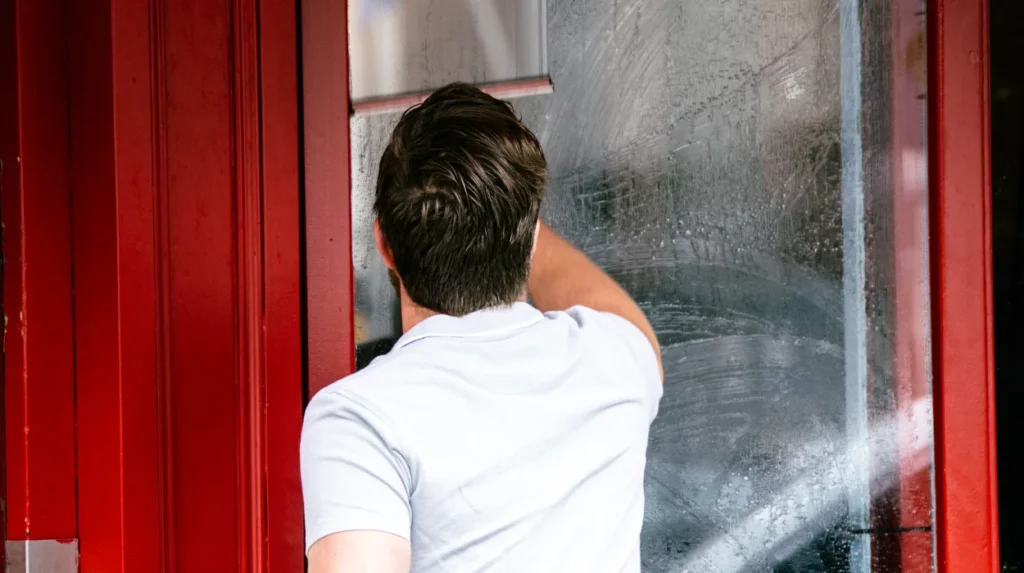
Pure water is better suited to professional window cleaning because dissolved minerals are removed before application. This allows the water to dry with minimal mineral residue, supporting a clearer finish than ordinary rainwater or untreated tap water.
Pure-water window cleaning normally uses filtration to remove dissolved minerals from water. Systems can include reverse osmosis and de-ionisation, depending on the equipment and required water quality.
The reason this matters is simple. Water containing dissolved minerals can leave deposits when it dries. These deposits can appear as spots or streaks, particularly on glass exposed to repeated cleaning.
A professional pure-water system changes the process. Instead of applying detergent and then wiping the glass dry, a water-fed pole system can agitate the surface and rinse away loosened dirt using purified water.
Industry examples in Greater Manchester describe the use of de-ionised or de-mineralised water with reach-and-wash systems. These systems also allow cleaning from ground level on many properties, reducing dependence on ladders.
This does not mean pure water makes every weather condition suitable. Strong wind, heavy rain, unsafe surfaces or poor access can still affect scheduling. The advantage is that the cleaning process itself is controlled even when the weather is variable.
For customers comparing rainwater with professional cleaning, this distinction is important. Rain provides moisture. Purified water forms part of a planned cleaning system.
Can windows be cleaned when it is raining?
Windows can be cleaned during suitable light rain when the cleaning method is designed for wet conditions, but heavy rain, strong winds and unsafe access can make cleaning impractical. Weather should influence scheduling, not automatically prevent professional cleaning.
A common misconception is that every drop of rain makes professional window cleaning pointless. That is not accurate for every cleaning method.
Water-fed pole systems can be suitable for light-rain conditions because the glass is already being rinsed during the cleaning process. A local window-cleaning provider in Oldham specifically describes pure-water-fed-pole cleaning as suitable for light rain.
However, there is a significant difference between light rain and severe weather. Heavy rainfall can reduce visibility, increase slip risks and make external equipment harder to control. Strong wind can also make long poles difficult to handle safely.
Professional cleaning should therefore involve a practical weather assessment rather than an automatic “rain equals cancellation” rule.
The condition of the glass also matters. Light rain may be manageable during routine maintenance, while heavily contaminated windows may require more detailed preparation and agitation before rinsing.
Customers should also distinguish between cleaning in rain and allowing rain to clean windows. The first involves a controlled cleaning procedure. The second simply depends on natural rainfall and offers no guarantee that accumulated grime will be removed.
What equipment makes window cleaning more reliable?
Professional window cleaning depends on equipment that controls water quality, reach and agitation. Water-fed poles, purified-water systems, brushes, appropriate cleaning tools and inspection procedures provide a more consistent process than household buckets or rainfall alone.
The equipment used can significantly affect the final result. A professional water-fed pole system combines a telescopic pole with a brush and purified water supply.
The pole provides reach without requiring the cleaner to work from a ladder for many accessible external windows. The brush agitates dirt, while purified water rinses the loosened contamination from the glass.
Cleaning-equipment selection should also reflect the building. A two-storey home, commercial frontage and conservatory may require different pole lengths, brush types and access techniques.
Water quality is equally important. A filtration system may use reverse osmosis and de-ionisation to reduce dissolved minerals. Some professional providers use a TDS meter to monitor the quality of purified water before use.
Frames, sills and window edges can also require attention because dirt can migrate back onto glass if these areas are ignored. A window is not an isolated pane. The surrounding frame and sill form part of the cleaning environment.
The right equipment therefore improves consistency, access and efficiency. It does not eliminate weather considerations, but it reduces dependence on weather as the cleaning mechanism.
When should Oldham homeowners choose professional window cleaning?
Professional window cleaning is most useful when windows have accumulated traffic film, mineral deposits, pollen, insect marks or difficult-to-reach contamination. It is also appropriate when consistent results matter more than simply removing visible surface dust.
Rainwater may make glass look temporarily cleaner after a heavy shower, but the underlying contamination remains. Over time, repeated rainfall can create a cycle in which dirt is loosened, redistributed and deposited again.
Professional cleaning becomes more useful when windows look dull despite frequent rain. It is also appropriate for upper-floor windows, large glazed areas, conservatories and properties where safe external access is difficult.
The frequency should depend on the property’s exposure. Homes near busy roads, commercial areas or construction activity can collect external contamination faster than sheltered properties.
Seasonal conditions also matter. Pollen can increase contamination during warmer months, while winter weather can contribute to mud, moisture and debris around exterior surfaces.
A planned cleaning schedule provides better control than waiting until rain appears to have washed the glass. This approach also makes it easier to identify persistent problems such as damaged seals, internal condensation or surface defects that cleaning cannot resolve.
For property owners considering professional Window Cleaning Services in Oldham, the decision should therefore be based on glass condition, accessibility, desired appearance and maintenance frequency.
How does professional window cleaning compare with relying on rain?
Rain is free and convenient, but it provides inconsistent cleaning results and no control over contamination. Professional window cleaning adds controlled water quality, mechanical agitation, suitable equipment and systematic coverage, making it the stronger choice for predictable maintenance.
The comparison becomes clearer when the two approaches are separated by function.
Rainwater can wet the surface and remove loose particles. Professional cleaning actively targets contamination. Rain depends entirely on atmospheric conditions, while a cleaning service controls the water, tools and cleaning sequence.
Rain also provides no systematic coverage. Some areas may receive more water than others depending on wind direction and the shape of the building. Professional cleaning follows a deliberate process across the glass, frames and accessible edges.
Cost is another consideration, but rainfall does not remove the need for periodic cleaning. If windows continue to accumulate film and deposits, waiting for rain only delays the required maintenance.
The strongest approach is therefore not to treat rain as the enemy of window cleaning. It is to understand its limitations.
Light rain may not prevent a suitable professional method from working. Heavy rain and strong winds may require rescheduling. In both cases, the cleaning result depends on the cleaning process rather than rainfall itself.
For local homeowners, this distinction makes choosing a cleaning provider easier because the focus moves from weather myths to measurable cleaning factors.
What should you check before choosing window cleaning in Oldham?

Before choosing a window cleaner, check the cleaning method, water system, equipment, access procedure, weather policy and areas included. A reliable provider should explain how the service handles glass, frames, difficult access and changing outdoor conditions.
Start by asking whether the cleaner uses traditional methods, water-fed poles or a combination. The right method depends on the property and window design.
Next, ask what water is used. If a pure-water system is advertised, ask how the water is purified and whether quality is monitored. This is particularly relevant when the service promises a residue-free finish.
Equipment should also be appropriate for the property. Long-reach poles can help clean upper windows from ground level, while specialist access may be needed for unusual architectural features.
Weather policies should be clear. A professional should distinguish between manageable light rain and conditions that create safety or quality problems.
Finally, clarify whether the quoted service includes frames, sills and other accessible areas. Clear scope prevents misunderstandings and makes different providers easier to compare.
Bee Cleaning Services Manchester can be considered within this broader decision framework when homeowners want professional cleaning solutions based on property condition and practical cleaning requirements.
What is the best approach to rainwater window cleaning in Oldham?
Rainwater should not be treated as a replacement for professional window cleaning. It can rinse loose dirt, but it cannot reliably remove established contamination or provide consistent results.
For regular maintenance, a controlled pure-water system offers a more predictable process. Water-fed poles and purified water can also make many external windows accessible from ground level, reducing reliance on ladders.
The weather still matters. Light rain may be compatible with some professional methods, while heavy rain and strong winds can affect safety and cleaning quality. The sensible approach is therefore weather-aware rather than weather-dependent.
Homeowners who want cleaner glass should assess the condition of their windows, the property’s exposure and the cleaning method being offered. This produces a better decision than assuming rainfall has already done the job.
Bee Cleaning Services Manchester provides professional cleaning solutions with the objective of maintaining clean, presentable surfaces through appropriate cleaning methods rather than relying on unpredictable rainfall.
FAQs About Rainwater Window Cleaning in Oldham
Is rainwater actually good for cleaning windows?
Rainwater can remove some loose dust from glass, but it does not reliably remove grease, traffic film, pollen or mineral deposits. It can also carry airborne particles onto the surface before evaporating.
Can professional window cleaners work in the rain?
Yes, some professional water-fed pole systems can operate during light rain. Heavy rain, strong winds and unsafe access can affect the cleaning process, so weather conditions should be assessed before work begins.
Does rain make professionally cleaned windows dirty again?
Rain does not automatically make clean windows dirty. However, rainfall can carry dust and pollutants onto glass, particularly in exposed areas. The effect depends on local conditions, surrounding pollution and how heavily it rains.
Is pure water better than tap water for window cleaning?
Yes, purified water is generally better for water-fed pole cleaning because dissolved minerals are removed before the water reaches the glass. This reduces the risk of mineral spotting when the water dries.
How often should windows be professionally cleaned in Oldham?
There is no single schedule for every property. Homes near busy roads, trees or construction areas may require more frequent cleaning, while sheltered properties may need less frequent maintenance. A quarterly or seasonal assessment is a practical starting point.