

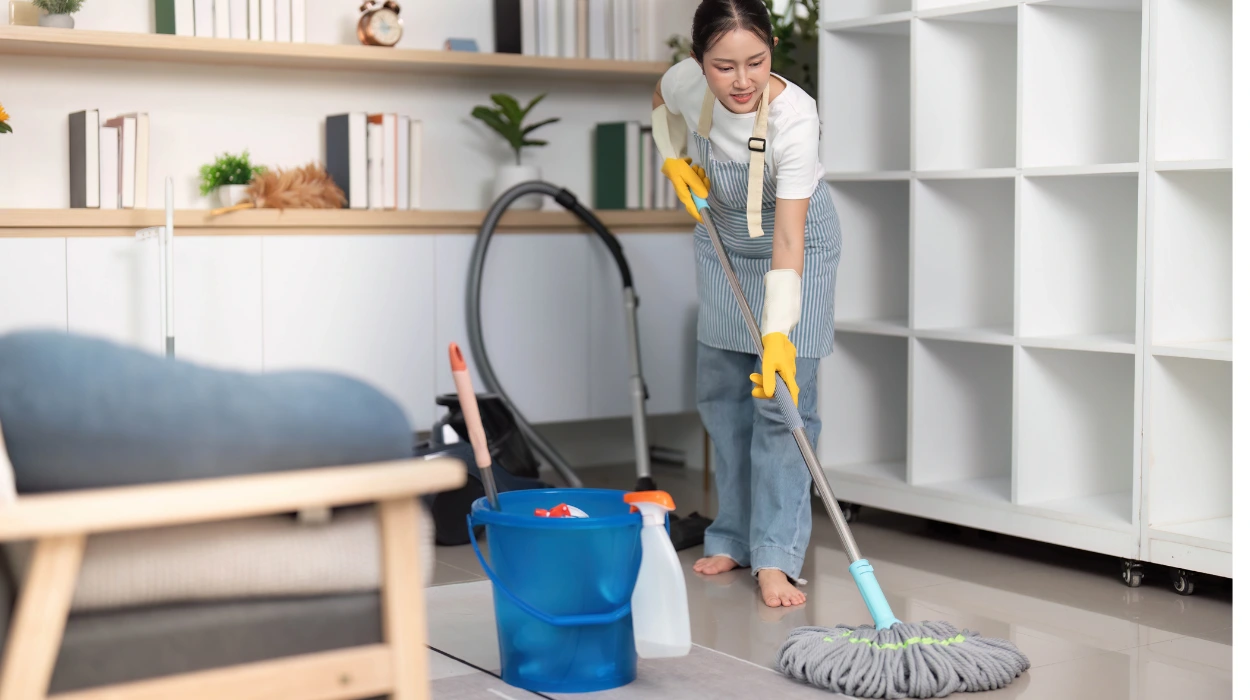
Signs Your Home Needs Professional Deep Cleaning Services include persistent odours, built-up dirt, stained surfaces, neglected areas, and dust that routine cleaning cannot remove.
When these problems remain despite regular cleaning, a professional deep clean can restore hygiene, surface condition, and overall freshness more effectively.
What Are the Main Signs Your Home Needs Professional Deep Cleaning Services?
Persistent odours, visible grime, dusty hidden areas, stained surfaces, mould-like buildup, and rooms that never feel completely clean are strong indicators that routine cleaning is no longer enough. Professional deep cleaning targets accumulated dirt in areas commonly missed during everyday cleaning.
A home can look reasonably tidy while still containing significant accumulated dirt. Floors may be vacuumed regularly, kitchen surfaces may be wiped, and bathrooms may receive routine attention, yet dirt can remain underneath furniture, around fixtures, inside corners, and along skirting boards. These areas gradually collect dust, grease, hair, moisture residue, and other contaminants. Over time, the difference between surface cleaning and deep cleaning becomes more noticeable. Professional cleaning equipment can help reach areas that are difficult to clean effectively with ordinary household tools. This makes deep cleaning particularly useful when a property needs a more complete reset rather than another routine visit.
Why Does Your Home Still Look Dirty After Regular Cleaning?
A regular clean maintains visible surfaces, while deep cleaning addresses accumulated dirt in neglected or difficult-to-reach areas. If your home repeatedly looks untidy shortly after cleaning, embedded dust, grease, stains, and residue may require a more detailed cleaning process.
Routine cleaning is designed around maintenance rather than restoration. It normally focuses on tasks such as vacuuming, mopping, wiping surfaces, cleaning bathrooms, and removing everyday waste. Deep cleaning goes further by addressing areas that do not require attention every week. This can include skirting boards, door frames, light fittings, behind furniture, detailed kitchen surfaces, bathroom fixtures, and other overlooked spaces. The difference becomes particularly clear in homes where cleaning has been irregular or where several occupants generate heavy daily use. A professional deep clean can establish a cleaner baseline from which a regular maintenance schedule becomes easier to manage.
Could Persistent Dust Mean Your Home Needs Deeper Cleaning?
Persistent dust on furniture, skirting boards, shelves, vents, and other surfaces can indicate that routine cleaning is not reaching every area effectively. Repeated dust accumulation may require detailed cleaning of surfaces, edges, corners, and hidden spaces.
Dust is not limited to visible furniture surfaces. Fine particles can accumulate around radiators, underneath beds, behind cabinets, along skirting boards, and in corners where ordinary cleaning equipment has limited access. Textiles, upholstery, curtains, and carpets can also hold particles that become airborne through normal household activity. If dust returns quickly after cleaning, the problem may involve several surfaces rather than one particularly dirty area. Using suitable cleaning-equipment and appropriate techniques helps cleaners work systematically through these locations. Deep cleaning therefore considers the wider environment instead of concentrating only on the most visible surfaces.
Are Stubborn Kitchen Grease and Bathroom Deposits Signs of Deep Cleaning?
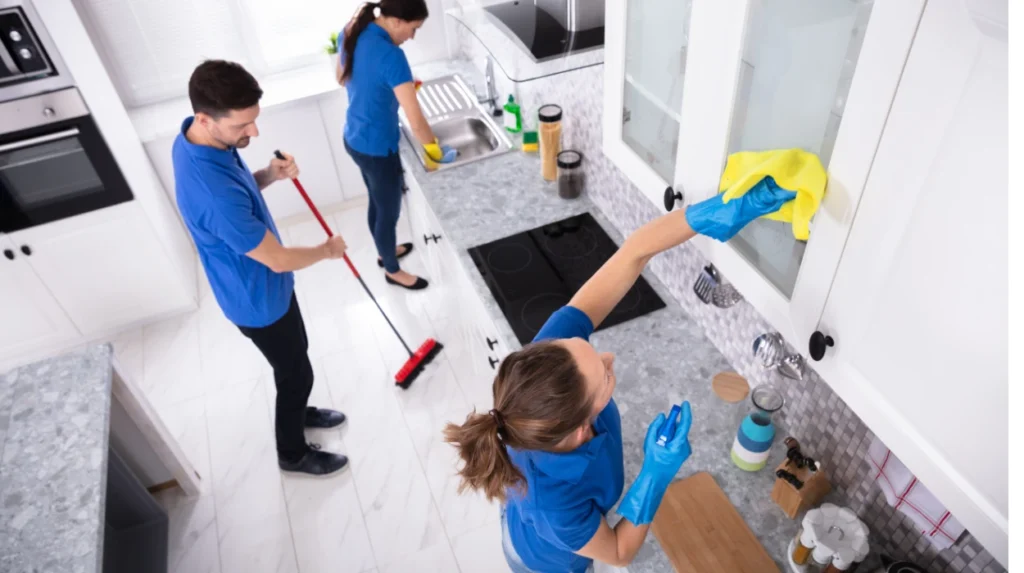
Persistent kitchen grease, soap residue, limescale, and difficult bathroom deposits are common signs that ordinary cleaning is no longer sufficient. Professional deep cleaning uses appropriate methods for different surfaces to remove accumulated residue without unnecessary damage.
Kitchens experience repeated exposure to cooking oils, food particles, steam, and moisture. Even when worktops are cleaned frequently, grease can accumulate around cupboard edges, splashbacks, extractor areas, appliance surfaces, and other detailed locations. Bathrooms present a different cleaning challenge because soap residue, water deposits, and moisture can build up around showers, taps, tiles, and sanitary fixtures. These deposits may become increasingly difficult to remove when they are left for extended periods. A professional cleaner can assess the surface and use suitable cleaning methods rather than applying the same product everywhere. This approach is particularly important because different materials can react differently to cleaning chemicals and excessive moisture.
When Do Unpleasant Odours Indicate a Deeper Cleaning Problem?
Unpleasant odours that remain after normal cleaning can indicate accumulated residue in carpets, upholstery, kitchens, bathrooms, bins, drains, or other areas. Deep cleaning helps identify and clean potential odour sources instead of simply masking smells with fragrances.
A fresh fragrance does not necessarily mean that the underlying source of an odour has been removed. Food residue, damp materials, pet-related dirt, spills, rubbish containers, and accumulated organic matter can all contribute to persistent smells. Soft furnishings can also retain odours because fibres absorb particles and moisture over time. Identifying the source is therefore more important than repeatedly applying an air freshener. Deep cleaning involves examining commonly overlooked areas where residue may remain. Where specialist treatment is required, the appropriate cleaning method depends on the material, source, and severity of the contamination.
What Areas of a Home Are Commonly Missed During Routine Cleaning?
Routine cleaning often misses areas such as behind furniture, skirting boards, door frames, light fittings, appliance edges, corners, and detailed bathroom or kitchen surfaces. These neglected locations can accumulate dust and residue, making them important targets during a professional deep clean.
The most overlooked areas are often those that do not immediately affect the appearance of a room. A clean-looking floor can draw attention away from dusty skirting boards, while an organised kitchen can conceal grease around appliance edges and cabinet details. Similarly, furniture can prevent easy access to flooring and wall edges. Deep cleaning works through these areas methodically rather than relying only on what is visible from normal standing height. This detailed approach can make a noticeable difference to the overall condition of a property. It also helps establish which areas should receive more frequent attention during future maintenance cleaning.
Can Stained Carpets and Upholstery Be Signs Your Home Needs Deep Cleaning?
Persistent carpet marks, flattened fibres, food stains, pet-related marks, and upholstery discolouration can indicate that everyday vacuuming is insufficient. Deeper carpet and fabric cleaning may be needed when dirt has become embedded within fibres rather than remaining on the surface.
Vacuuming removes loose particles but does not perform the same function as a specialist fabric or carpet cleaning process. Foot traffic gradually pushes dirt deeper into carpet fibres, particularly around entrances, hallways, stairs, and frequently used rooms. Upholstery can experience similar accumulation from regular household use. Spills may also leave residues that attract additional dirt if they are not treated correctly. The appropriate cleaning process depends on the fabric, carpet construction, stain type, and moisture tolerance. For homes with significant carpet or upholstery buildup, specialist cleaning can form an important part of a broader deep-cleaning programme.
Does Mould-Like Buildup or Damp Residue Require Professional Attention?
Persistent dark staining, damp residue, or mould-like growth should not simply be covered with ordinary cleaning products. The source of moisture should be considered first, while appropriate cleaning methods can address removable surface contamination without treating cleaning as a substitute for property repairs.
Bathrooms, kitchens, window areas, and poorly ventilated spaces can experience increased moisture. Where dampness persists, cleaning alone may not resolve the underlying issue. Ventilation, leaks, condensation, and building conditions can all influence moisture levels. A professional cleaner can clean suitable surfaces, but structural damp or recurring moisture may require attention from an appropriate property professional. This distinction is important because a recurring mark does not automatically represent a cleaning failure. Deep cleaning should improve cleanliness while the underlying cause of persistent moisture is addressed separately where necessary.
How Does Professional Cleaning Equipment Improve Deep Cleaning?
Professional cleaning equipment can improve the efficiency and consistency of deep cleaning by helping cleaners remove dust, loosen deposits, extract moisture, and treat surfaces using methods suited to the material. Equipment selection should match the surface rather than relying on one universal cleaning method.
Cleaning-equipment ranges from commercial vacuum systems to extraction machines, steam equipment, microfiber systems, brushes, specialist tools, and surface-specific products. The benefit is not simply greater equipment power. Correct technique, controlled moisture, suitable pressure, and appropriate cleaning products are equally important. For example, a surface that tolerates steam may require a different approach from delicate wood, natural stone, or sensitive upholstery. Professional cleaners can select methods according to the cleaning requirement and material involved. This helps reduce the risk of ineffective cleaning or unnecessary surface damage.
When Is Deep Cleaning More Appropriate Than Weekly Cleaning?
Deep cleaning is appropriate when a property has accumulated significant dirt or has not received detailed cleaning for an extended period. Weekly cleaning is better suited to maintenance after the property’s main cleaning requirements have been brought under control.
The two services perform different functions. A deep clean creates a detailed starting point by addressing accumulated dirt and neglected areas. Regular cleaning then helps maintain that condition through scheduled maintenance. Homes may benefit from deep cleaning after moving into a property, following renovation work, after long periods without detailed cleaning, or when household routines have changed. The frequency of subsequent cleaning depends on occupancy, property size, lifestyle, pets, and the level of daily activity. A practical cleaning plan should therefore distinguish between restoring cleanliness and maintaining it.
Should You Book Deep Cleaning Before Starting a Regular Cleaning Schedule?
Booking a deep clean before beginning regular maintenance can provide a cleaner baseline and make subsequent cleaning more manageable. Once accumulated dirt has been addressed, weekly or monthly visits can focus on maintaining surfaces rather than repeatedly dealing with long-standing buildup.
This approach can be particularly useful when a property has received only basic cleaning for a long period. Starting with a detailed clean means neglected areas can receive attention before a maintenance schedule begins. Afterward, the cleaning frequency can be adjusted according to how quickly dirt returns. Some households need weekly maintenance, while others may require less frequent visits combined with regular household cleaning. For residents comparing different schedules, the decision should consider the home’s size, number of occupants, usage patterns, and cleaning requirements rather than relying on a fixed frequency.
For residents considering professional cleaning in the Oldham area, Bee Cleaning Services Manchester provides professional cleaning solutions designed around the condition and requirements of the property. Its approach can include detailed cleaning tasks alongside appropriate equipment and surface-specific methods.
What Should You Check Before Booking a Professional Deep Clean?
Before booking, check which rooms and surfaces are included, whether specialist equipment is available, how difficult stains are handled, what preparation is required, and whether the cleaning scope matches your property’s condition. Clear service expectations help avoid misunderstandings.
A useful cleaning assessment should consider the property’s current condition rather than focusing only on the number of rooms. Ask whether kitchens, bathrooms, floors, skirting boards, internal doors, accessible furniture areas, and other detailed surfaces are included. If carpets, upholstery, curtains, or difficult stains require specialist treatment, confirm whether these are separate services. It is also useful to understand what the cleaner expects the homeowner to prepare before arrival. A clearly defined scope allows the cleaning process to be organised efficiently and makes it easier to compare services on the basis of actual work rather than price alone.
How Can You Decide Between Deep Cleaning, Weekly Cleaning and Monthly Cleaning?
Choose deep cleaning when accumulated dirt needs detailed attention, weekly cleaning when the property requires consistent maintenance, and monthly cleaning when household cleaning needs are lighter. The correct schedule depends on property condition, occupancy, usage, and how quickly dirt accumulates.
A sensible cleaning strategy can combine different service types rather than treating them as competing options. A property may begin with a deep clean and then move to weekly maintenance if several rooms receive heavy use. Another household may prefer monthly professional cleaning while handling routine tasks independently between visits. Properties with children, pets, frequent visitors, or high daily activity may require more frequent maintenance. The important factor is whether the chosen schedule prevents dirt from reaching the point where another intensive clean becomes necessary. Regular assessment can help homeowners adjust the frequency as their circumstances change.
What Are the Benefits of Professional Deep Cleaning for an Oldham Home?

Professional deep cleaning can improve the overall cleanliness of a property by addressing accumulated dust, residue, stains, neglected surfaces, and difficult-to-reach areas. A detailed clean also provides a practical foundation for maintaining the home through an appropriate regular cleaning schedule.
Professional cleaning is most valuable when the property’s cleaning requirements exceed what can reasonably be completed through everyday household maintenance. Detailed work can save time while bringing overlooked areas back into a manageable condition. It can also help identify areas requiring specialist treatment, such as carpets, upholstery, or persistent moisture-related deposits. After the initial work, homeowners can establish a realistic maintenance routine based on actual cleaning needs. For households in Oldham, professional home cleaning solutions can provide a structured approach to detailed property cleaning.
What Is the Best Next Step After a Deep Clean?
The best next step is to maintain the improved condition with a cleaning schedule suited to the property. Comparing weekly and monthly cleaning requirements can help determine how often professional maintenance is necessary after the initial deep cleaning has been completed.
Maintenance should focus on preventing the same buildup from returning. High-use rooms such as kitchens, bathrooms, hallways, and living areas normally need more frequent attention than rarely used rooms. Homeowners can also divide responsibilities between professional cleaning and everyday household tasks. If the property becomes difficult to maintain between visits, a more frequent professional schedule may be appropriate. If the home remains manageable, monthly cleaning may provide sufficient support. This makes cleaning frequency a practical decision based on results rather than a fixed rule.
Signs Your Home Needs Professional Deep Cleaning Services become clearer when routine cleaning repeatedly fails to control dust, stains, odours, grease, residue, and neglected areas. These problems indicate that the property may need a more detailed cleaning process rather than simply more frequent surface cleaning.
Professional deep cleaning can restore a practical baseline by addressing difficult-to-reach areas and accumulated dirt with suitable methods and cleaning equipment. Afterward, weekly or monthly maintenance can help preserve the results according to the property’s actual needs.
Bee Cleaning Services Manchester provides professional cleaning solutions for homes requiring detailed cleaning and ongoing maintenance. A structured approach allows homeowners to match the cleaning method and frequency with the condition and usage of their property.
Frequently Asked Questions
How often should I get my house professionally deep cleaned?
A deep clean is useful when routine cleaning no longer controls accumulated dust, grime, stains, or neglected areas. Many homes can benefit from a professional deep clean once or twice a year. Homes with pets, children, or heavy daily use may need it more often.
A deep clean can also be useful after moving, renovation, or a long period without detailed cleaning.
Afterwards, regular weekly or monthly cleaning can help maintain the results.What is actually included in a professional deep clean?
A professional deep clean generally goes beyond normal dusting, vacuuming, and mopping.
It can include detailed cleaning of skirting boards, doors, frames, corners, fixtures, kitchens, and bathrooms.
The exact scope depends on the cleaning company and property condition.
Carpets, upholstery, ovens, windows, and other specialist areas may require separate treatments.
Always check the service checklist before booking so you know exactly what is included.Should I clean or tidy my house before professional cleaners arrive?
Yes, removing clutter can help cleaners spend more time actually cleaning surfaces rather than moving personal belongings. Clear floors, worktops, and accessible areas where possible before the appointment.
Furniture can also be moved slightly away from walls if you want skirting boards or wall edges cleaned.
You do not necessarily need to clean the house beforehand.Is professional deep cleaning worth the money?
Professional deep cleaning can be worthwhile when accumulated dirt requires more time, equipment, or detailed work than you can manage yourself. It can restore neglected areas and provide a cleaner starting point for regular maintenance.
The value depends on the property’s condition, size, cleaning requirements, and service scope.
Before booking, compare exactly what tasks and areas are included.