

After Party Cleaning Checklist: 10 Steps Every Homeowner Should Follow starts with removing waste, securing leftover food, treating spills, cleaning bathrooms and restoring floors. A structured sequence prevents stains, odours and missed areas while making post-party recovery faster and more manageable.
Why Should You Follow an After Party Cleaning Checklist?
A structured after-party cleaning process helps homeowners restore hygiene, remove waste, treat spills before they set, clean high-touch surfaces and return rooms to normal without wasting time moving repeatedly between unrelated tasks.
Party cleaning is different from an ordinary household tidy-up because several types of mess can appear at once. Food residue, drink spills, disposable packaging, fingerprints, crumbs and bathroom waste often spread across several rooms. Cleaning them randomly can create unnecessary work and leave important areas unfinished.
The most effective approach is to work from urgent messes to detailed cleaning. Fresh liquid spills should be addressed before they stain, food waste should be removed before odours develop, and rubbish should be collected before surfaces and floors are cleaned. Professional cleaning guidance also recommends dividing post-party work into immediate and next-day tasks.
For homeowners in Oldham, the same principle applies whether the event was a birthday, family gathering, dinner party or larger celebration. The condition of the property after guests leave determines whether a quick reset is enough or whether a more comprehensive cleaning session is required.
What Should You Do First After Guests Leave?
Start by opening windows where appropriate, collecting rubbish, separating recyclable materials, storing safe leftover food, removing decorations and identifying spills or breakages before beginning detailed surface or floor cleaning.
The first stage is about controlling the mess rather than trying to make the entire house spotless immediately. Walk through the kitchen, living room, dining area, hallway, bathrooms and any outdoor spaces used during the event. Take note of damaged items, broken glass, food waste and liquid spills.
Use separate bags for general rubbish and recyclable materials where local waste arrangements allow. Plates, glasses and serving equipment should be gathered into one location so that the kitchen can be reset efficiently. Leftover food should be assessed promptly and refrigerated or discarded according to normal food-safety practices.
Decorations should also be removed carefully. Adhesive hooks, tape and hanging materials can leave marks if pulled aggressively. A methodical first pass reduces clutter and gives you clear access to the surfaces that require cleaning.
Step 1: Remove Rubbish and Leftover Food
Begin with cups, plates, napkins, bottles, cans, food packaging and disposable decorations. Empty indoor bins and replace their liners so unpleasant smells do not remain in the property.
Leftover food should be separated from waste immediately. Refrigerate suitable items and discard food that should not be kept. This is one of the highest-priority stages because organic waste and spilled drinks can create odours and sticky residues.
How Should You Deal With Party Spills and Stains?
Treat drink, food and greasy spills as soon as possible using a suitable method for the affected material, because prompt treatment reduces the chance of permanent staining on carpets, upholstery, flooring, tables and other household surfaces.
Spills are among the most important problems in post-party cleaning. Red wine, fruit juice, sauces, soft drinks and oily foods can leave visible marks when allowed to dry. The correct treatment depends on the surface, so homeowners should avoid applying an unfamiliar chemical simply because it works on another material.
Blot liquid rather than aggressively rubbing it into carpet or upholstery. For hard flooring, remove the residue with a surface-appropriate cleaner and dry the area afterwards. Wooden furniture should be checked for water rings or prolonged moisture exposure.
Professional after-party cleaning commonly includes drink-spill treatment, stain removal, floor vacuuming and mopping as part of the overall restoration process.
Step 2: Treat Fresh Spills Before They Dry
Inspect floors, rugs, sofas, dining chairs and tables for visible spills. Use clean absorbent material to lift liquid where appropriate, then follow the manufacturer’s cleaning instructions for the surface.
Do not mix cleaning chemicals. If a stain is extensive, old or located on delicate fabric, professional assessment is safer than repeated DIY treatment.
How Can You Reset the Kitchen Efficiently?
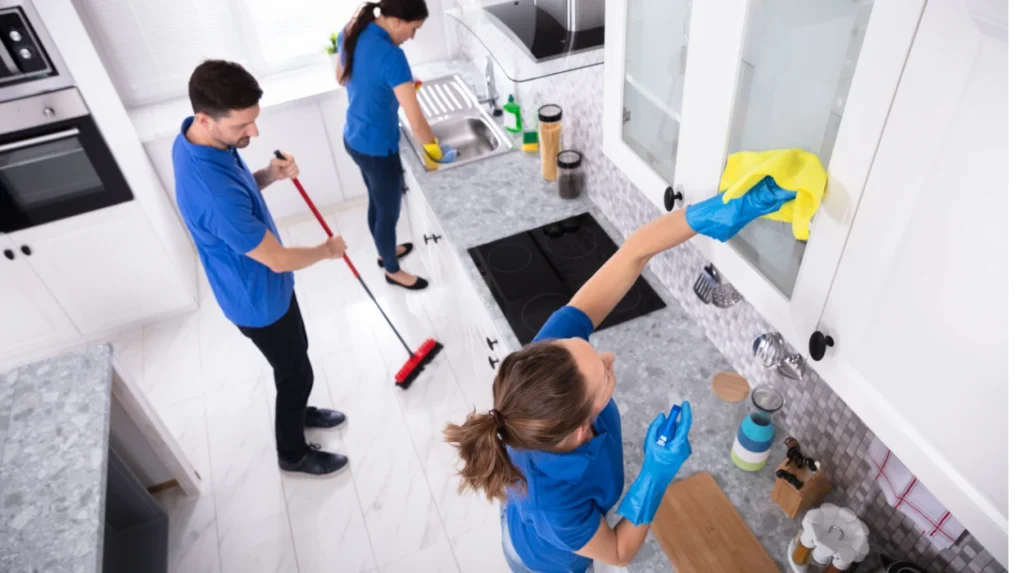
Reset the kitchen by clearing dishes, loading or washing them, cleaning food-preparation surfaces, scrubbing the sink, wiping appliance exteriors, removing rubbish and finishing with appropriate floor cleaning.
The kitchen normally receives heavy use during a party, making it one of the most important areas in the cleanup. Serving dishes, glasses, bottles, food containers and cooking equipment can quickly fill worktops and sinks.
Start by clearing everything from the counters. Load suitable dishes into the dishwasher or wash them by hand. Soak items with dried food residue rather than repeatedly scrubbing them with excessive force.
Next, clean the worktops using a product suitable for the material. Wipe cupboard fronts and appliance exteriors where fingerprints, grease or food marks are visible. Finish by cleaning the sink and floor.
Step 3: Restore the Kitchen
Clean the sink, taps, worktops, dining surfaces and appliance exteriors. Check around the cooker and food preparation areas for grease or dried food.
Once the upper surfaces are finished, sweep or vacuum the floor before mopping. Cleaning the floor last prevents crumbs and debris from falling onto an already-clean surface.
How Should You Clean Bathrooms After a Party?
Bathrooms should be cleaned from high-touch surfaces to fixtures and floors, with particular attention to toilets, sinks, taps, mirrors, handles and other frequently touched areas used by multiple guests during the event.
Guest bathrooms can require more attention than normal after a celebration. Multiple visitors may use the same toilet, sink, taps, door handles and light switches over several hours.
Remove rubbish and used paper products first. Clean the toilet according to the product instructions, then clean the sink, taps, counters and other frequently touched surfaces. Mirrors may need attention because fingerprints and water spots become more noticeable under strong lighting.
The floor should be cleaned after the higher surfaces are finished. This prevents dust and debris from falling onto a freshly mopped floor.
Step 4: Clean and Sanitise Bathroom Surfaces
Focus on the toilet, flush handle, sink, taps, counters, mirror, door handle and floor. Replace empty toilet rolls and other essential supplies.
Ventilation is also useful after cleaning. Open suitable windows or use the bathroom ventilation system to help remove lingering moisture and odours.
How Should You Clean Living Rooms and Guest Areas?
Restore guest areas by removing decorations and rubbish, wiping tables and high-touch surfaces, vacuuming upholstery where suitable, straightening furniture and cleaning floors after all loose debris has been removed.
Living rooms often show the most obvious evidence of a party. Furniture may have been moved, cushions displaced and tables covered with food, drinks and decorations.
Start from the highest accessible surfaces and work downwards. Dust or wipe shelves, tables and other surfaces before vacuuming the floor. This prevents falling dust from contaminating areas that have already been cleaned.
Check sofas and chairs for crumbs, drink marks and misplaced items. Upholstery should only be treated with products compatible with the fabric. If a valuable or delicate material has been stained, professional cleaning may be preferable.
Step 5: Restore Furniture and Guest Spaces
Return furniture to its normal position and remove temporary party equipment. Collect small objects, decorations and rubbish before vacuuming.
Pay attention to corners, underneath tables and around seating areas because crumbs and disposable items commonly collect in these locations.
How Important Are Floors During Post-Party Cleaning?
Floor cleaning should be completed after rubbish, crumbs and surface debris have been removed, allowing vacuuming, sweeping, spot treatment and mopping to address the full range of party-related dirt without repeatedly re-cleaning the same areas.
Floors receive direct traffic from every guest, so they often contain the largest concentration of crumbs, dust and sticky residues. Hard flooring may require sweeping or vacuuming followed by appropriate mopping, while carpets generally need thorough vacuuming.
Sticky patches deserve additional attention because they can collect dirt after the party has ended. Check entryways, dining areas, kitchen floors and spaces around seating.
Do not saturate flooring unnecessarily. Excess water can damage some wood and laminate surfaces, while inappropriate chemicals can affect finishes.
Step 6: Vacuum, Sweep and Mop
Remove loose debris first. Vacuum carpets, rugs and upholstery where appropriate, then sweep hard floors before applying a suitable cleaning solution.
Inspect the floor under furniture and around skirting boards. If the party involved outdoor access, check the entrance for mud and tracked-in debris.
What Cleaning Equipment Do You Need?
Essential cleaning-equipment for post-party recovery includes rubbish bags, gloves, microfiber cloths, suitable surface cleaners, a vacuum cleaner, broom, dustpan, mop and bucket, with specialist equipment added only when the surface or stain requires it.
Having the correct cleaning-equipment makes the process faster and reduces the risk of using unsuitable products. A basic setup should allow you to collect waste, clean surfaces, remove dust and deal with floor mess without constantly stopping to find another tool.
Microfiber cloths are useful for many hard surfaces, while separate cloths should be used for different cleaning zones to avoid transferring dirt. Gloves provide a practical barrier when handling rubbish or cleaning bathrooms.
Specialist problems may require carpet extraction, upholstery equipment or other professional machinery. Homeowners should not assume that stronger equipment or chemicals automatically produces better results.
Step 7: Prepare and Organise Your Cleaning Equipment
Gather your equipment before starting. Separate products for kitchens, bathrooms, glass and general surfaces where required by their instructions.
Keep cleaning products in their original containers and follow label directions. Never combine bleach with other household cleaning chemicals because dangerous gases can be produced.
How Should You Handle Decorations and Outdoor Areas?
Remove decorations carefully, check patios and entrances for food or rubbish, collect outdoor waste and return temporary furniture or accessories to their normal storage locations after the indoor cleanup is under control.
Party decorations can remain attached to walls, ceilings, doors and furniture after guests leave. Removing them carefully helps prevent unnecessary surface damage.
If guests used a garden, patio or barbecue area, include these locations in the final inspection. Outdoor rubbish can attract pests and create unpleasant smells if left for an extended period.
Collect bottles, food packaging and disposable items before sweeping outdoor areas. Patio furniture and cushions should be returned to their normal positions or storage areas.
Step 8: Restore Decoration and Outdoor Areas
Take down banners, balloons, table decorations and temporary signs. Store reusable items separately from waste so they can be used again.
Inspect the entrance, patio and garden areas. Remove food debris and rubbish, then clean any obvious spills or marks on suitable surfaces.
When Should You Inspect High-Touch Areas?
Complete a final high-touch inspection after the main cleaning because door handles, switches, taps, remote controls, counters and frequently handled objects can remain dirty even when floors and visible surfaces appear clean.
High-touch points are easy to overlook because they are not always visibly dirty. During a party, however, multiple people may handle the same doors, switches, taps and furniture.
Walk through the property after the main cleaning and inspect these locations systematically. Clean them using products suitable for each surface.
This final pass also gives homeowners an opportunity to identify missed fingerprints, drink rings or small spills. A professional cleaning process similarly benefits from a final inspection because it provides a structured quality-control stage.
Step 9: Complete the High-Touch Surface Check
Inspect handles, switches, taps, table edges, remote controls and other frequently handled surfaces. Wipe them using an appropriate cleaner and clean cloth.
Avoid excessive moisture around electrical switches and electronic equipment. Apply cleaning products to a cloth where appropriate rather than directly onto sensitive components.
How Can You Complete a Final Post-Party Inspection?
Finish by walking through every used room, checking rubbish, odours, spills, bathrooms, kitchen surfaces, floors, furniture and misplaced items so the property is restored to a clean and usable condition.
The final inspection should follow the same route each time. Begin at the entrance and move through each room used during the celebration. This reduces the chance of forgetting a secondary space.
Check bins, refrigerators, sinks, toilets, floors and guest areas. Look beneath furniture and around corners where small items may have been left behind.
If the mess is larger than expected, homeowners should recognise when DIY cleaning is no longer the most efficient option. A professional service can provide a systematic cleaning process using appropriate equipment and trained staff.
Step 10: Perform the Final Room-by-Room Inspection
Check each room from top to bottom. Confirm that rubbish has been removed, surfaces are clean, floors are free from sticky residue and bathrooms have been restored.
If the property still has persistent stains, strong odours or extensive dirt after the first cleanup, consider arranging a professional one-off cleaning visit rather than repeatedly treating difficult areas without specialist equipment.
For homeowners comparing professional options, a detailed one-off cleaning service can be useful when the post-party workload is substantially larger than a normal household reset.
When Should You Hire After Party Cleaning Services in Oldham?
Professional after-party cleaning becomes useful when the event has created extensive rubbish, multiple spills, heavily used bathrooms, stained carpets, large guest areas or a workload that cannot reasonably be completed within the homeowner’s available time.
A small family gathering may only require a few hours of household cleanup. A larger birthday party, anniversary, engagement celebration or gathering with many guests can create substantially more work.
The decision should be based on the condition of the property rather than the size of the event alone. If food residue, stains, waste and high-touch cleaning are spread across several rooms, professional help can make the restoration process more efficient.
After Party Cleaning Services in Oldham can be particularly practical when the homeowner needs the property restored quickly after guests leave. Bee Cleaning Services Manchester can provide professional cleaning solutions for homeowners who need structured post-event property care.
The scope should be confirmed before booking. Ask what rooms are included, whether floors and bathrooms are covered, whether waste removal is included, what cleaning-equipment is supplied and whether specialist stain treatment costs extra.
What Should You Ask Before Booking Party Cleanup?
Before booking, confirm the cleaning scope, property size, number of rooms, expected duration, equipment supplied, stain treatment, waste handling, insurance and pricing structure so the service matches the actual condition of your home.
Clear communication prevents misunderstandings. A homeowner should explain whether the party involved food preparation, alcohol, children, pets, outdoor areas or extensive guest traffic because these details can change the cleaning requirements.
Pricing should also be based on the actual scope rather than an assumed standard. Property size, number of bathrooms, flooring type, furniture and condition can all influence the time and equipment required. Local cleaning pricing guides also show why property layout and cleaning intensity can materially affect quotations.
For readers moving from general research into provider comparison, the article on what to look for when hiring a home cleaner in Oldham provides a useful framework for assessing cleaning providers.
What Are the Main Benefits of Professional Post-Party Cleaning?
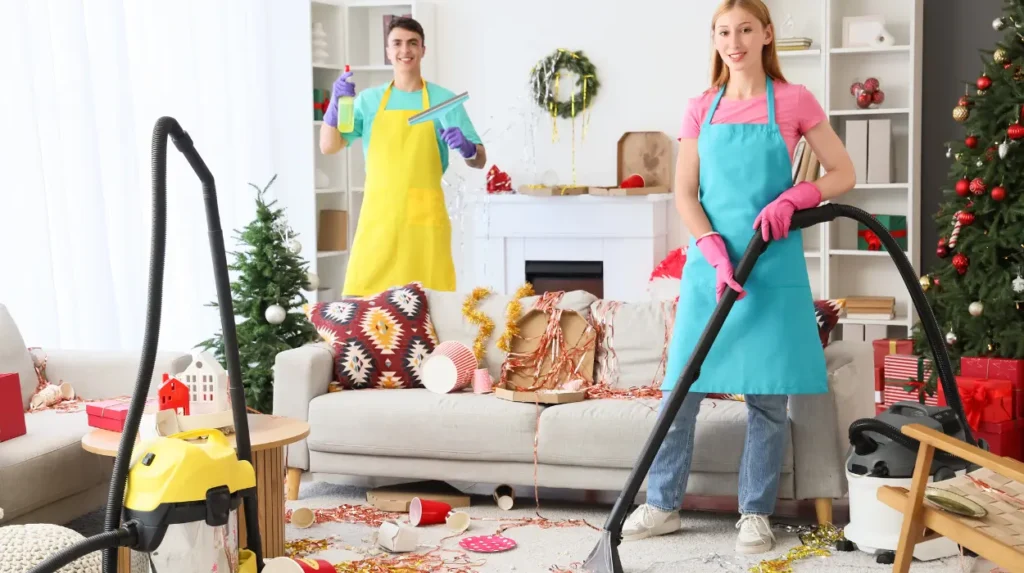
Professional post-party cleaning provides a structured approach to waste removal, surface cleaning, bathroom restoration, floor care and stain treatment while reducing the amount of time homeowners need to spend recovering their property after an event.
The main benefit is organisation. Instead of trying to clean everything simultaneously, professional cleaners can follow a defined sequence that separates waste removal, surface cleaning, bathroom care and floor restoration.
Equipment is another consideration. A professional provider may have access to commercial vacuum systems, specialist floor tools and appropriate cleaning products that are not normally kept in a household cupboard.
Bee Cleaning Services Manchester focuses on professional cleaning solutions designed around the condition and requirements of the property. For larger post-event workloads, a professional one-off home cleaning service can be considered when a normal household cleanup is not sufficient.
What Should Homeowners Remember After a Party?
The most effective post-party routine is to remove rubbish first, protect against stains, restore the kitchen and bathrooms, clean guest areas, finish floors and perform a final inspection before considering the property fully restored.
A checklist prevents small tasks from becoming forgotten tasks. It also helps homeowners decide which jobs need immediate attention and which can wait until the following day.
The most urgent issues are generally food waste, liquid spills, broken glass and heavily used bathroom areas. Once these are controlled, the remaining work becomes easier to organise.
For larger events, professional After Party Cleaning Services in Oldham can provide a practical alternative to spending an entire day restoring the property. The right approach depends on the home’s size, the level of mess and the time available.
Bee Cleaning Services Manchester provides professional cleaning solutions that help homeowners approach post-event cleaning systematically, from visible party waste through to detailed surface and floor care.
Frequently Asked Questions About After Party Cleaning
What should I clean first after a party?
Start with rubbish, leftover food, broken items and fresh spills. These problems can create odours, stains or safety issues if ignored. Then reset the kitchen and clean the bathrooms used by guests.
How do you clean a house after a big party?
Divide the work into waste removal, kitchen cleaning, bathroom cleaning, surface cleaning and floor care.
Collect cups, plates, bottles and decorations before detailed cleaning begins.What cleaning-equipment is needed after a party?
Basic cleaning-equipment includes rubbish bags, gloves, microfiber cloths, suitable cleaners, a vacuum, broom, dustpan, mop and bucket. Separate products may be required for glass, bathrooms and particular flooring materials.
How do you get rid of a party smell in the house?
Remove rubbish and leftover food first because these are common sources of lingering odours.
Clean kitchen surfaces, bins, floors and bathroom areas thoroughly. Ventilate the property where practical and safe.Is it worth hiring a professional party cleanup service?
Professional cleaning can be worthwhile when a party creates extensive waste, stains or cleaning work across several rooms. It can also help homeowners who have limited time after hosting an event.