
Post-Outbreak Deep Disinfection for Oldham Businesses can reduce harmful microorganisms on frequently touched surfaces when cleaning, suitable disinfectants, contact times and safe procedures are used correctly.
For offices, schools and retail premises, the process should focus on high-touch areas, equipment, shared facilities and surfaces identified through a risk assessment.
Why Do Oldham Businesses Need Deep Disinfection After an Outbreak?
After an outbreak, ordinary visible cleaning may not address every area that has experienced frequent contact. Door handles, switches, desks, counters, taps, shared equipment and washroom fittings can all require closer attention. NHS England distinguishes cleaning from disinfection: cleaning physically removes dirt and microorganisms, while disinfection reduces harmful microorganisms on surfaces.
A post-outbreak response should therefore begin with identifying where contamination is most likely rather than simply applying disinfectant everywhere. The type of premises, number of occupants, activities carried out and surfaces involved should influence the cleaning plan. This risk-based approach helps businesses use appropriate methods without creating unnecessary chemical exposure or disrupting normal operations.
For an Oldham workplace, timing can also matter. A business may need an enhanced clean after several illness-related absences, before reopening a temporarily closed area, or when shared facilities have experienced increased use. The objective is not to claim that an environment is completely free of microorganisms, but to establish a controlled and appropriately cleaned workplace.
What Does Post-Outbreak Deep Disinfection Actually Include?
A professional response normally combines physical cleaning with targeted disinfection rather than treating disinfection as a substitute for cleaning. Dirt and organic matter can interfere with some disinfectants, which is why NHS England identifies cleaning as an important prerequisite for effective disinfection in many environments.
The process starts with an assessment of the premises and the surfaces requiring attention. Cleaning staff can then establish priorities for high-touch points, shared equipment, washrooms, kitchens, reception areas and other frequently occupied zones. The chosen disinfectant should be suitable for the intended surface and used according to its manufacturer instructions.
The sequence of work is also important. NHS guidance recommends working from higher to lower surfaces and from cleaner areas towards more contaminated areas to minimise recontamination. Floors are generally handled later, with appropriate precautions while surfaces remain wet.
Which Areas Should Receive the Most Attention?
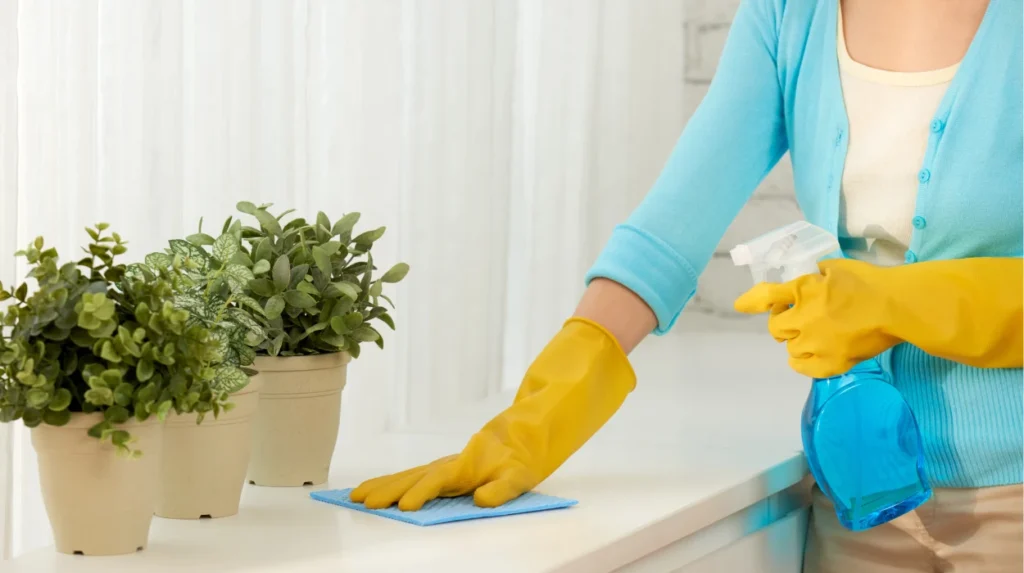
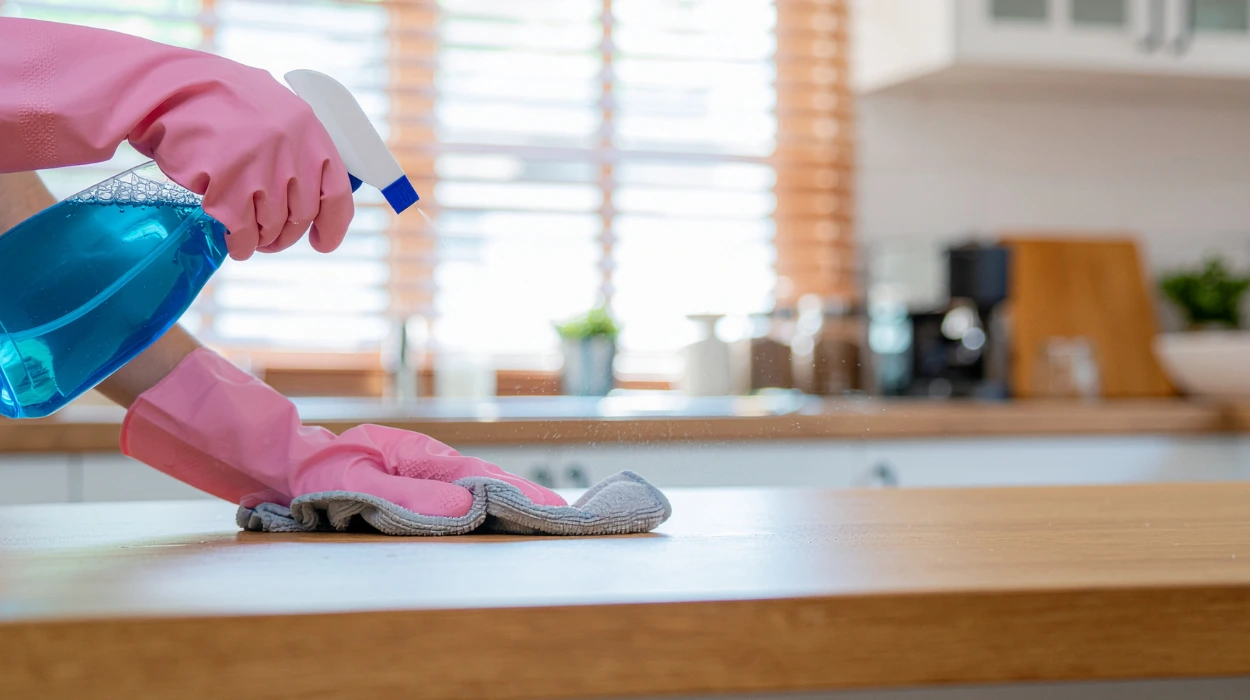
High-touch surfaces deserve particular attention because they are repeatedly handled throughout the working day. These can include entrance handles, push plates, light switches, lift controls, desks, reception counters, taps, toilet fixtures and shared devices.
Shared equipment can require additional consideration because different people may handle the same item during a single shift. Keyboards, phones, touchscreens, scanners, tills and communal appliances should be assessed for material compatibility before a disinfectant is applied.
Bathrooms and kitchen areas also require structured cleaning because moisture, frequent contact and shared use can increase the need for consistent hygiene controls. A professional cleaning plan should distinguish between surfaces that need routine cleaning and areas where enhanced disinfection is justified by the circumstances.
How Does Professional Disinfection Differ From Ordinary Commercial Cleaning?
Routine commercial cleaning generally maintains cleanliness through scheduled tasks such as dust removal, vacuuming, mopping, washroom cleaning and surface cleaning. Post-outbreak work is more targeted because the cleaning plan is built around a specific hygiene concern and the areas most likely to require enhanced attention.
This does not mean every business needs a hospital-style decontamination procedure. NHS England notes that the appropriate cleaning frequency and method depend on the activity taking place and the infection risk associated with an area.
Businesses should therefore avoid choosing a service solely because it uses strong chemicals or describes itself as “hospital grade.” The more useful questions concern the cleaning process, product suitability, contact time, staff training, PPE, risk assessment and documentation.
Professional commercial cleaning solutions for Oldham workplaces can be structured around the type of premises, the areas requiring attention and the level of cleaning needed after an outbreak.
Why Is Contact Time Important During Disinfection?
A disinfectant does not necessarily work immediately after being sprayed onto a surface. The product needs to remain in contact with the surface for the manufacturer’s specified period, and the surface generally needs to remain wet for that time. NHS England specifically highlights contact time as an essential part of effective disinfection.
This is one reason why simply spraying and immediately wiping a surface may not deliver the intended result. The correct method depends on the product, concentration, surface and manufacturer’s instructions. Cleaning staff should understand these requirements before beginning work.
Contact time also affects business operations. A workplace may need sections temporarily restricted while surfaces are treated and allowed to remain wet. Planning the work outside peak operating hours can reduce disruption while still allowing the correct procedure to be followed.
What Cleaning Equipment Is Appropriate for an Outbreak Response?
The right cleaning-equipment depends on the premises, surfaces, cleaning chemicals and risk assessment. Microfibre cloths, disposable materials where appropriate, mop systems, warning signage, PPE and correctly labelled cleaning solutions can all form part of a controlled process.
Equipment should not become a source of cross-contamination. Reusable materials need appropriate cleaning between tasks, while disposable items should be handled and discarded according to the relevant procedure. Cleaning staff should also avoid carrying contaminated materials from one area into another.
Chemical safety is equally important. NHS England advises that cleaning and disinfecting chemicals should be managed through appropriate risk assessment and COSHH controls, with safety information and product labels used to guide safe handling, storage and emergency procedures.
The equipment should therefore support the cleaning method rather than become the focus of the service. Fogging, spraying or specialist machinery should not automatically be considered superior to correctly performed manual cleaning and targeted disinfection.
How Should Offices, Schools and Retail Premises Be Treated Differently?
Offices often contain shared desks, meeting rooms, kitchens, reception areas and electronic equipment. A post-outbreak plan should identify high-touch points and shared spaces while considering which electronic surfaces require manufacturer-approved cleaning methods.
Schools can have a wider range of high-contact areas because pupils and staff use doors, desks, chairs, washrooms, communal equipment and other facilities throughout the day. Cleaning schedules should account for occupancy, age groups, activities and the surfaces most frequently touched.
Retail premises present another pattern. Tills, card machines, baskets, counters, doors, customer-facing surfaces and staff facilities may experience repeated contact. Cleaning should be organised so that customer areas, staff areas and high-touch equipment receive suitable attention without unnecessarily interfering with trading.
What Should Businesses Check Before Hiring a Disinfection Service?
A business should first establish what it actually needs. A supplier should be able to explain the difference between routine cleaning, enhanced cleaning, sanitisation and disinfection rather than treating these terms as interchangeable.
The business should also ask which products will be used, what surfaces they are suitable for and how manufacturers’ contact-time requirements will be followed. Where chemicals are involved, the provider should have appropriate procedures for safe handling, PPE and COSHH-related controls.
Another important consideration is the method statement. It should identify the areas being treated, cleaning sequence, equipment, responsibilities and precautions. NHS England’s current cleanliness guidance emphasises documented processes, appropriate cleaning standards and monitoring within higher-risk environments.
Businesses can also compare whether the provider understands the practical requirements of their premises. A school, office and retail unit should not necessarily receive an identical cleaning specification because occupancy patterns, surface types and operational risks differ.
When Should a Business Arrange Enhanced Disinfection?
Enhanced cleaning can be considered when there has been a confirmed or suspected infectious outbreak, increased illness-related absence, contamination of shared areas or a need to restore hygiene controls after an affected period.
However, the response should be proportionate. Not every illness event requires the same level of intervention, and businesses should consider the nature of the suspected infection, the environment affected and any advice from relevant public health or occupational health professionals.
Routine cleaning should continue after the enhanced response. A single deep clean cannot prevent future contamination if frequently touched surfaces, shared facilities and general workplace hygiene are subsequently neglected.
This is why an effective approach combines immediate corrective cleaning with an appropriate ongoing schedule. Businesses can review their normal cleaning frequency and increase attention to high-touch areas when occupancy, risk or circumstances require it.
Can Deep Disinfection Guarantee That Viruses and Bacteria Are Eliminated?
No cleaning service should promise that an occupied building will remain completely free of every virus or bacterium. Disinfection is designed to reduce harmful microorganisms on treated surfaces under specified conditions, not create a permanently sterile environment.
The effectiveness of the process depends on factors such as surface preparation, product suitability, concentration, coverage and contact time. NHS England explicitly states that cleaning, disinfection and sterilisation are different processes, with sterilisation reserved for specific critical applications rather than ordinary workplace environments.
Businesses should therefore judge a provider by the quality and control of its process rather than an absolute claim of eliminating every microorganism. Clear procedures, suitable products, trained staff and documented risk controls provide a more meaningful basis for evaluating a service.
How Can Bee Cleaning Services Manchester Support Oldham Businesses?
Antiviral Sanitisation Services in Oldham can provide a structured approach for businesses that require enhanced surface cleaning following an outbreak or increased hygiene concern. The emphasis should remain on suitable cleaning methods, targeted high-touch areas, appropriate products and safe application procedures.
Bee Cleaning Services Manchester can tailor professional cleaning solutions to different commercial environments, including offices, schools and retail premises. The practical objective is to restore a cleaner environment while reducing avoidable cross-contamination during the cleaning process.
Businesses should communicate the affected areas, operating hours, surface types and any relevant restrictions before work begins. This allows the cleaning plan to be matched to the property rather than relying on a generic treatment.
What Should Happen After the Deep Cleaning Is Complete?
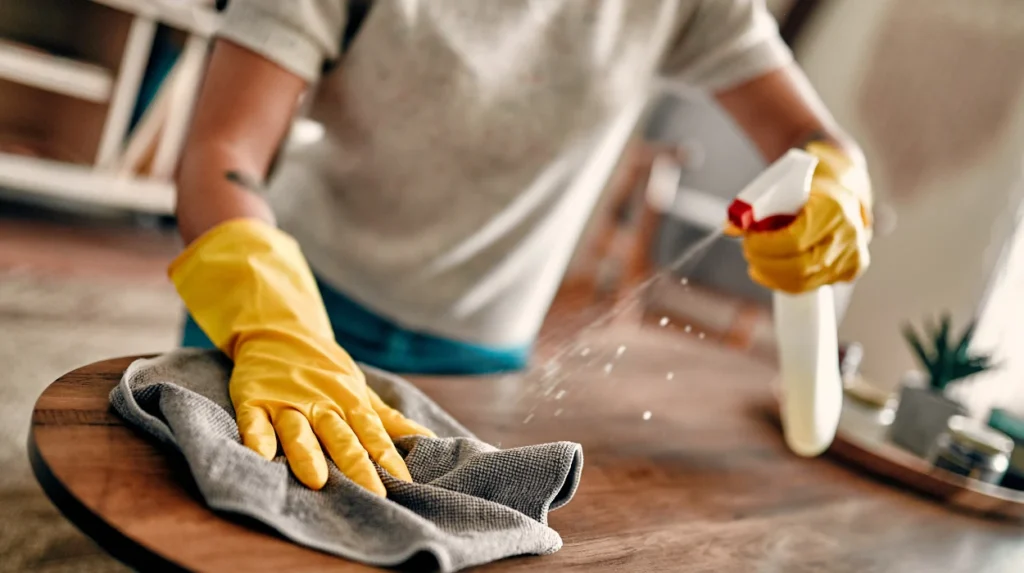
The cleaning process should not be treated as the final infection-control measure. Businesses should maintain routine cleaning schedules, encourage appropriate hand hygiene and keep frequently touched areas under regular observation.
Management can also review whether particular areas require more frequent cleaning based on actual use. A busy reception desk may need different attention from a lightly used meeting room, while a shared kitchen may require more frequent intervention than a private office.
Staff should know which cleaning responsibilities apply to them and which tasks are handled by the cleaning provider. Clear responsibility reduces gaps between scheduled professional cleaning and everyday workplace hygiene.
After an enhanced cleaning response, the business should also retain relevant records where appropriate. Documentation can help demonstrate what was cleaned, when it was cleaned and which procedures were followed, particularly where workplace hygiene forms part of a wider health and safety management system.
Is Professional Post-Outbreak Disinfection Worth the Investment?
For businesses dealing with an outbreak-related hygiene concern, professional cleaning can provide a more structured alternative to an improvised response. The value comes from applying an organised process rather than simply using more disinfectant.
A suitable provider should assess the environment, identify priority surfaces, select compatible products, follow contact times and manage cleaning equipment correctly. These factors are more important than simply describing a service as “deep” or “antiviral.”
For businesses comparing providers, practical information about commercial cleaning standards and workplace hygiene can help establish what questions should be asked before arranging enhanced cleaning.
A decision should ultimately be based on the property’s requirements, the provider’s procedures, chemical safety controls and the ability to work around business operations. This creates a clearer basis for choosing a service that is appropriate for the actual situation
Post-Outbreak Deep Disinfection for Oldham Businesses works best when it is treated as a controlled cleaning process rather than a quick chemical treatment. Effective work combines physical cleaning, targeted disinfection, correct contact times, suitable cleaning-equipment, surface compatibility and safe chemical handling.
For businesses that need enhanced hygiene measures, Bee Cleaning Services Manchester provides professional cleaning solutions designed around commercial environments and practical operational requirements. Maintaining an appropriate routine cleaning programme afterwards remains essential because no one-off treatment can prevent every future source of contamination.
FAQs About Post-Outbreak Deep Disinfection
What is post-outbreak deep disinfection?
Post-outbreak deep disinfection is an enhanced cleaning approach used after an infectious illness concern or outbreak. It combines thorough cleaning with targeted disinfection of relevant surfaces, particularly frequently touched areas and shared facilities. The process should be based on the premises, surfaces, risk level and appropriate cleaning procedures rather than simply applying disinfectant throughout the building. NHS England distinguishes cleaning, disinfection and sterilisation as separate processes.
Does deep disinfection kill all viruses and bacteria?
No. No professional cleaning process should claim to make an occupied workplace permanently free from every virus or bacterium. Disinfection is intended to reduce harmful microorganisms on treated surfaces when the correct product, application method and contact time are used. The result also depends on whether surfaces have been properly cleaned before disinfection and whether the disinfectant is suitable for the particular microorganism and surface.
Which areas should be prioritised after an outbreak?
Frequently touched surfaces should generally receive particular attention because repeated contact can contribute to microorganism transfer. Examples include door handles, light switches, taps, reception counters, shared equipment, touchscreens, desks and other commonly handled surfaces. The exact priorities should be determined according to the type of premises, activities and identified risks. NHS England specifically highlights frequent touch points within enhanced cleaning plans.
Why is cleaning necessary before disinfection?
Cleaning physically removes dirt, debris and organic material from surfaces, while disinfection reduces harmful microorganisms. Some disinfectants can be less effective when organic material is present, which is why cleaning may be an important prerequisite for effective disinfection. A suitable cleaning process should therefore consider whether a surface requires cleaning first or whether an appropriate combined cleaning and disinfecting product can be used.