

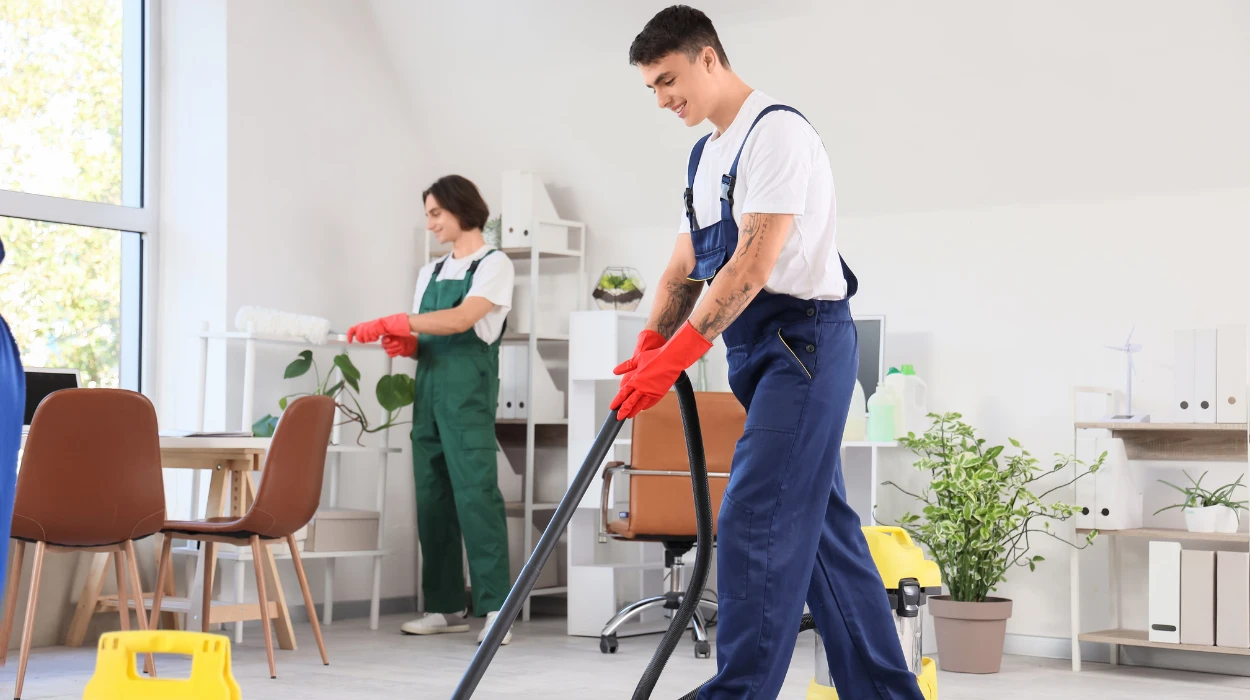
Commercial cleaning means professional cleaning for business premises, including offices, shops, warehouses, hospitality venues and other workplaces. For Oldham companies, it combines routine cleaning, hygiene control, specialist cleaning tasks and scheduled maintenance around business operations.
What does commercial cleaning mean for an Oldham business?
Commercial cleaning means maintaining a workplace through planned professional cleaning rather than occasional domestic-style cleaning. It can include offices, retail units, warehouses, hospitality premises, schools and other commercial environments. The exact scope depends on the building, footfall, working hours and hygiene requirements.
For an Oldham company, the service can involve routine dusting, vacuuming, mopping, washroom cleaning, waste handling, surface sanitisation and floor maintenance. More demanding premises may also require carpet cleaning, window cleaning, machine scrubbing, high-level dusting or specialist hygiene work. A professional plan should match the actual risks and usage of the premises.
The main difference from domestic cleaning is the operational scale and consistency required. A workplace may have dozens or hundreds of people using shared surfaces every day, creating different cleaning demands from a private home. Commercial providers therefore normally work to defined schedules, task specifications and agreed service standards.
Local commercial cleaning listings in Oldham show that businesses commonly seek daily office cleaning, deep cleaning, warehouse cleaning, kitchen sanitation, floor care and post-refurbishment cleaning. Pricing can also depend on building size, cleaning frequency, staffing requirements, equipment and whether specialist work is required.
What areas are normally included in commercial cleaning?
A commercial cleaning programme normally covers the areas that affect hygiene, appearance, safety and day-to-day workplace use. Reception areas, offices, meeting rooms, corridors, kitchens, toilets and communal spaces are common parts of a scheduled cleaning specification. The precise checklist should be agreed before work begins.
Office cleaning may include desk and surface cleaning, floor vacuuming, mopping, waste removal, meeting-room cleaning and sanitisation of frequently touched items. Commercial premises may additionally require reception cleaning, door and handle disinfection, furniture care and floor maintenance. These tasks are also reflected in commercial cleaning service specifications currently used by providers.
The cleaning programme should distinguish between daily, weekly and periodic tasks. For example, bins and washrooms may require frequent attention, while internal glass, skirting boards, detailed floor treatment and deeper dusting may be scheduled less often. This approach prevents the cleaning team from spending every visit on tasks that do not need daily treatment.
A clear specification is particularly useful for businesses with multiple rooms or departments. It establishes which areas are cleaned, how frequently they are serviced and what standard is expected. This makes the service easier to monitor and allows changes to be made when staffing, occupancy or business activity changes.
How is commercial cleaning different from domestic cleaning?
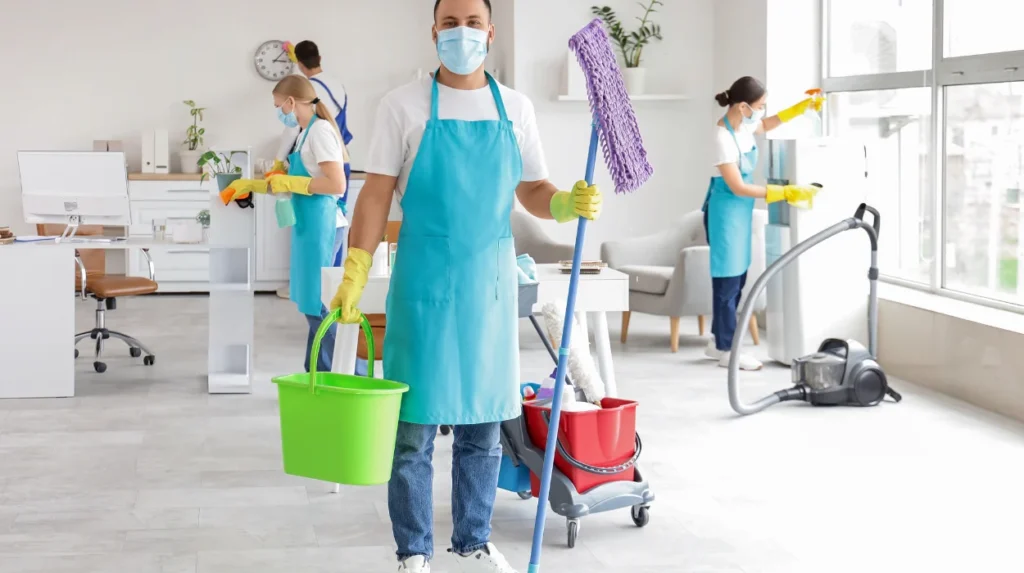
Commercial cleaning is designed around business operations, larger premises and higher or more variable footfall. Domestic cleaning generally focuses on maintaining a private living environment, while commercial cleaning can involve offices, retail areas, warehouses, hospitality spaces and other workplaces. The methods and equipment may therefore be more specialised.
Commercial cleaning also has to work around opening hours, staff movements, customer traffic and operational requirements. A business may need cleaners before opening, after closing or at weekends so that cleaning does not interfere with employees or customers. This makes scheduling an important part of the service rather than an afterthought.
The equipment can also differ according to the environment. Commercial teams may use industrial vacuum cleaners, floor machines, extraction equipment, specialist mops and other professional cleaning-equipment selected for particular surfaces. Correct equipment helps improve efficiency while reducing the possibility of damage caused by unsuitable cleaning methods.
For businesses considering professional support, commercial cleaning solutions for workplace hygiene can be structured around the premises rather than a generic domestic checklist. This allows the scope to reflect the building’s actual cleaning requirements.
Why does cleaning frequency matter for Oldham companies?
Cleaning frequency should be based on how the premises are used rather than applying the same schedule to every business. An office with a small workforce may need a different routine from a busy retail unit, restaurant or shared commercial building. Footfall, occupancy, surface use and the type of business all influence the appropriate frequency.
High-contact areas generally need more frequent attention because they are repeatedly touched throughout the working day. Door handles, switches, shared desks, kitchen surfaces, washrooms and reception areas can accumulate dirt and contamination more quickly than low-use spaces. A structured cleaning schedule helps these areas remain consistently maintained.
Daily cleaning may be appropriate for busy workplaces, while some lower-traffic premises may require several visits each week. Warehouses and industrial environments can require additional dust-control or floor-cleaning measures depending on operations. Professional providers can use a site assessment to identify the most practical schedule.
The goal is not simply to clean as often as possible. Over-cleaning can waste resources, while insufficient cleaning can allow dirt, dust and hygiene problems to accumulate. A balanced schedule assigns frequent attention to high-use areas and periodic attention to surfaces that need deeper maintenance.
What cleaning-equipment is used for commercial premises?
The right cleaning-equipment depends on the surface, building type and cleaning objective. Commercial teams may use vacuum systems, floor scrubbers, polishers, extraction machines, microfiber systems, specialist brushes and other professional tools. Equipment selection should support efficient cleaning without damaging flooring, furniture or fixtures.
Hard floors may require mechanical scrubbing or polishing where appropriate, while carpets can require commercial vacuuming and periodic extraction. Kitchens may need degreasing tools and suitable cleaning products, whereas offices often require equipment designed for desks, partitions, screens and other sensitive surfaces.
Equipment alone does not determine cleaning quality. Staff need to understand how to use machines, select appropriate products and follow safe working procedures. Professional commercial cleaning also involves managing chemicals correctly, especially where stronger cleaning agents are used.
Businesses should therefore ask potential providers whether equipment is included within the service and whether specialist machinery attracts an additional charge. A detailed quotation should make these points clear before the cleaning programme starts.
How should an Oldham company assess a commercial cleaning provider?
The first consideration should be whether the provider understands the type of premises being cleaned. An office, warehouse, restaurant and healthcare environment do not necessarily have the same cleaning requirements. Experience with a similar property type can therefore be more useful than a generic claim of being experienced.
Businesses should also review insurance, staff training, cleaning procedures, equipment, communication arrangements and quality-control processes. Where chemicals are involved, businesses should expect appropriate attention to COSHH requirements and safe handling procedures. Professional certification and staff training can provide additional evidence of structured operations.
A useful provider should also be able to explain what happens when a cleaning task is missed or a requirement changes. Clear escalation procedures, inspection routines and communication channels make ongoing contracts easier to manage. These operational details are often more important than choosing a provider based solely on the lowest quoted price.
For companies comparing providers, it is also useful to distinguish between the advertised service and the actual written specification. The quote should identify areas covered, cleaning frequency, included tasks, equipment, consumables and any exclusions. This creates a more reliable basis for comparing different commercial cleaning proposals.
What should be included in a commercial cleaning specification?
A commercial cleaning specification should clearly describe what will be cleaned, how often it will be cleaned and what standard the business expects. It should avoid vague wording such as “general cleaning” when the company needs a measurable service. Clear specifications reduce disagreements because both parties understand the agreed scope.
The document should identify areas such as offices, reception, kitchens, toilets, corridors, meeting rooms and communal spaces. It can then separate routine tasks from periodic work such as deep floor cleaning, internal window cleaning or carpet extraction. This distinction helps businesses understand what is included in the regular service.
The specification should also address practical arrangements. These may include cleaning times, access arrangements, alarm procedures, keyholding, waste disposal and contact details for reporting problems. If the business operates outside standard hours, the cleaning schedule should reflect those operating requirements.
A strong specification can be reviewed periodically because business needs change. New employees, office expansion, refurbishment, changes in customer traffic or new working patterns may all affect cleaning requirements. Regular reviews keep the service aligned with the workplace instead of leaving an outdated schedule in place.
How can companies compare commercial cleaning quotes?
Comparing quotes requires more than choosing the lowest figure. A low price may reflect fewer cleaning hours, a smaller task list, excluded equipment or additional charges for periodic work. Businesses should therefore compare the scope, frequency, staffing, equipment and contract terms alongside the headline price.
An itemised quote makes this process easier. It should show which tasks are included, how often cleaners attend, whether cleaning products and machinery are supplied, and which specialist services cost extra. These factors can materially change the overall value of two apparently similar quotations.
Companies can also request clarification about contract length, cancellation terms, service reviews and arrangements for additional cleaning. If a business expects occasional events, refurbishment work or seasonal increases in footfall, these requirements should be discussed before the contract is finalised.
For a more detailed evaluation, businesses can read guidance on comparing commercial cleaning quotes before requesting proposals. The important principle is simple: compare like with like and make sure the written scope matches the actual needs of the premises.
What are the main benefits of professional commercial cleaning?
Professional cleaning helps businesses maintain a more consistent standard across the workplace. Routine attention to floors, surfaces, washrooms, kitchens and shared areas can support a cleaner and more organised working environment. It also reduces the responsibility placed on employees to manage cleaning alongside their normal duties.
A structured service can improve consistency because tasks are assigned to a defined schedule rather than being completed only when problems become visible. This is particularly useful for busy commercial premises where dirt can accumulate quickly in high-traffic areas.
Professional cleaning can also support workplace presentation. Reception areas, meeting rooms and customer-facing spaces contribute to how visitors perceive a business. Clean surroundings do not replace good service, but they form part of the overall professional environment.
For Oldham businesses, the most useful approach is to treat cleaning as an operational requirement. A suitable programme considers the building, footfall, surfaces, hygiene priorities, working hours and budget before deciding how frequently each task should be completed.
What should Oldham businesses ask before agreeing a cleaning contract?
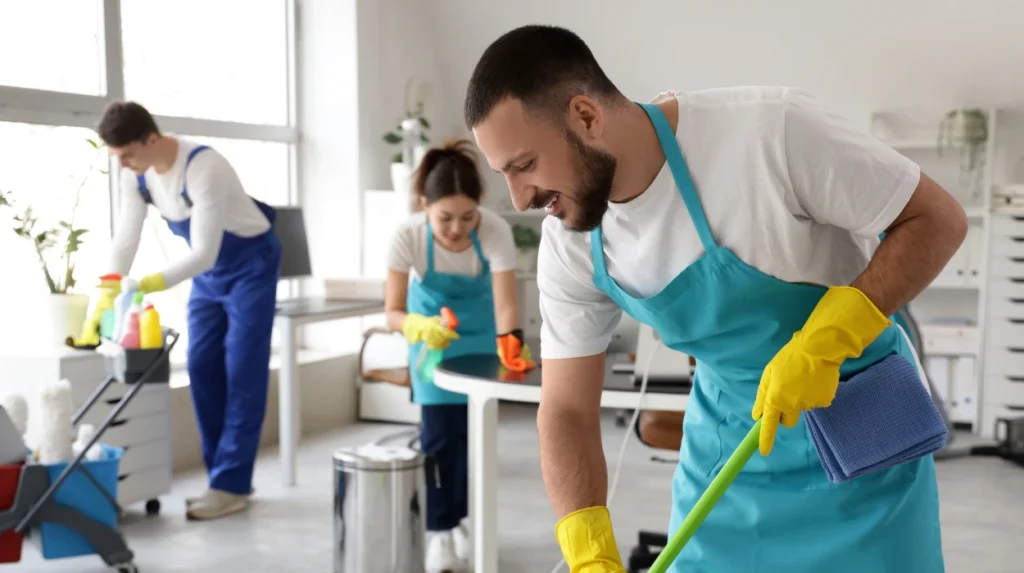
Before signing an agreement, businesses should ask what is included, who supplies the cleaning-equipment, how frequently cleaners attend and whether periodic tasks are included. They should also establish who manages the cleaning team and how quality concerns are reported and resolved.
It is sensible to confirm insurance, staff training and chemical-safety procedures where relevant. Businesses with sensitive environments should also ask whether staff vetting or additional sector-specific training is available. These questions help establish whether a provider has the operational controls needed for the workplace.
The contract should also explain pricing and additional charges. Businesses should understand whether specialist equipment, consumables, deep cleans, emergency visits or weekend work are included or charged separately. Transparent terms make budgeting easier and reduce unexpected costs.
Finally, companies should consider whether the provider can scale the service when circumstances change. A growing office, temporary project, new premises or increased footfall may require additional cleaning capacity. Flexibility can therefore be an important consideration when selecting a long-term commercial cleaning partner.
What does commercial cleaning mean in practical terms?
In practical terms, commercial cleaning is a planned workplace maintenance system that combines routine cleaning, hygiene tasks, professional equipment, trained staff and an agreed schedule. It is designed around the needs of the business rather than a generic domestic cleaning routine.
For Oldham companies, the right service can cover everything from everyday office maintenance to specialist floor, carpet, washroom and communal-area cleaning. The most effective approach begins with understanding the premises and then creating a written cleaning specification that matches its use.
Bee Cleaning Services Manchester provides professional cleaning solutions for commercial environments, with cleaning plans that can be structured around workplace requirements, cleaning frequency and operational schedules. The important objective is consistent, clearly defined cleaning that supports the condition and usability of the premises.
Businesses considering their next step can also explore professional hotel and hospitality cleaning requirements in Oldham when comparing different commercial cleaning schedules and service expectations.
Commercial cleaning is more than making a workplace look tidy. It is a structured approach to maintaining hygiene, presentation, surfaces and shared areas through planned professional work. For Oldham companies, the most suitable programme depends on premises type, footfall, operating hours and cleaning priorities.
Bee Cleaning Services Manchester approaches commercial cleaning as a practical workplace requirement, helping businesses maintain consistent cleaning standards through professional methods, appropriate equipment and structured service planning. A clearly defined specification remains the foundation for a useful and measurable cleaning arrangement.
Frequently Asked Questions
What is the difference between commercial and office cleaning?
Commercial cleaning is the broader category covering many business premises.
Office cleaning is one specific type of commercial cleaning for workplaces.
Commercial services can also cover shops, warehouses and hospitality properties.
The cleaning frequency depends on occupancy, footfall and workplace activities.
Both should use a clearly defined cleaning specification and schedule.Do commercial cleaners bring their own cleaning-equipment?
Most professional commercial cleaning providers supply the equipment required for agreed tasks.
This can include vacuums, floor machines, microfiber systems and specialist equipment.
The exact equipment depends on the building and cleaning specification.
Businesses should confirm whether machinery and consumables are included in the quote.
Specialist equipment may sometimes be priced separately from routine cleaning.How often should an Oldham office be professionally cleaned?
Many offices require daily or several-times-weekly cleaning depending on occupancy and usage.
Washrooms, kitchens and high-touch areas may require more frequent attention.
Lower-traffic areas can often be managed through less frequent periodic tasks.
The correct schedule depends on staff numbers, footfall and workplace activities.
A site assessment can help establish a practical cleaning frequency.What should I check before hiring a commercial cleaner?
Check the service scope, cleaning frequency, insurance and staff training arrangements.
Confirm which cleaning products, equipment and consumables are included.
Ask how quality problems, missed tasks and service changes will be handled.
Review contract terms, cancellation conditions and additional service charges.
A detailed written quote makes different providers easier to compare.Is professional commercial cleaning worth it for a small business?
It can be useful when employees do not have time or suitable equipment for cleaning.
A planned service keeps routine workplace cleaning separate from staff responsibilities.
Small businesses can select schedules based on their actual occupancy and budget.
The key is matching the cleaning scope to the premises rather than overbuying services.
A clear specification helps ensure the business receives appropriate value.