


It normally covers the oven interior, racks, trays, glass door, accessible surfaces, and heavy grease removal using suitable professional cleaning methods. A professional service also uses appropriate cleaning-equipment and procedures designed to remove baked-on residue without unnecessarily damaging oven components.
What Is Included in Professional Oven Cleaning?
Professional oven cleaning is more than wiping the visible parts of an appliance. A trained cleaner normally assesses the oven first and then selects suitable products, tools, and cleaning methods according to its condition. Heavy grease, carbon deposits, food residue, and burnt-on spills can require different levels of treatment. The exact scope can vary depending on the oven type, condition, and agreed service specification. Understanding what is included helps customers compare cleaning services more accurately.
A professional cleaning process may include the oven cavity, removable shelves, baking trays, door glass, seals, and accessible external surfaces. Some services may also cover the hob or extractor as an additional item. Customers should confirm the exact scope before booking because not every provider includes the same components. A clearly defined cleaning specification helps prevent misunderstandings about what will be cleaned.
Which Parts of an Oven Are Normally Cleaned?
Oven Interior and Cavity
The oven cavity is usually the main focus because it collects grease, food particles, smoke residue, and carbonised spills during normal cooking. Professional cleaners work carefully around heating elements, fans, lights, and other components that should not be treated incorrectly. Suitable cleaning products are applied to break down stubborn deposits before they are removed with appropriate tools.
The cleaning process should balance effective degreasing with protection of the appliance. Excessive moisture, aggressive chemicals, or unsuitable abrasive tools can potentially damage surfaces or components. Professional cleaning therefore involves identifying which areas can safely be treated and which parts require more careful handling. This is one reason professional cleaning can be different from a quick household wipe-down.
Oven Racks and Shelves
Oven racks and shelves often develop a layer of grease and baked-on food after repeated cooking. Depending on the service method, these removable parts may be treated separately so that accumulated residue can be loosened more effectively. Thorough cleaning improves their appearance and removes residue that can otherwise continue producing smoke or unpleasant odours during cooking.
The cleaning method depends on the material, finish, and condition of the racks. A professional cleaner can select an appropriate solution and cleaning tool rather than using excessive force. Once cleaned, the shelves should be rinsed or wiped appropriately and dried before being returned to the oven. This helps keep the appliance ready for normal use after the service.
Oven Door and Glass
The oven door is another important part of the cleaning process because grease and food vapours can accumulate around the glass. Internal glass can become cloudy or marked, while the outer surface can collect fingerprints, grease, and general kitchen residue. Professional cleaning focuses on removing these deposits without scratching or damaging the glass.
Some oven doors have removable or partially accessible glass panels, while others have more restricted access. A professional cleaner should work according to the appliance design rather than forcing components apart. If a particular part requires manufacturer-specific handling, the service scope should be clarified before work begins.
How Is Baked-On Grease Removed?
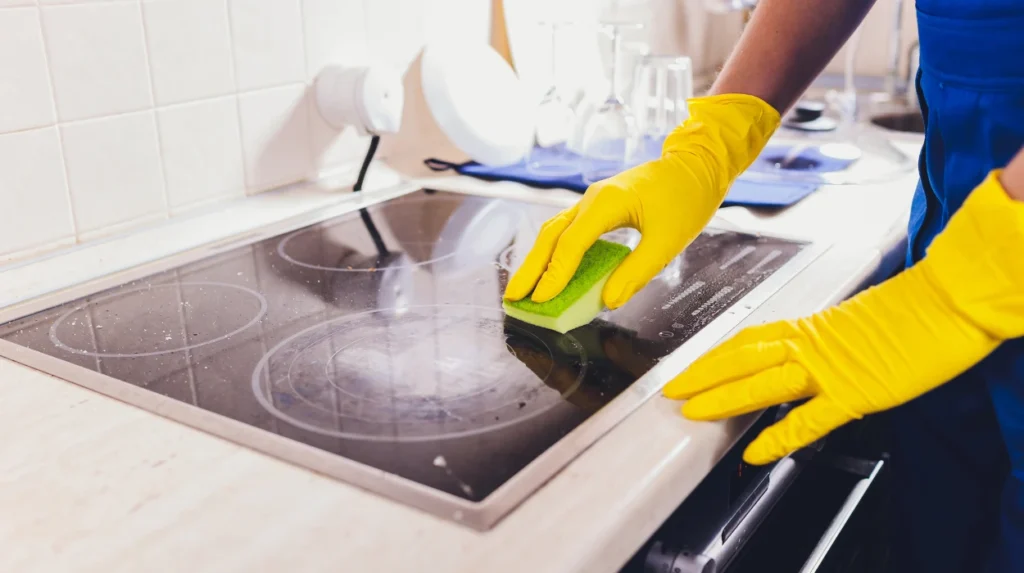
Baked-on grease is one of the main reasons people choose professional oven cleaning. Repeated heating can transform ordinary food and oil residue into hard deposits that are difficult to remove with everyday household products. Professional cleaners generally use a combination of suitable degreasers, dwell time, scraping tools, brushes, and controlled cleaning techniques.
The cleaning solution needs enough time to loosen deposits before mechanical cleaning begins. Scraping too aggressively can damage certain surfaces, so the tool and pressure need to be selected carefully. A methodical approach usually produces a better result than simply applying a strong chemical and scrubbing immediately. The goal is to loosen contamination efficiently while preserving the appliance’s surfaces.
What Cleaning-Equipment Do Professional Oven Cleaners Use?
Professional cleaning-equipment can include specialist brushes, non-abrasive pads, scrapers, microfibre cloths, protective materials, suitable degreasers, and equipment designed for different parts of the appliance. The exact tools depend on the oven’s construction and the level of contamination. Professional cleaners generally select equipment according to the surface rather than using one tool for everything.
Equipment selection is particularly important around glass, enamelled surfaces, seals, heating elements, and control areas. Using unsuitable abrasive materials can create scratches or damage finishes. A structured cleaning process therefore combines appropriate equipment with controlled chemical use. This approach is consistent with professional cleaning practices where different surfaces require different tools and treatment methods.
Does Professional Oven Cleaning Include the Hob?
It depends on the service specification. Some oven cleaning packages focus exclusively on the oven, while others allow customers to add a hob, extractor, microwave, or other kitchen appliances. Customers should check whether the hob is included before the appointment rather than assuming it forms part of the standard oven service.
When a hob is included, the cleaner normally considers the type of surface and cooking equipment before selecting products. Glass, ceramic, stainless steel, and other finishes can have different cleaning requirements. A suitable cleaning method helps remove grease and cooking residue while reducing the risk of surface damage. Clear service descriptions make it easier to understand what is included in the quoted price.
Does Professional Oven Cleaning Remove Bad Odours?
Professional cleaning can help reduce unpleasant oven odours when those odours are caused by accumulated grease, food residue, or burnt-on deposits. When old residue is heated repeatedly, it can produce smoke or strong smells during cooking. Removing the underlying contamination can therefore improve the cleanliness of the appliance and reduce residue-related odours.
However, cleaning cannot guarantee that every possible smell will disappear. Persistent odours can sometimes originate from electrical components, insulation, spills that have reached inaccessible areas, or other appliance issues. A cleaner should not attempt to repair an electrical or mechanical problem as part of a standard cleaning service. If an unusual smell continues after cleaning, the appliance may require inspection by a suitably qualified professional.
Why Is a Professional Cleaning Process Different From DIY Cleaning?
DIY oven cleaning can be effective for light maintenance, particularly when spills are addressed quickly. However, heavily contaminated ovens can require considerable time and effort. Professional cleaners have experience identifying different types of residue and choosing suitable cleaning methods for the appliance.
Another difference is consistency. A professional process normally follows defined stages rather than concentrating only on the most visible marks. The cleaner can work through the cavity, removable parts, door, glass, and accessible surfaces systematically. This structured approach reduces the likelihood of important areas being overlooked.
For customers considering local options, professional oven cleaning solutions in Oldham can provide a useful starting point when comparing service scope, cleaning methods, and pricing information.
How Does the Oven Cleaning Process Usually Work?
Initial Inspection
The first stage is usually an inspection of the appliance. The cleaner identifies the oven type, its condition, the level of grease accumulation, and any areas that require special attention. This assessment can also identify components that should not be exposed to excessive moisture or particular cleaning products.
Preparation
The surrounding kitchen area may be protected before cleaning begins. Removable racks and trays can be taken out, while the cleaner prepares the appropriate products and tools. Good preparation helps prevent unnecessary mess and allows the cleaning process to proceed in an organised way.
Degreasing and Cleaning
Suitable cleaning products are applied to areas affected by grease and baked-on residue. The product may need time to work before the deposits are removed using suitable brushes, pads, or scrapers. Different surfaces may require different approaches, particularly when dealing with glass or coated oven interiors.
Detailed Finishing
After the main contamination has been removed, the cleaner focuses on remaining residue, corners, edges, shelves, and accessible surfaces. The door glass is cleaned carefully, and removable components are checked before being returned. The final stage is intended to leave the appliance visibly cleaner and free from avoidable cleaning residue.
How Does Oven Type Affect the Cleaning Service?
Not every oven has the same design, so the cleaning process can vary. Single ovens, double ovens, range cookers, fan-assisted ovens, and combination appliances can have different internal layouts. Some models provide easier access to removable components, while others have more restricted areas.
The amount of cleaning required can also depend on how frequently the appliance is used. A frequently used family oven may accumulate grease more quickly than an appliance used occasionally. Previous cleaning habits, cooking style, spills, and the age of the appliance can also influence the condition. This means professional cleaners should assess the actual appliance rather than assuming every oven requires identical treatment.
For a useful comparison of appliance types and cleaning requirements, readers can explore this guide to single oven and range cooker cleaning.
What Should You Check Before Booking an Oven Cleaner?
Before booking, customers should ask what parts of the appliance are included in the service. It is useful to clarify whether racks, trays, door glass, the hob, extractor, and other kitchen appliances are included or charged separately. This makes the quotation easier to understand and allows customers to compare different providers fairly.
It is also sensible to ask about the cleaning method and products used. A professional provider should be able to explain how the appliance will be treated and whether any areas have specific restrictions. Customers can also ask whether they need to remove items from around the oven before the cleaner arrives.
The condition of the oven should be communicated honestly during booking. Heavy carbonisation, excessive grease, or unusual appliance designs may affect the time required. Giving accurate information helps the cleaning team prepare the correct cleaning-equipment and estimate the work more effectively.
How Often Should an Oven Be Professionally Cleaned?
There is no universal schedule because oven usage varies between households. A frequently used oven may need more regular deep cleaning, while an appliance used occasionally may require professional attention less often. Regular wiping after spills can help prevent residue from becoming heavily baked onto the internal surfaces.
Professional cleaning can be particularly useful when routine maintenance no longer removes accumulated grease effectively. It may also be considered before moving out of a property, after prolonged heavy use, or when the oven has developed significant residue. The most appropriate frequency depends on usage, cooking habits, and the appliance’s condition.
Is Professional Oven Cleaning Worth It?
Professional oven cleaning can be worthwhile when heavy contamination makes routine cleaning difficult or time-consuming. The service combines specialist knowledge, suitable products, cleaning-equipment, and a structured process. This can reduce the amount of physical effort required from the customer while addressing areas that may be difficult to clean thoroughly.
The value also depends on the condition of the appliance and the service scope. Customers should compare what is included rather than selecting a provider based solely on the advertised price. A clear quotation, defined cleaning process, suitable equipment, and transparent inclusions make it easier to assess whether a professional service meets the household’s needs.
When Should You Consider Same-Day Oven Cleaning?
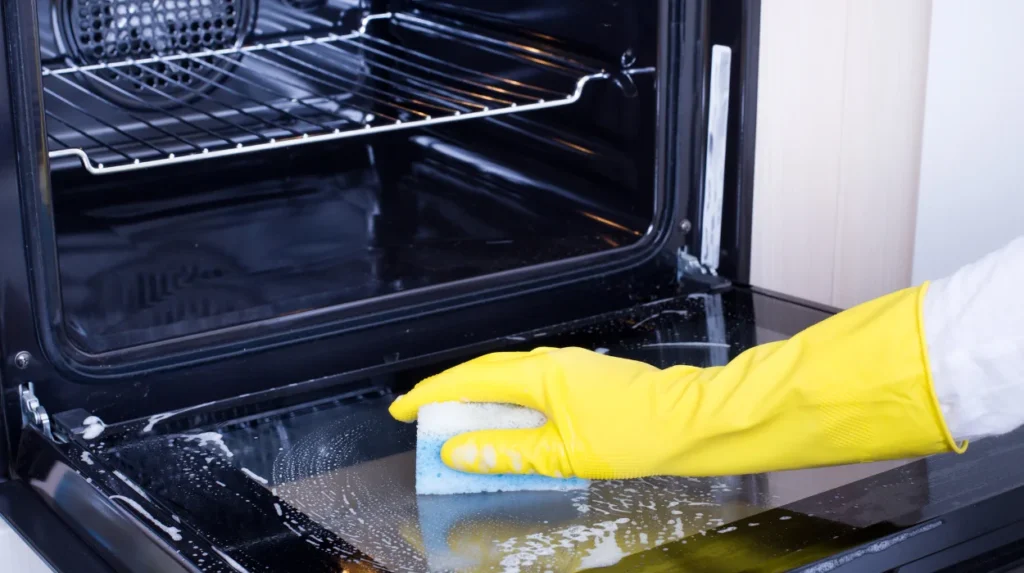
Same-day cleaning can be useful when an oven needs attention quickly because of a property handover, inspection, event, heavy cooking, or an urgent household requirement. Availability depends on the provider’s schedule, location, appliance type, and workload on the requested day.
Customers looking for a rapid option should confirm the appointment time, expected service duration, cleaning scope, and when the appliance can safely be used again. Rather than assuming every same-day appointment follows the same process, it is better to confirm these details before booking.
For readers comparing faster cleaning options, a commercial decision-focused page such as quick oven cleaning options in Oldham can be used as related reading while planning the service.
What Does a Professional Oven Cleaning Service Actually Include? A Practical Summary
What Does a Professional Oven Cleaning Service Actually Include? In most cases, it includes detailed cleaning of the oven cavity, racks, trays, door glass, and accessible surfaces, with the exact scope depending on the provider and appliance. Professional cleaning also involves selecting suitable cleaning products and cleaning-equipment for different surfaces.
The most important difference is the structured approach. Instead of treating every part of the appliance in exactly the same way, professional cleaning considers the oven’s design, contamination level, surface materials, and accessible components. This helps achieve a more consistent cleaning result while reducing the risk associated with unsuitable cleaning methods.
For households considering Oven Cleaning Services in Oldham, checking the cleaning scope before booking is an important step. Bee Cleaning Services Manchester provides professional cleaning solutions designed around practical appliance cleaning requirements, suitable methods, and clearly defined service expectations.
Professional oven cleaning involves more than removing visible dirt from the appliance. It combines inspection, preparation, suitable cleaning products, specialist cleaning-equipment, careful degreasing, and detailed finishing across the accessible parts of the oven.
For customers considering Oven Cleaning Services in Oldham, understanding the service scope makes it easier to compare cleaning options and choose an approach appropriate for the appliance. Bee Cleaning Services Manchester provides professional cleaning solutions with attention to practical cleaning requirements and the condition of the appliance.
Frequently Asked Questions
What does a professional oven cleaning service actually include?
A professional oven clean usually includes the interior cavity, racks, shelves, trays, and oven door glass.
The cleaner removes built-up grease, food residue, and carbon deposits from accessible areas.
Removable components may be cleaned separately for a more thorough result.
Some services also include the hob or extractor as an additional service.
The exact inclusions should always be confirmed before booking.How long does a professional oven cleaning take?
The cleaning time depends on the oven type, size, and amount of accumulated grease.
A standard oven may take around one to two hours, while heavily soiled or larger appliances can take longer.What cleaning equipment do professional oven cleaners use?
Professional cleaners can use specialist brushes, scrapers, pads, cloths, degreasers, and equipment suited to particular oven surfaces. Some services use heated dip tanks for removable racks and trays.
Can professional oven cleaning remove burnt-on grease?
Professional oven cleaning is designed to tackle difficult grease, carbon, and baked-on food deposits.
Specialist cleaning products can help loosen hardened residue before it is removed with suitable tools.
Very old or heavily carbonised deposits may require additional time and treatment.Can I use my oven immediately after professional cleaning?
The answer depends on the cleaning method and the provider’s instructions. Some professional systems are designed to leave an oven ready for use after the cleaning process is completed.