

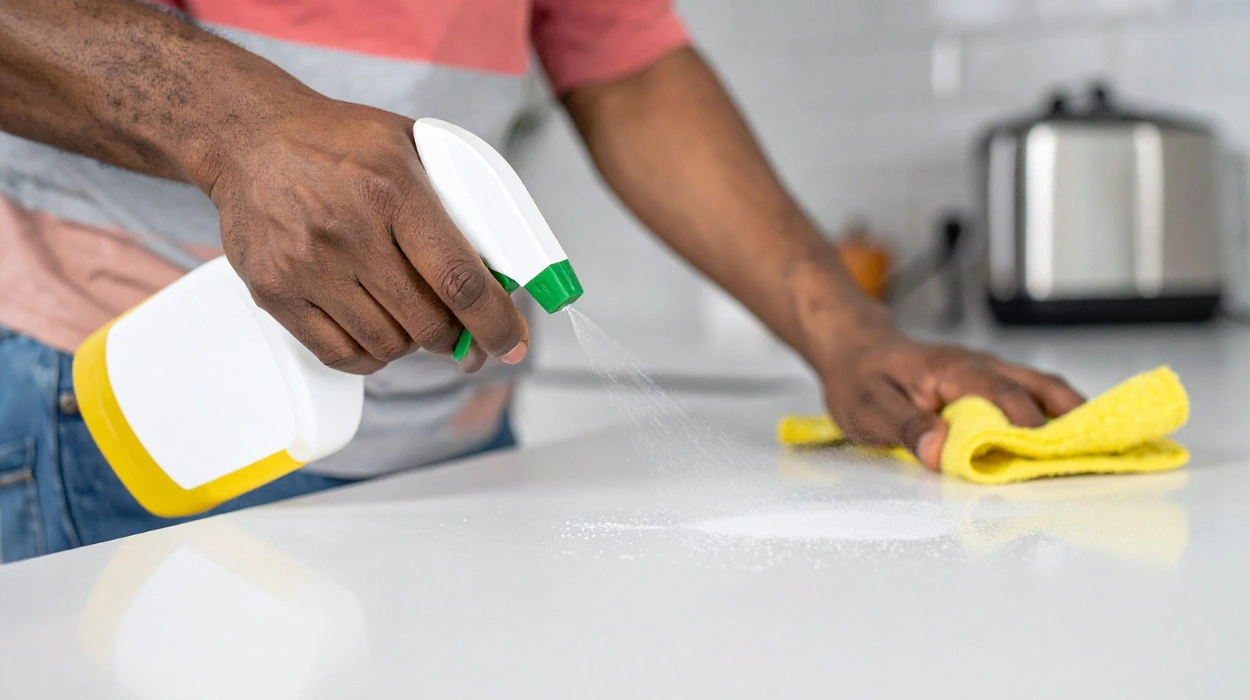
Keeping your kitchen neat is more than just for looks. It really matters for food safety how clean things are and how long your counters and stuff last. The comprehensive kitchen surface cleaning guide is in place to demonstrate how you can properly clean your kitchen in order to keep things safe and not leave your kitchen in a mess. Each surface, be it counter, cabinet, or sink, must be supplied with its special method of cleaning.
Spoiling and handling the wrong material may leave a trace or even destroy things in the long run. This manual will take you step-by-step through cleaning every part of your kitchen, allowing you to have a healthier and cleaner kitchen, and also maintain your kitchen in good condition.
Why Cleaning Your Kitchen Counters Matters
Day in and day out, your kitchen receives grease, food particles, water, and germs. Otherwise, unless you clean it up immediately, this stuff accumulates quickly, thereby promoting germs and rendering your kitchen stinky. Objects that are frequently touched by people, such as counters, cabinet handles, and sinks, get germy within no short time, hence not to be overlooked.
In addition to the fact that it is clean, bad cleaning can destroy your kitchen equipment. Powerful cleaners, coarse scrubbers, and excessive water may destroy finishes, cause stone to appear dull, and cabinets to be feeble. Being cautious about how to clean your kitchen will ensure that your stuff will look good and last longer.
Understanding Different Kitchen Surface Materials
Stone counters, plastic-y stuff, steel sinks, and tile are all different when you are cleaning. Something that is effective on one item may destroy another.When you are aware of what your kitchenware is composed of, then it is possible to clean it much better and avoid errors.
Occupying yourself with the knowledge of your surfaces is important to ensure that your kitchen stays clean and is long-lasting
Essential Supplies for Cleaning Kitchen Surfaces Safely
You must have the right stuff to clean your kitchen properly. Super-strong chemicals or rough scrubbers will do nothing but harm. Also, know what NOT to use. Powerful, acrid cleaners, substances with excessive bleach, and steel wool may destroy finishes. Provisions will also come to your rescue and keep your kitchen in good shape.
How to Clean Kitchen Countertops by Material
Kitchen counters are the most used; therefore, cleaning of counters is extremely important. Be careful when preparing foodstuffs that you do not spill them and that they do not get hot and destroy them.
Granting Granite and Marble Countertops.
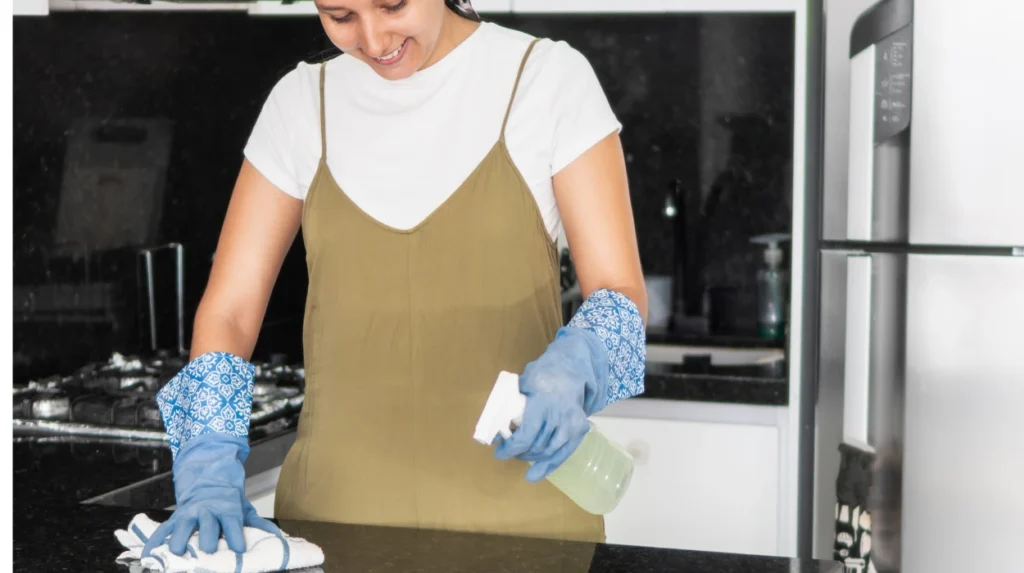
Stone counters should be washed tenderly. Do not get them too wet, as the stone will absorb the water and be stained. Nor should sour cleaners or scrub pads be used, as they may be scratched on the stone. Cleaning a small portion at the time and ensuring they are dry also keeps them clean and presentable.
Cleaning Quartz and Laminate Countertops
Other counters are simpler to clean though they require affection. Clean them daily to remove grease and crumbs before they become hard. Quickly clean up spills to avoid staining.Do not use super-hot stuff and harsh cleaners, as they can damage the top layers. When properly taken care of, these counters might remain sleek and clean and even presentable over several years.
How to Clean Kitchen Cabinets Inside and Out
Cabinets get greasy, dusty, and have fingerprints all over them without you even noticing. Cleaning the outside gets rid of sticky stuff from cooking and touching them every day. Wipe them down to keep them fresh.
Cleaning the inside kitchen is also important. Crumbs, spills, and dust can bring bugs and make things not clean. Cleaning them often helps keep things in order and makes your whole kitchen cleaner.
Cleaning Tile
Tile protects your walls from grease and water, but it can get gross fast. Tile needs to be cleaned carefully to get rid of goo without messing up the grout or finish . Wipe them a little at a time to stop grease from building up and leaving marks. This keeps your backsplash shiny, clean, and looking good with the rest of the kitchen.
Cleaning Sinks
Kitchen sinks receive the highest amount of germs. Wash them all day to eliminate food and prevent bad odors. In the case of steel sinks, scrub them a little and dry them thoroughly lest they get water spots. Don’t forget the faucets. They can get a build-up and fingerprints fast. Cleaning them often keeps them shiny and helps keep your whole kitchen clean.
Cleaning Stoves
Stoves are dirty, and they have burnt stuff on them. When they are cleaned, stuff will not accumulate and be harder to clean in the future. Wait for them to cool and then clean them, so as not to injure them. The exterior of your fridge, microwave, and dishwasher should be cleaned, too. These are often touched, and they gather germs.
But do not overdo your disinfection, and overdoing it will cause harm to your surfaces. Use cleaners that are effective in destroying germs and, at the same time, safe on food. Good disinfectants would not be a limitation in keeping things clean
How Often Should You Clean Different Kitchen Surfaces?
Wash the items that you touch in your day-to-day activities (counters, sinks, stoves). Wipe cabinets, appliances/backsplashes every week or so, and do a good kitchen cleaning every now and then to keep the kitchen clean and attractive. Alter the cleaning frequency with the amount you cook, the number of people in your family, and how frequently you use your kitchen. This will ensure it is clean without much effort.
Common Kitchen Surface Cleaning Mistakes to Avoid
One of the errors is to apply hard chemicals that claim to do the job quickly but damage your kitchen in the end. Scrubbing excessively, combining cleaners, and failing to read the instructions may put things in a permanent fix. The other error is not drying things. Leaving water on items causes streaks and spots and may disintegrate the material. Unless you make these mistakes, you will have a clean and longer-lasting kitchen.
How to Maintain Kitchen Surfaces After Cleaning
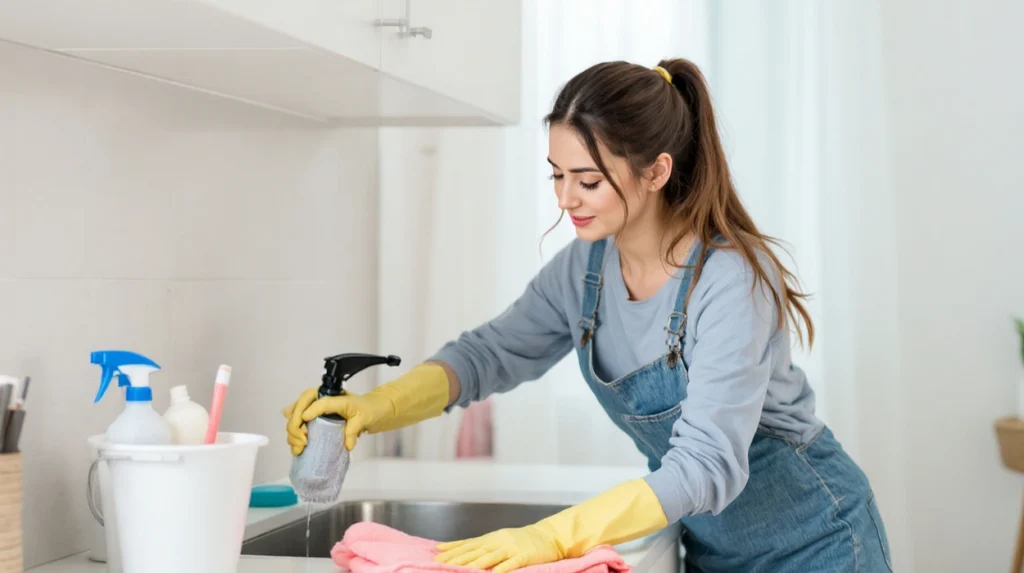
It is essential to maintain your kitchen as well as keep it clean. Swiping spills quickly and placing mats is a way of ensuring that things are not worn out. Washing a bit at once will prevent the accumulation of grease. By cleaning your kitchen, you can make it last longer, and you will not need to do as much intensive cleaning. This assists in keeping it neat and in good appearance.
Eco-Friendly and Food-Safe Kitchen Surface Cleaning Tips
The use of natural cleaners reduces the use of chemicals. They are ideal in households that have children or pets. By cleaning with food-safe cleaning, you leave your cooking areas clean with no remaining bad stuff. The clean and healthy kitchen is made through natural cleaners and good cleaning habits.
There are occasions when cleaning is not adequate. When you have grease, there is too much of it, or you are just in a hurry, consider hiring a cleaning service. They even know how to wash deep without destroying your kitchen. It is awesome to have a professional clean it before partying, after you have done a fix-up on your house cleaning. It is sure to make your kitchen gorgeous and also save time.
A clean kitchen means better health, safer food, and things that last longer. If you clean each part of your kitchen the right way, you can keep it looking great and working well every day.If you want professional-level results without the hassle, Bee Cleaning Service Manchester offers expert kitchen surface cleaning tailored to your needs, helping you enjoy a spotless and hygienic kitchen with confidence.