


No, a landlord cannot legally force you to hire professional cleaners. However, you must return the property to the same standard of cleanliness as when you moved in.
End-of-Lease Cleaning Services in Farnworth are often discussed when tenants prepare to move out, especially when deposit returns are involved. Many tenants assume landlords can demand professional cleaning, but UK law tells a different story. The Tenant Fees Act 2019 clearly prevents landlords from requiring tenants to pay for professional cleaning services.
What matters instead is the condition of the property at check-out compared to check-in. If the home was clean at the start, it must be returned in a similar condition, allowing for fair wear and tear.
This means tenants can clean the property themselves if they achieve the same standard. The law focuses on results rather than the method used to achieve them.
Understanding this distinction helps avoid unnecessary costs and confusion during the moving process.
It also prevents disputes that commonly arise due to misunderstandings about cleaning obligations.
In practice, many disputes occur simply because expectations were not clearly aligned from the beginning.
That is why documentation such as inventory reports plays a critical role in determining cleaning standards.
What Landlords Can Legally Expect
Landlords are entitled to receive their property back in the same condition it was provided, excluding natural wear and tear. This expectation is reasonable and supported by tenancy laws across England.
If the property was professionally cleaned before the tenant moved in, the landlord can expect a similar level of cleanliness at the end. However, they still cannot force the tenant to hire a cleaning company.
Instead, they can request a “professional standard” of cleaning, which refers to the outcome rather than the service provider.
If the tenant fails to meet this standard, the landlord may arrange cleaning and deduct reasonable costs from the deposit. These deductions must be justified with evidence such as check-in and check-out reports. Unreasonable or inflated charges can be challenged through deposit protection schemes. This system ensures fairness for both tenants and landlords during the move-out process. Ultimately, the focus remains on condition, not compulsory services.
Why Cleaning Disputes Are So Common
Cleaning is one of the leading causes of deposit disputes in rental properties. Studies suggest that more than half of deposit disagreements relate to cleanliness issues. This is often due to unclear expectations or inconsistent cleaning standards between tenants and landlords. For example, a tenant may believe the property is clean enough, while a landlord may expect a deeper level of cleaning.
Without proper documentation, resolving these disagreements becomes difficult. Inventory reports, photos, and written agreements help bridge this gap and provide objective evidence.
Another factor is the difference between regular cleaning and deep cleaning required at the end of tenancy.
End-of-tenancy cleaning is more detailed and includes areas often overlooked during routine cleaning.
This difference alone can lead to disputes if tenants are not fully prepared.
The Difference Between DIY and Professional Cleaning Standards
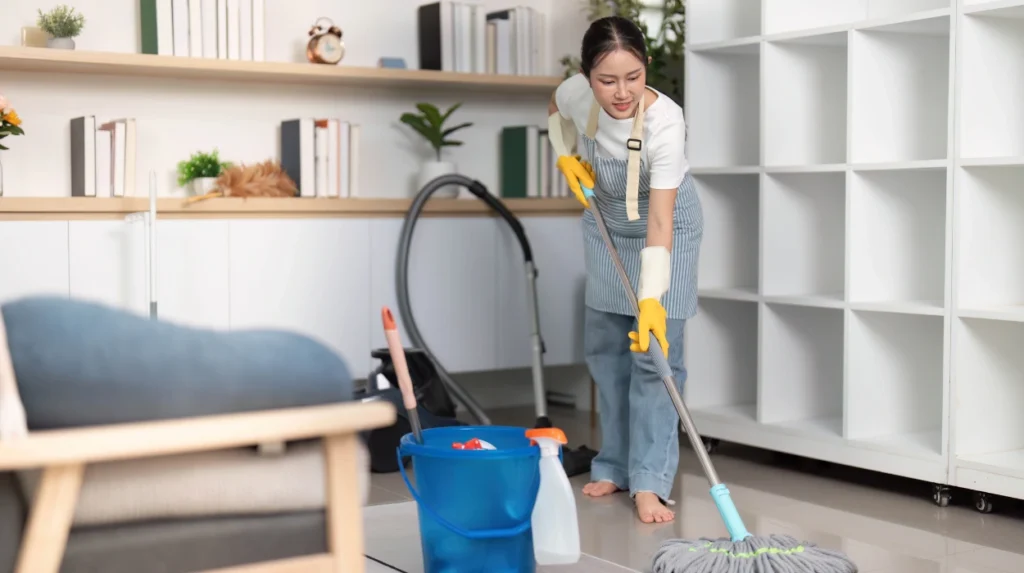
Many tenants choose to clean the property themselves, which is perfectly acceptable under the law.
However, achieving a professional-level result can be challenging without the right tools and experience.
Deep cleaning tasks such as oven degreasing, carpet treatment, and limescale removal require time and effort.
Professional cleaners follow structured checklists that cover every part of the property thoroughly.
This includes hidden areas like behind appliances, inside cupboards, and detailed bathroom sanitation.
While DIY cleaning may save money upfront, it can increase the risk of deposit deductions if standards are not met.
That is why many tenants explore options like expert move-out cleaning solutions to ensure compliance.
The key is not who does the cleaning, but whether the final result meets inspection standards.
When Professional Cleaning Becomes a Practical Choice
Although not legally required, professional cleaning often becomes the safer option in certain situations.For instance, tenants with limited time or large properties may struggle to complete a full deep clean. Similarly, furnished properties or homes with carpets may require specialised cleaning techniques.
In such cases, hiring professionals helps ensure that all areas meet expected standards.
It also provides documented proof of cleaning, which can be useful in deposit disputes. Landlords are more likely to accept results that clearly match professional benchmarks. This reduces the chances of disagreements and speeds up the deposit return process. Many tenants consider services like detailed end of tenancy cleaning guidance before deciding.
What End of Tenancy Cleaning Actually Includes
End-of-tenancy cleaning goes far beyond everyday housekeeping tasks. It involves a comprehensive, top-to-bottom clean designed to prepare the property for inspection or new tenants.
Kitchens are deep cleaned, including ovens, hobs, and internal cupboards. Bathrooms are sanitised with attention to limescale, tiles, and fixtures.Living areas and bedrooms are dusted, vacuumed, and cleaned in detail.
Windows, skirting boards, and even less visible areas are addressed during the process. The goal is to restore the property to its original condition as closely as possible. This level of cleaning is why services like End of Lease Cleaning Services in Farnworth are commonly recommended.
How to Avoid Deposit Deductions
Avoiding cleaning-related deductions starts with understanding the original condition of the property.
Tenants should review the inventory report carefully before moving out. Matching the same level of cleanliness is the most effective way to protect your deposit. Photographic evidence can support your case if disputes arise.
It is also important to focus on high-impact areas such as kitchens and bathrooms.
Leaving behind rubbish or neglecting small details can lead to unnecessary deductions. Planning ahead and allowing enough time for cleaning makes a significant difference. Some tenants choose reliable end of lease cleaning services in Farnworth to ensure everything is covered.
The Role of Professional Services in Meeting Standards
Professional cleaning companies bring consistency and expertise to the end-of-tenancy process.
They follow industry checklists that align with landlord and letting agent expectations.
This reduces uncertainty and ensures no area is overlooked during cleaning.
Companies like Bee Cleaning Services Manchester provide structured cleaning solutions tailored to rental properties.
Their approach focuses on meeting inspection criteria rather than just surface-level cleaning.
This is particularly useful for tenants who want to minimise risk and save time.
Professional services also help landlords prepare properties quickly for new tenants.
As a result, they play a practical role even though they are not legally mandatory.
A landlord cannot force you to hire professional cleaners, but they can require a high standard of cleanliness.
The safest approach is to ensure the property matches its original condition as closely as possible.
While DIY cleaning is allowed, professional services often provide reassurance and consistency.
Bee Cleaning Services Manchester supports tenants with structured, thorough cleaning aligned with landlord expectations. For many renters, this balance between legal rights and practical outcomes makes end-of-tenancy cleaning decisions clearer and more manageable.
Do I have to pay for professional cleaning at the end of tenancy?
No, you are not legally required to pay for professional cleaning. UK law states landlords cannot force this, but you must return the property in the same clean condition as when you moved in.
If your cleaning does not meet that standard, landlords can deduct reasonable cleaning costs from your deposit.What are the new rules for landlords in 2026?
The rules remain based on the Tenant Fees Act 2019, which still applies in 2026. Landlords cannot charge mandatory cleaning fees, but they can expect a professional level of cleanliness and claim deductions if standards are not met. All deductions must be supported with evidence like inventory reports and photos.
What is the one hour cleaning rule?
The one hour cleaning rule is a simple time-management method where you clean intensively for one hour, focusing on priority areas. It is not a legal or tenancy rule but helps tenants stay organised and complete tasks efficiently before inspections.
What surfaces in a clean room must be cleaned daily?
In a properly maintained space, high-touch surfaces like countertops, sinks, handles, and worktops should be cleaned daily. Dust-prone areas such as shelves and floors should also be maintained regularly to prevent buildup and ensure hygiene standards.
What is the correct order for the three sink cleaning method?
The correct order is wash, rinse, then sanitise. First, items are cleaned with detergent, then rinsed with clean water, and finally sanitised to remove bacteria and ensure hygiene compliance.