

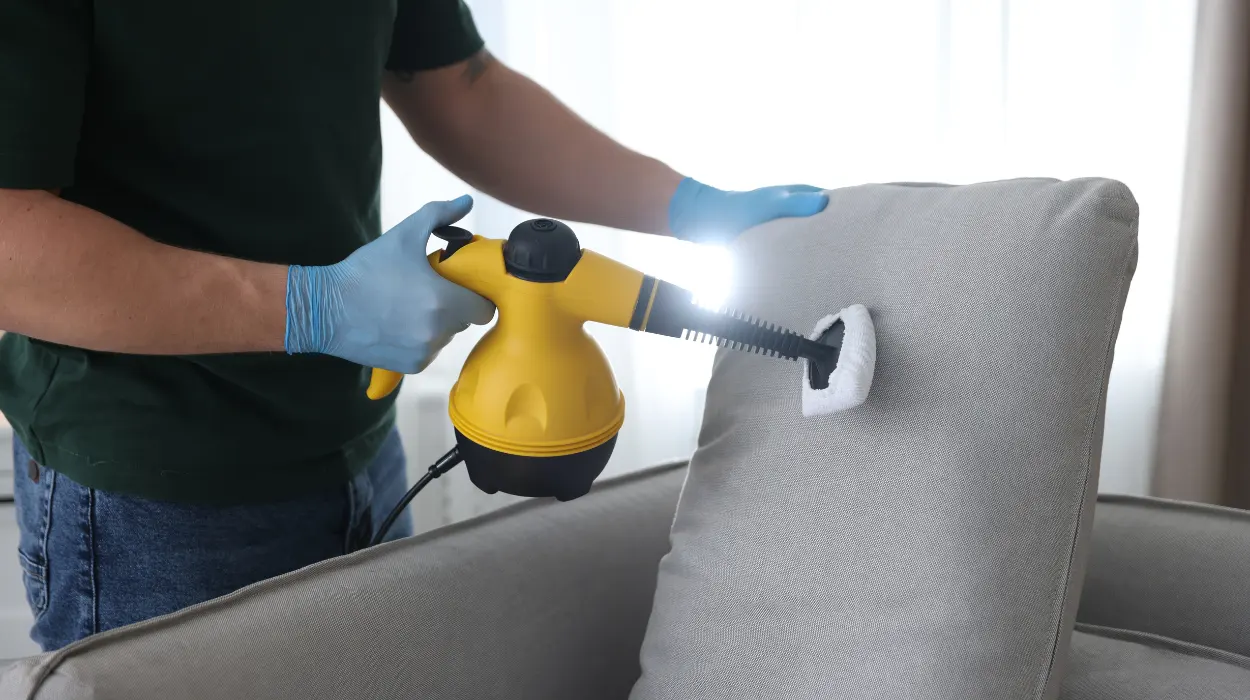
Professional upholstery cleaning services in Farnworth remove far more than visible stains. They draw out embedded allergens, body oils, food residue, and odour-causing bacteria that routine vacuuming simply cannot reach.
Why Upholstered Furniture Collects More Grime Than You Realise
Armchairs and dining chairs are among the most regularly used pieces of furniture in any home or commercial setting. Unlike hard surfaces that can be wiped clean in seconds, fabric upholstery absorbs whatever comes into contact with it. Skin cells, sweat, pet dander, food particles, and airborne dust all work their way into the fibres over time. Because this build-up happens gradually, it rarely triggers immediate concern. Most people only notice something is wrong when the fabric begins to look flat, discoloured, or carries a persistent musty smell. By that point, the soiling has often penetrated beyond the surface layer and into the foam or padding beneath. Understanding this reality is the first step toward making better decisions about upholstery maintenance in your home or business.
What Professional Upholstery Cleaning Actually Involves
Many people assume that professional cleaning is simply a more thorough version of what they could do at home with a cloth and a spray bottle. In practice, the process is considerably more structured and equipment-dependent than that. A trained technician will begin with a fabric identification check, because different materials respond differently to heat, moisture, and chemical agents. Velvet, microfibre, linen, chenille, and synthetic blends each require a specific approach. Applying the wrong solution to a delicate fabric can cause permanent shrinkage, colour bleeding, or pile damage. Once the fabric type is confirmed, the technician conducts a pre-inspection to identify staining patterns, high-wear zones, and any areas that may need pre-treatment before the main cleaning begins.
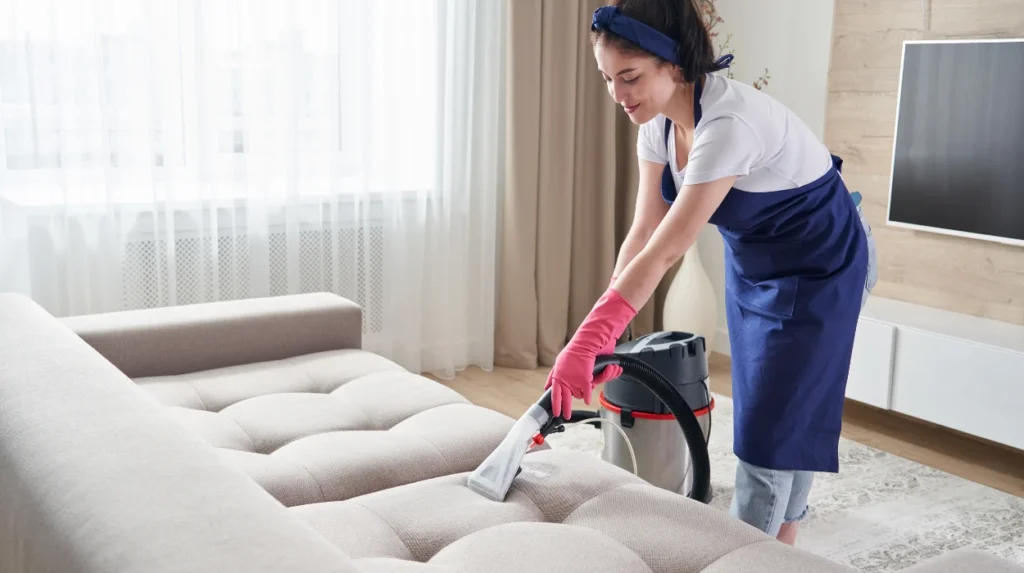
Pre-treatment involves applying a specially formulated conditioner or emulsifier to break down grease, protein-based stains, and dried residue that has bonded to the fibres. This stage is often overlooked in DIY attempts, which is why home efforts frequently leave residue behind rather than extracting it cleanly. After sufficient dwell time, hot water extraction equipment is used to simultaneously inject a cleaning solution deep into the fabric and vacuum the loosened soiling back out in a single controlled motion. The result is a fabric that is not merely surface-clean but hygienically refreshed throughout its entire depth.
The Difference Between Armchairs and Dining Chairs in Cleaning Terms
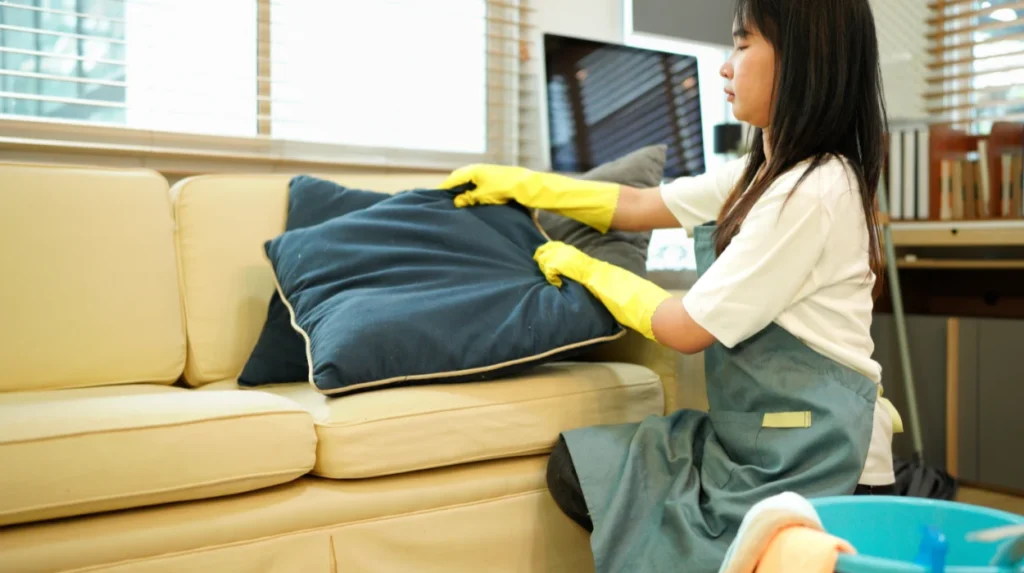
While both armchairs and dining chairs fall under the category of upholstered seating, they present distinct cleaning challenges. Armchairs tend to accumulate body oils and pet-related soiling along the seat cushion, backrest, and armrests. These are the areas that experience the most skin-to-fabric contact over an extended period. Because armchairs are typically used for longer sitting sessions, the soiling in these zones tends to be denser and more deeply embedded than in dining chairs. The armrests, in particular, are often the first area to show visible discolouration because they absorb hand oils and any residue from hand creams or snacks consumed during use.
Dining chairs present a different set of challenges primarily related to food and liquid. Grease from meals, sauce splashes, beverage rings, and crumbs pushed into seam lines are all common findings during a professional dining chair inspection. Because dining chairs are often grouped in sets of four or six, technicians must also ensure consistent colour restoration across all units so that the cleaned chairs match each other evenly after the process is complete. This matching process requires careful rinsing and drying to prevent tide marks from forming on any individual chair that could make it appear lighter or darker than its counterparts.
How Soiling in Upholstery Affects Indoor Air Quality
This is where the connection between furniture hygiene and everyday health becomes more tangible. Upholstered surfaces act as reservoirs for particulate matter. Each time a person sits down on an uncleaned armchair, the compression forces trapped particles upward into the breathing zone. Dust mites, which thrive in fabric-based environments, produce waste proteins that are a well-documented cause of respiratory irritation and worsening allergy symptoms. For households with children, elderly residents, or anyone with a pre-existing respiratory condition, the concentration of these particles in soft furnishings can meaningfully affect indoor air quality on a daily basis. Regular professional cleaning reduces this particulate load significantly, helping maintain a healthier breathing environment in rooms where upholstered seating is present. If you want to understand the broader relationship between household allergens and upholstery, exploring whether dirty upholstery can cause allergies in your home provides useful background on the topic.
The Case for Specialist Cleaning Over DIY Machine Hire
A common question among homeowners is whether hiring a domestic upholstery cleaning machine produces results comparable to those from a professional service. The honest answer is that the two are not equivalent. Consumer-grade rental machines operate at significantly lower extraction pressure than professional equipment, which means they inject moisture into the fabric but lack the suction power to remove it fully. This leaves furniture wetter for longer, which extends the risk of mould development within the foam layers beneath the fabric. It also means that much of the soiling is stirred rather than removed. For a more detailed comparison of both approaches, understanding the differences between machine rental and hiring a specialist upholstery cleaning service helps set realistic expectations before committing to either route.
Professional equipment also carries pH-balanced, fabric-specific solutions that are formulated to rinse out completely without leaving attractant residue. Residue-heavy cleaning is one of the most common reasons re-soiling occurs rapidly after a DIY attempt. The fabric appears clean immediately after drying, but within a few weeks looks dirtier than it did before because the leftover solution continues to attract dust and debris. This cycle can be frustrating and ultimately more costly than investing in professional cleaning from the outset.
What to Expect on Cleaning Day
Knowing what the appointment involves helps homeowners or business managers prepare appropriately. The technician will typically request clear access to the furniture being cleaned, and upholstered pieces should be moved away from walls where possible to allow access to all sides. Any loose cushions will be cleaned separately, and seams and piping will receive specific attention to draw out concentrated soiling from these narrow zones. Drying times vary depending on fabric weight, ambient temperature, and the level of soiling treated. Lightweight dining chair covers may dry within two to three hours, while thicker armchair upholstery may require up to six hours before the fabric is fully ready for use. Technicians will advise on ventilation strategies to accelerate drying without introducing excessive heat that could affect fabric stability.
It is also worth noting that not all staining can be fully removed through the cleaning process alone. Old tannin stains from tea or coffee, ink, and certain dyes may leave a residual trace depending on how long they have been present in the fabric and whether previous attempts to clean them caused them to set more deeply. A professional technician will provide an honest pre-inspection assessment so that expectations are aligned before work begins rather than after.
Protecting Your Upholstery After Cleaning
Once upholstery has been professionally cleaned, the period immediately following treatment is the best time to apply a fabric protection treatment if one is appropriate for the material type. Fabric protectors work by coating individual fibres with a barrier layer that causes liquids to bead on the surface rather than being absorbed instantly. This gives households more time to blot spills before they become permanent stains. Protection treatments are not a substitute for regular cleaning, but they do extend the interval between professional sessions and make routine maintenance more manageable between appointments.
Ongoing care between professional cleaning visits should include light vacuuming with an upholstery attachment on a weekly basis, prompt blotting of any spills using a clean absorbent cloth, and avoidance of harsh household sprays that can break down fabric fibres or leave chemical residue. Positioning armchairs away from direct sunlight also reduces the rate of colour fade, which becomes more visible on upholstery that has been recently refreshed and restored to a closer approximation of its original tone.
How Frequency of Use Should Guide Your Cleaning Schedule
Domestic armchairs in regular daily use benefit from professional cleaning every twelve to eighteen months. Dining chairs that are used for family meals several times a week may require attention slightly more frequently, particularly if food-based soiling is present. In commercial environments such as hotels, waiting rooms, offices, or restaurants, the frequency of use is considerably higher and a more regular cleaning schedule is necessary to maintain both hygiene standards and presentation quality. For businesses, professional upholstery cleaning also plays a role in extending the serviceable life of seating assets, which can represent a meaningful deferral of replacement costs over several years. Choosing professional upholstery cleaning services that restore and maintain fabric condition is an investment in the long-term value of your furnishings.
Armchairs and dining chairs carry far more embedded soiling than their surface appearance typically suggests, and maintaining them properly requires more than occasional spot cleaning. The depth of contamination, the variety of fabric types involved, and the risk of damage from improper technique all make a compelling case for professional intervention over DIY solutions. Bee Cleaning Services Manchester provides upholstery cleaning services in Farnworth that address these challenges with the right equipment, fabric-specific solutions, and trained technicians who understand how to restore different materials without causing damage. Whether you are caring for a single armchair or a full set of dining chairs, professional cleaning delivers results that protect both the appearance and the hygiene of your furniture over time.
Is it actually worth paying someone to clean my armchair, or can I just rent a machine and do it myself?
Renting a machine seems like the cheaper option upfront, but consumer-grade rental equipment lacks the extraction pressure of professional machines, which means moisture stays trapped in the foam for hours and can lead to mildew. Professional cleaners also use fabric-specific solutions that rinse out completely, whereas rental machine detergents often leave residue that attracts dirt faster after drying.
My dining chairs smell fine, but look grubby. Does that mean they are not that dirty inside?
No smell does mean no problem. Odour becomes noticeable only after bacterial and organic build-up reaches a certain threshold, but dust mites, skin cells, and food grease can be deeply embedded long before any smell develops. The absence of odour simply means the contamination has not yet reached a level your senses detect, not that the fabric is clean.
Can a professional really get a years-old grease stain out of a fabric dining chair?
Old grease stains are among the more stubborn types because the oil bonds with fabric fibres over time and oxidises, which changes its chemical structure. A professional technician will apply an emulsifying pre-treatment designed to break that bond before extraction, which gives a much better result than home attempts using dish soap or surface sprays.
How do I know if my armchair fabric is safe for wet cleaning or if it needs dry cleaning instead?
Most fabric upholstery carries a care code tag, usually found under the seat cushion or on the base of the chair. A W code means water-based cleaning is safe, an S means solvent-based dry cleaning only, and an X means vacuuming only with no liquid treatment. Professional cleaners carry out a fabric identification check before any work begins and will test a small hidden area.
After getting my armchairs cleaned professionally, how do I stop them from getting dirty so fast again?
Rapid re-soiling after cleaning is almost always caused by cleaning residue left in the fabric, which continues attracting dust and debris as it dries. A professional clean using proper rinsing and high-extraction equipment removes both soiling and solution, leaving no attractant behind. After the cleaning, applying a fabric protector helps liquids bead on the surface rather than absorbing instantly.