

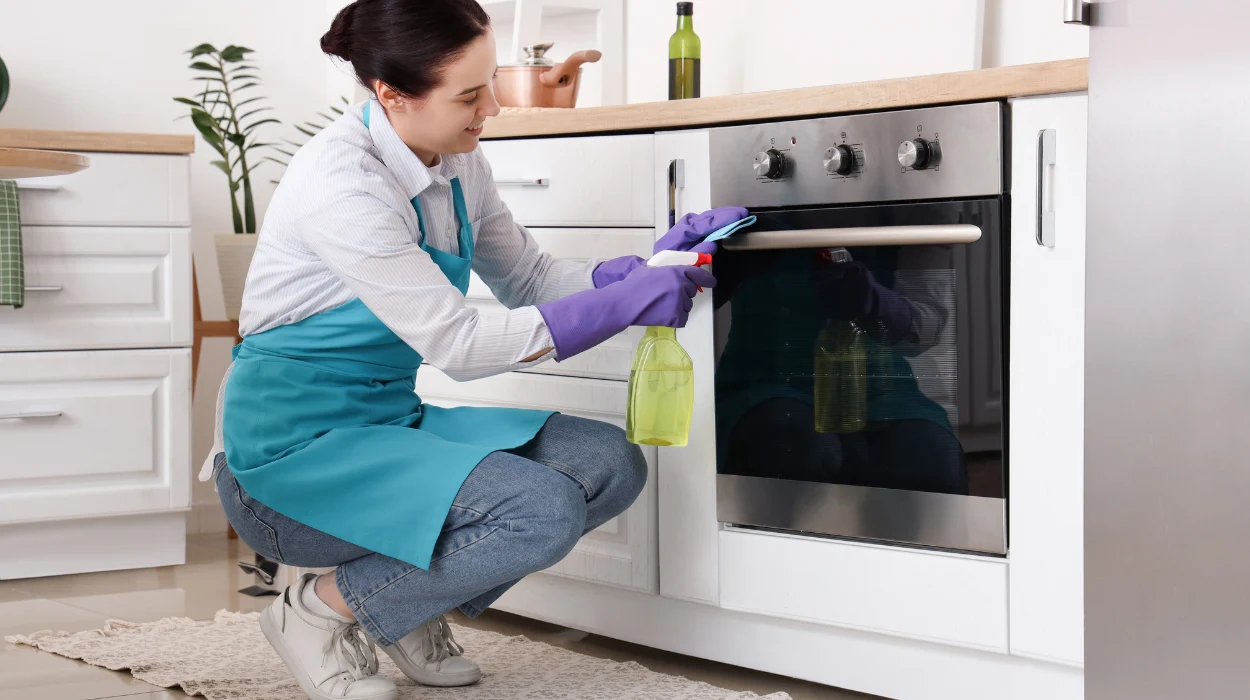
In most cases, yes, as long as the oven is fully dry and the technician has confirmed it is safe to switch on. A short empty heat cycle is usually advised first to clear any faint cleaning odours.
Why Timing Can Vary
Most ovens are ready to use shortly after a professional clean, but the exact timing depends on the cleaning method, the oven type and how thoroughly the interior has been rinsed and dried. Technicians generally remove all cleaning solution from the cavity, door glass, racks and trays before finishing the job. Gas, electric and range-style ovens follow the same basic principle. Surfaces should be dry, racks should be refitted correctly and no residue should remain on heating elements. If any part still feels damp or smells of chemicals, it is sensible to wait a little longer. The guidance given on the day always takes priority over general advice.
What Happens During a Professional Oven Clean

A professional oven clean usually begins with removing racks, trays and shelf supports so each part can be treated separately. Baked-on grease and carbonised food are loosened with cleaning solutions, then lifted away using specialist cleaning equipment and non-scratch tools. Door glass is often separated where the design allows, so grease trapped between the panels can be cleared. Every component is then rinsed, wiped and dried before reassembly. This thorough process is why a professionally cleaned oven looks very different from one wiped at home. It also explains why a final dry-off matters, because moisture left in corners can cause steam or mild odours at first use.
For households that want a reliable result, Bee Cleaning Services Manchester provides professional oven cleaning in Oldham designed to leave the oven clean, dry and ready for normal cooking. Technicians work through the cavity, hob parts and racks in a set order so nothing is missed. They also check door seals, hinges and handles for grease build-up that could affect performance. Once the job is complete, the customer is shown the finished oven and told when it is safe to switch on. This handover answers most questions about timing and removes any guesswork about whether a first heat cycle is needed. It also means each oven is treated according to its own make and model.
Preparing Your Oven for First Use
Before cooking, open the oven door for a few minutes so any remaining moisture can escape. Check that the racks sit securely in their runners and that the oven tray is completely dry. Wipe the door seal lightly with a clean cloth if it looks damp. Then switch the oven on empty at around 200°C for fifteen to twenty minutes. This burns off faint residue and clears the mild smell some people notice after a deep clean. Keep the kitchen ventilated during this time, and let the oven cool fully before placing food inside. These simple steps take little time and protect both taste and safety.
Gas, Electric and Range Cookers
Gas and electric ovens behave similarly, but there are small differences worth knowing. In gas ovens, burners and vents should be dry and unobstructed before lighting, and the flame should burn evenly. Electric ovens rely on heating elements that must be free from damp and loose debris. Range cookers and AGA-style cookers need extra care because their cast iron surfaces and continuous heat call for different cleaning methods. Owners of these appliances should follow manufacturer advice on temperature and downtime. Reading about what to know before cleaning an AGA is a useful starting point for anyone with a range cooker. When in doubt, wait until the technician confirms the safe interval.
Common Mistakes to Avoid After a Clean

One common mistake is placing food in the oven while racks are still wet, which can create steam and leave marks on dishes. Another is using harsh scouring pads or fresh chemical sprays straight away, which can damage the finish and add new residue. Some people skip the empty heat cycle and then worry about smells when cooking begins. Lining the oven floor with loose foil can block airflow and cause uneven heating, so it is best avoided. Wiping spills with a damp cloth once the oven has cooled slightly keeps the interior cleaner for longer. Small habits like these make a clear difference to how long the results last.
Safety Considerations for Families and Pets
Households with children or pets often ask whether cleaning products leave anything behind. Reputable providers rinse and wipe all surfaces so no product remains in contact with food. Using gentler formulas where possible reduces odour and lowers the chance of irritation. Anyone with a sensitive household can read about non-toxic oven cleaning in Oldham for families and pets before booking. Keep children and pets out of the kitchen during the service and until all surfaces are dry. Ventilate the room, and make sure small items such as racks are not left within reach while they cool. These precautions are simple and sensible.
How Often Should an Oven Be Professionally Cleaned?
Most households benefit from a professional clean every six to twelve months, depending on how often they cook. Frequent roasting, grilling and baking produce more splatter and carbon, which builds up faster. Regular cleaning prevents smoke, strong odours and uneven heating, which are all signs that grease is burning on the surface. It can also extend the working life of seals and heating elements. Landlords and tenants often schedule a clean before an inspection or a move. Wiping the interior lightly between visits keeps the oven efficient and makes each professional visit quicker and more effective.
For most homes, the answer to can I use my oven straight after a professional clean is a reassuring yes, provided the oven is dry and a short empty heat cycle is run first. The key points are correct drying, secure racks, good ventilation and following the technician’s advice. Understanding what happens during the service makes the aftercare feel straightforward rather than uncertain. Bee Cleaning Services Manchester provides professional cleaning solutions that leave ovens safe, dry and ready for use. Clear aftercare guidance is part of that service, so households can return to cooking with confidence.
Frequently Asked Questions
How long should I wait before cooking after an oven clean?
Most people can cook once the oven is completely dry, often within an hour or so. Run the oven empty for 15 to 20 minutes first. If you notice any damp or chemical smell, wait longer and ventilate the kitchen.
Is it normal for the oven to smell after being cleaned?
A mild smell on first use is common and usually harmless. It comes from small amounts of residue burning off. An empty heat cycle with the window open normally clears it. A strong or lasting smell is worth mentioning to your cleaner.
Do I need to wipe the oven again before cooking?
Usually not. A quick wipe of the door seal and tray with a dry cloth is enough. Avoid using fresh sprays or abrasive pads straight away, as they can leave residue or scratch the freshly cleaned surfaces.
Is a professionally cleaned oven safe for kids and pets?
Yes, when all surfaces are rinsed, wiped and dried properly. Keep children and pets out of the kitchen during cleaning and until the oven has cooled. Gentler, low-odour products can also help in sensitive households.
Can I clean my AGA or range cooker the same way as a normal oven?
Not always. Cast iron surfaces and continuous heat need different methods and downtime. Check your manufacturer’s advice and ask a professional who knows range cookers before using any cleaning products on them.