

Yes, businesses can arrange a professional office deep clean in Oldham when a workplace needs more than routine maintenance. A deep clean targets accumulated dirt, high-touch surfaces, floors, kitchens, washrooms, and other areas that regular cleaning may not fully address.
Why Book a Professional Office Deep Clean in Oldham?
Book a Professional Office Deep Clean in Oldham when your workplace needs a more detailed level of cleaning than its normal schedule provides. Regular office cleaning is designed to maintain day-to-day hygiene, while deep cleaning focuses on areas that gradually collect dust, grime, stains, and buildup. This can be particularly useful after busy periods, office events, renovations, seasonal changes, or periods when routine cleaning has been reduced. A planned deep clean can also help reset workplace standards before returning to a regular maintenance programme. For businesses, the aim is not simply to make the office look tidy but to create a consistently clean and well-maintained environment.
A professional office deep clean usually involves a more detailed assessment of the workplace before cleaning begins. The cleaning team can identify high-traffic areas, frequently touched surfaces, flooring requirements, kitchen areas, washrooms, meeting rooms, and other spaces that require additional attention. Suitable cleaning-equipment and products are selected according to the materials and surfaces involved. Professional methods can help reduce the risk of damaging flooring, furniture, glass, and other workplace fixtures. This structured approach makes the service different from asking employees to spend additional time cleaning around their normal responsibilities.
What Is Included in an Office Deep Clean?
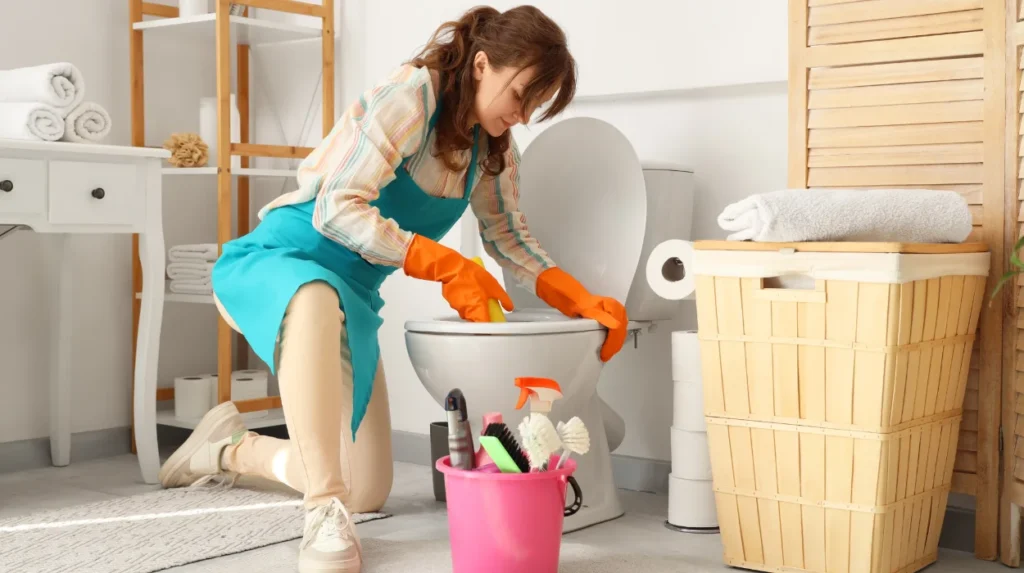
An office deep clean can cover several areas that receive less attention during routine visits. Workstations may require detailed dusting, surface cleaning, and attention around furniture and equipment, while reception areas often need thorough floor and high-touch surface cleaning. Meeting rooms can be cleaned around tables, chairs, doors, glass partitions, and other frequently used areas. Kitchens and break rooms may require more intensive cleaning of worktops, sinks, cupboard fronts, floors, and accessible appliances. Washrooms also receive detailed cleaning and sanitisation because they are important hygiene areas within any workplace.
Floor care is another important part of a detailed office cleaning programme. Carpets can accumulate dust, debris, and particles that ordinary vacuuming does not always remove completely. Depending on the carpet and the agreed scope, deeper cleaning methods may be appropriate periodically. Hard floors can also require more detailed mopping, scrubbing, or maintenance depending on their material and condition. Using appropriate cleaning-equipment helps professional cleaners work efficiently while protecting different flooring surfaces from unsuitable methods.
High-Touch Areas Need Extra Attention
Door handles, light switches, shared equipment, reception counters, meeting tables, and other frequently touched surfaces can require particular attention during a deep clean. These areas are contacted repeatedly throughout the working day and therefore form an important part of workplace hygiene. Professional cleaning teams can incorporate them into a structured cleaning process rather than treating them as optional tasks. Colour-coded materials and dedicated cleaning tools can also help reduce the possibility of transferring contaminants between different areas. The exact cleaning method should always reflect the surface material and the workplace cleaning specification.
A detailed cleaning process can also address areas that are easy to overlook during everyday maintenance. Dust can collect behind furniture, around skirting boards, on accessible ledges, and in less frequently used corners. Meeting rooms and storage spaces may receive less daily attention than reception areas or washrooms, allowing buildup to develop gradually. Deep cleaning provides an opportunity to address these overlooked areas as part of a planned service. Once completed, routine office cleaning can then help maintain the improved standard.
When Does an Office Need a Deep Clean?
There is no single timetable that applies to every office because cleaning requirements depend on occupancy, foot traffic, business activities, and the condition of the premises. A small office with limited visitors may need deep cleaning less frequently than a busy workplace with many employees and customers. Businesses may also arrange a deeper service before important meetings, after office events, following building work, or when accumulated dirt becomes noticeable. Seasonal cleaning can be useful when workplaces need additional attention after periods of increased indoor activity. The most suitable frequency should be determined by the condition and usage of the individual premises.
A deep clean can also be useful when a business is changing its regular cleaning arrangements. Before starting a new maintenance programme, bringing the workplace to a consistent baseline can make ongoing cleaning easier to manage. This approach separates restorative cleaning from routine maintenance and allows cleaners to concentrate on keeping the premises at the required standard afterwards. Businesses can then establish daily, weekly, or periodic tasks according to their operational needs. A written cleaning specification helps make these expectations clear.
Why Is Professional Cleaning-Equipment Important?
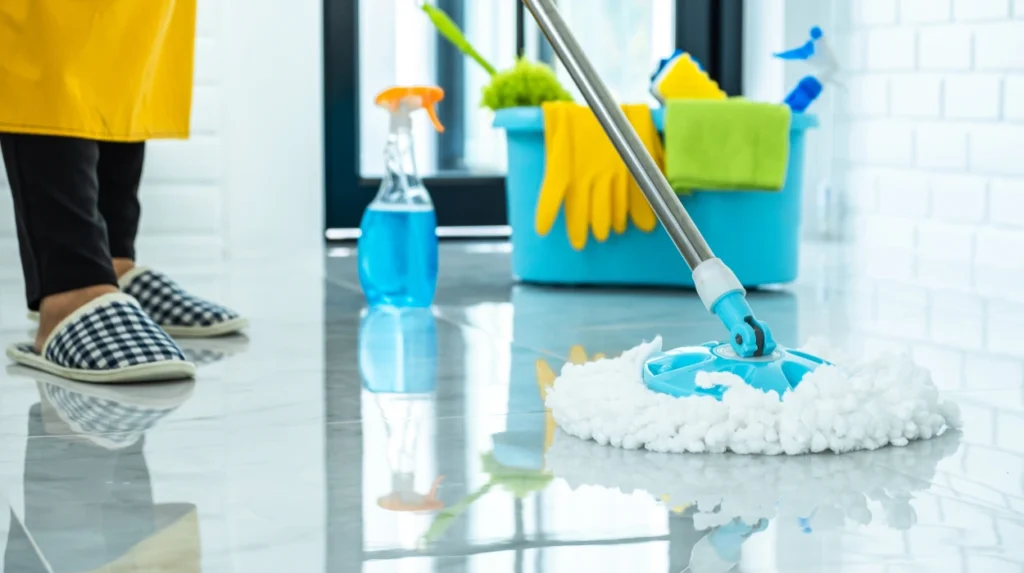
Professional cleaning-equipment can improve both efficiency and cleaning consistency in commercial workplaces. Commercial vacuum cleaners, microfibre systems, floor-cleaning machines, glass-cleaning tools, and other specialist equipment can be selected according to the requirements of different surfaces. The right equipment can help cleaners remove dust and debris effectively without using unsuitable methods. It also allows larger commercial areas to be cleaned more efficiently than relying entirely on basic household tools. Equipment selection should always be matched to the flooring, furniture, surfaces, and agreed cleaning procedures.
Using professional equipment is particularly relevant when an office has different types of flooring and furniture. Carpeted areas, hard floors, glass partitions, kitchens, and washrooms can all require different cleaning approaches. A professional team understands that one product or tool should not automatically be used throughout an entire workplace. Separating equipment for different hygiene zones can also support better cleaning practices. This structured approach helps businesses maintain a consistent standard while reducing unnecessary wear on workplace surfaces.
How Does Deep Cleaning Differ From Regular Office Cleaning?
Regular office cleaning focuses primarily on maintaining cleanliness through recurring tasks. These can include vacuuming, dusting, emptying bins, cleaning washrooms, wiping kitchen surfaces, and maintaining high-touch areas according to an agreed schedule. Deep cleaning goes further by concentrating on accumulated dirt, less accessible areas, detailed floor care, and other periodic tasks. The two services therefore work together rather than replacing one another. A deep clean can establish a stronger baseline, while regular cleaning helps maintain that condition.
Businesses considering their wider cleaning arrangements can also review guidance about commercial office cleaning requirements in Oldham. Understanding what routine commercial cleaning covers makes it easier to identify which tasks belong in a periodic deep-cleaning service. It can also help business owners discuss the scope of work with a cleaning provider. Clear expectations are particularly important when comparing different quotations.
What Should Businesses Check Before Booking?
Before booking a professional service, businesses should understand exactly what the quotation includes. The cleaning scope should identify the areas being cleaned, the main tasks involved, the expected service duration where applicable, and any specialist requirements. It is also sensible to clarify whether carpet cleaning, internal glass, appliance cleaning, high-level dusting, or other periodic tasks are included or priced separately. This prevents assumptions and makes different quotations easier to compare. A clear scope also gives the cleaning team a practical checklist for completing the work.
Businesses should consider the cleaning provider’s approach to staff training, workplace safety, equipment, communication, and quality control. A professional cleaning service should understand that offices contain sensitive equipment, documents, furniture, flooring, and shared facilities that require appropriate care. Cleaning should be organised around the business schedule where possible to minimise unnecessary disruption. For companies comparing regular service models, information about daily and contract cleaning options can help explain how periodic deep cleaning can fit into a longer-term maintenance plan.
How Can an Office Stay Clean After a Deep Clean?
A deep clean provides the greatest benefit when it is followed by an appropriate maintenance schedule. Businesses should identify which areas require daily attention and which tasks can be completed weekly or periodically. High-touch surfaces, washrooms, kitchens, entrances, and busy floors generally need more frequent attention than low-traffic areas. Waste should be removed consistently, spills should be dealt with promptly, and shared spaces should remain part of the regular cleaning specification. These simple measures help prevent the workplace from quickly returning to its previous condition.
The cleaning schedule should also be reviewed when workplace circumstances change. Additional employees, increased visitor traffic, office expansion, or changes in working patterns can all affect cleaning requirements. A service that was suitable for a small team may need adjustment when occupancy increases. Likewise, a business with reduced office use may require a different frequency. Regular communication with the cleaning provider allows the cleaning programme to remain aligned with the actual condition and usage of the workplace.
Why Choose a Professional Office Cleaning Service in Oldham?
Professional office cleaning provides a structured alternative to relying entirely on employees or occasional cleaning. It allows businesses to establish defined responsibilities, cleaning frequencies, and quality expectations. For workplaces in Oldham, a local cleaning provider can also make communication and scheduling more practical. Bee Cleaning Services Manchester provides professional cleaning solutions designed around different commercial cleaning requirements. Its approach can combine detailed cleaning with ongoing maintenance according to the needs of the workplace.
Businesses looking for professional office cleaning solutions in Oldham can consider how a local provider manages scheduling, equipment, cleaning procedures, and service consistency. A suitable cleaning plan should reflect the size and usage of the office rather than applying exactly the same approach to every workplace. This helps ensure that important areas receive appropriate attention without adding unnecessary tasks. Bee Cleaning Services Manchester can support businesses seeking a practical professional cleaning solution for their workplace.
Frequently Asked Questions
Is an office deep clean different from regular cleaning?
Yes. Regular cleaning maintains everyday hygiene through recurring tasks, while deep cleaning provides more detailed attention to accumulated dirt, less accessible areas, floors, kitchens, washrooms, and other areas requiring periodic treatment.
How often should an office have a deep clean?
The frequency depends on office size, occupancy, foot traffic, business activities, and the existing maintenance schedule. Some workplaces may benefit from periodic deep cleaning several times a year, while others may need it more frequently.
Does office deep cleaning include cleaning-equipment?
Professional providers generally bring suitable commercial cleaning-equipment required for the agreed scope. The exact equipment depends on the flooring, surfaces, furniture, and specialist cleaning tasks involved.
Can deep cleaning be arranged outside office hours?
Scheduling depends on the provider and the workplace requirements. Businesses can discuss suitable cleaning times so the service causes minimal disruption to employees, customers, and normal operations.
What should be included in an office deep-clean quotation?
A quotation should clearly explain the areas covered, cleaning tasks, frequency or one-off service details, specialist treatments, equipment requirements, and any exclusions. A written scope helps businesses compare services fairly.
A Practical Approach to Office Deep Cleaning
An office deep clean is most useful when it is treated as part of a broader workplace maintenance strategy rather than as a substitute for regular cleaning. It can address accumulated dirt, improve the condition of frequently used areas, and provide a cleaner starting point for ongoing maintenance. Businesses should select a service based on their actual workplace requirements, the cleaning scope, equipment, scheduling, and quality procedures. Bee Cleaning Services Manchester provides professional cleaning solutions for businesses seeking structured office cleaning support in Oldham. A well-planned combination of periodic deep cleaning and regular maintenance can help keep a commercial workplace consistently clean and presentable.
Meta Title
Book a Professional Office Deep Clean in Oldham: 5 Tips
Meta Description
Book a Professional Office Deep Clean in Oldham for detailed workplace hygiene, professional cleaning-equipment, floors, kitchens, washrooms and shared areas.
Internal Linking Summary
Service Page → Professional office cleaning solutions → https://beecleaningservices.co.uk/blogs/why-oldham-businesses-choose-local-office-cleaning-companies/
MOFU Article → Daily and contract cleaning options → https://beecleaningservices.co.uk/blogs/daily-commercial-cleaning-services-in-oldham-cleaning-vs-contract-cleaning-which-saves-money/
BOFU Article → Commercial office cleaning requirements → https://beecleaningservices.co.uk/blogs/what-does-commercial-office-cleaning-actually-include/
How to Use “Read More” or “Related Article”
For this BOFU article, I recommend adding 2 to 3 related-article boxes, rather than adding “Read More” after every section. The best placements are:
After the section “What Is Included in an Office Deep Clean?”
Related Article: What Does Commercial Office Cleaning Actually Include?
After the section “How Does Deep Cleaning Differ From Regular Office Cleaning?”
Related Article: Daily Commercial Cleaning Services in Oldham: Cleaning vs Contract Cleaning
Near the conclusion:
Related Article: Why Oldham Businesses Choose Local Office Cleaning Companies
Use descriptive anchor text inside the article and a small “Related Article” box after a relevant section. This creates useful internal links without making the page look overly promotional.