


Carpet cleaning powder and steam cleaning use different methods, moisture levels and equipment, so neither is automatically best for every carpet. Powder cleaning suits quicker, low-moisture maintenance, while hot water extraction is generally better when deeper soil, stains and odours need to be addressed.
What is the difference between carpet cleaning powder and steam cleaning?
The main difference is how moisture and cleaning action are used to remove soil from carpet fibres. Carpet cleaning powder is normally associated with dry or low-moisture cleaning, where an absorbent compound is worked into the carpet and then removed with powerful vacuuming. Steam cleaning, more accurately called hot water extraction, uses a cleaning solution and heated water followed by extraction. The National Carpet Cleaners Association explains that dry compound systems can provide rapid use of the cleaned space, while water-based methods require more drying time.
For homeowners, the practical distinction is cleaning depth versus drying convenience. Powder methods can be useful when a carpet needs refreshing without significant moisture, particularly where a room must return to use quickly. Hot water extraction is more appropriate in many situations involving embedded soil because the process combines chemical treatment, agitation, moisture and mechanical extraction. The correct choice still depends on fibre type, carpet construction, contamination, previous cleaning and the drying conditions available.
How does carpet cleaning powder work?
Carpet cleaning powder is designed to capture or absorb soil from the carpet rather than flushing the material away with a large volume of water. Depending on the system, an absorbent compound is distributed across the carpet, worked into the pile using suitable equipment and subsequently removed through thorough vacuuming. Some low-moisture systems use encapsulating chemistry instead, where cleaning agents surround soil and become easier to remove after drying.
The effectiveness of powder cleaning depends heavily on correct application and removal. Excess product, inadequate agitation or incomplete vacuuming can leave residues within the carpet, which may affect appearance and contribute to rapid re-soiling. Professional cleaning equipment can improve consistency because the operator can control application, agitation and recovery rather than relying only on manual brushing and a household vacuum.
How does steam cleaning work on carpets?
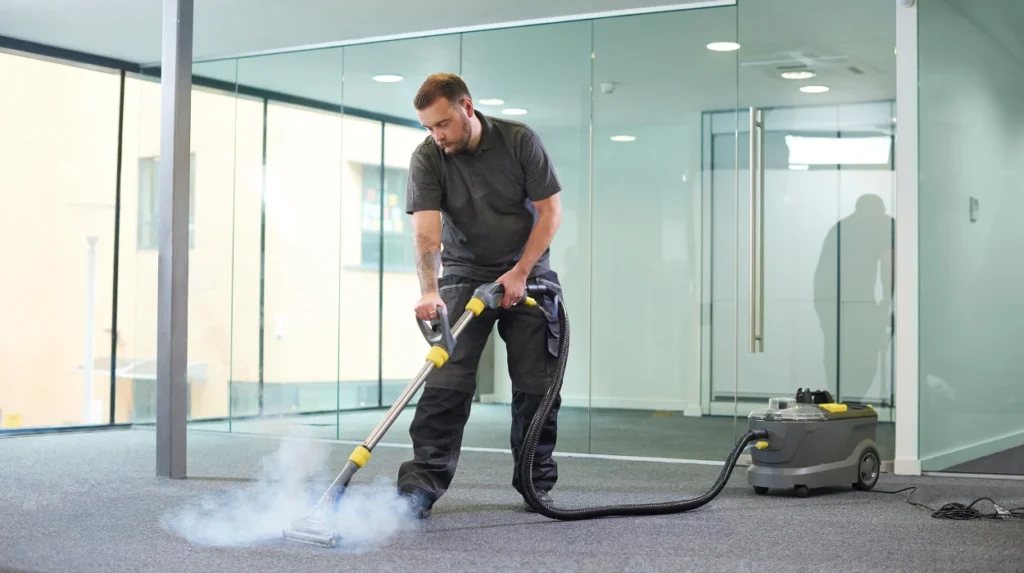
What customers commonly call steam cleaning is usually hot water extraction rather than literal steam being forced through carpet fibres. The process normally begins with dry vacuuming and inspection, followed by targeted treatment of suitable stains and application of a cleaning solution. Heated water is then introduced into the carpet and recovered with powerful extraction equipment, taking loosened soil and residues with it.
This method uses substantially more moisture than dry powder cleaning, so drying conditions become important. Ventilation, temperature, air movement, carpet construction and the amount of moisture recovered can all influence drying time. Modern extraction equipment is designed to recover a significant proportion of the applied solution, but carpets should still be allowed to dry properly before normal heavy use resumes.
Is steam cleaning actually steam?
The term can be misleading because professional carpet steam cleaning is commonly used as a consumer-friendly name for hot water extraction. Actual high-temperature steam is not necessarily the process being used, and carpet cleaning should be selected according to the fibre and construction rather than the word “steam”.
This distinction matters when comparing cleaning-equipment options. A professional should identify the actual process, moisture level, cleaning chemistry and extraction method being proposed. Asking whether the service uses hot water extraction, low-moisture encapsulation or absorbent compound cleaning gives a clearer understanding of what will happen to the carpet.
Which method cleans deeper, powder or steam cleaning?
For carpets with substantial embedded soil, hot water extraction will often provide a more intensive cleaning process because water, cleaning chemistry and extraction work together to loosen and recover contamination. Dry powder systems are valuable for low-moisture maintenance but may have limitations where soil, sticky residues or odours are located deeper within the carpet structure.
However, deeper cleaning does not mean that more moisture is always better. Excess moisture can create unnecessary drying challenges, especially when ventilation is poor or the carpet construction is moisture-sensitive. A professional assessment should therefore consider both the desired cleaning result and the risks associated with the chosen method rather than treating one system as universally superior.
Which method dries faster?
Dry or low-moisture powder cleaning generally has the advantage when rapid drying is the main priority. Because considerably less water is introduced, the carpet can often return to normal use sooner, making low-moisture approaches useful for busy households, offices and other spaces where extended downtime is inconvenient. Exact drying time still depends on the system, product, carpet and environmental conditions.
Hot water extraction usually requires more drying time because water is part of the cleaning process. Professional extraction reduces the amount of moisture left behind, but airflow and ventilation remain important. Current UK carpet-cleaning guidance also distinguishes low-moisture cleaning from extraction partly because drying time and disruption can influence which method is most suitable.
Which method is better for stains and heavily soiled carpets?
Stain removal depends on what caused the mark, how long it has been present and whether the fibre itself has been permanently altered. For many heavily soiled carpets, hot water extraction provides a stronger overall cleaning process because pre-treatment can break down soil before the carpet is rinsed and extracted. This can be particularly useful in high-traffic areas where dirt has become embedded through repeated foot movement.
Powder cleaning can still improve visible surface soil and refresh carpets, particularly when the contamination is relatively light. It should not, however, be presented as a universal solution for every stain. Some marks are caused by dye transfer, bleaching, fibre damage or permanent colour change, meaning cleaning may improve surrounding soil without completely restoring the original appearance.
Can powder cleaning remove carpet odours?
Powder cleaning can help reduce odours associated with surface soil, but its performance depends on where the odour source is located. If smells are caused by contamination that has penetrated beneath the visible carpet pile, simply applying a surface compound may not address the underlying source. Pet accidents, spills and persistent organic contamination can require a more carefully selected cleaning and extraction process.
Odour treatment should therefore begin with identifying the cause rather than masking it with fragrance. If moisture, underlay contamination or previous cleaning residue is involved, the operator may need to consider a different cleaning method. This is one reason professional carpet assessment is more useful than selecting a product solely because its packaging promises a fresh smell.
Which method is better for wool and delicate carpets?
Carpet fibre is one of the most important factors when choosing a cleaning method. Natural fibres can have different moisture, temperature and chemical requirements from common synthetic fibres, so a method suitable for a synthetic carpet should not automatically be applied to wool or other delicate materials. The NCCA specifically notes that dry cleaning can be a safer option for some natural carpets where water could create problems.
Before cleaning, the carpet should be inspected for fibre type, construction, colour stability, previous damage and manufacturer guidance where available. A controlled low-moisture approach may be preferable in some circumstances, while another carpet may tolerate an appropriately managed extraction process. The important point is that the cleaning method should follow the carpet’s characteristics, not simply the customer’s preferred machine.
What cleaning-equipment is used for each method?
Cleaning-equipment varies considerably between household products and professional systems. Powder cleaning may involve specialised applicators, counter-rotating brush machines or other agitation equipment, followed by commercial-grade vacuum recovery. These tools help distribute the compound more evenly and work it into the carpet rather than leaving the process entirely dependent on manual application.
Hot water extraction equipment combines solution delivery with powerful vacuum recovery. Professional operators may also use separate vacuum cleaners, sprayers, agitation machines, stain-treatment tools, air movers and moisture-control equipment. The machine itself does not guarantee a good result, because incorrect chemical concentration, excessive moisture, unsuitable agitation or poor extraction can still cause problems.
Is professional carpet cleaning better than DIY powder?
DIY powder can be useful for routine maintenance when the carpet is lightly soiled and the product is specifically designed for the carpet type. The user should follow the manufacturer’s instructions, test an inconspicuous area where appropriate and vacuum thoroughly after treatment. Using more powder than recommended does not automatically produce a better result and can increase the chance of residue.
Professional cleaning becomes more valuable when the carpet has heavy traffic soil, persistent staining, recurring odours or a history of unsuccessful DIY treatment. Professional operators can inspect the carpet before selecting a process and adjust cleaning chemistry, agitation, moisture and extraction accordingly. For households in Oldham comparing options, Bee Cleaning Services Manchester provides professional cleaning solutions through its professional carpet cleaning service in Oldham.
Should you choose powder cleaning or steam cleaning?
The best choice depends on the condition of the carpet and what the room needs after cleaning. Powder or low-moisture cleaning is often logical when quick turnaround, reduced moisture and routine maintenance are priorities. Hot water extraction can be more suitable when deeper soil removal, intensive stain treatment or more substantial rinsing is required and suitable drying conditions are available.
A useful decision process is to identify the carpet fibre first, then the level and type of contamination, followed by the required drying time. The final consideration should be the cleaning equipment and operator’s ability to control the process. This avoids choosing a method simply because it is advertised as “deep”, “dry” or “professional”.
What should you check before booking carpet cleaning?
Before booking, ask what cleaning method will actually be used and whether the operator calls it hot water extraction, steam cleaning, dry compound cleaning or low-moisture cleaning. Ask whether the carpet will be inspected first, what happens with existing stains and how much drying time should realistically be expected. These questions help prevent misunderstandings about the final result.
It is also useful to ask whether the cleaning company can identify fibre type and explain any limitations before work starts. A responsible cleaning process should distinguish removable soil from permanent damage and should avoid promising that every old stain will disappear. This approach is particularly important for carpets that have already been treated with multiple household chemicals or have visible wear.
How does DIY carpet cleaning powder compare with professional treatment?
DIY powder provides convenience, but professional treatment offers greater control over preparation, application, agitation and recovery. Household vacuum cleaners may remove loose powder from the surface without achieving the same level of recovery as commercial equipment. The final result can therefore depend heavily on how thoroughly the compound is distributed and removed.
For readers deciding whether to continue with home powder cleaning or arrange professional treatment, the more useful comparison is explained in this guide to DIY carpet powder versus professional treatment. The decision should consider carpet condition, fibre type, stain severity, drying requirements and the cost of replacing or repairing a carpet after unsuitable cleaning.
Is carpet cleaning powder suitable for regular maintenance?
Yes, powder-based or low-moisture cleaning can have a role in regular carpet maintenance when the carpet and cleaning system are suitable. It can help manage everyday surface soil while reducing disruption, particularly in areas that cannot remain out of use for long periods. It should be regarded as one maintenance option rather than a replacement for every type of restorative cleaning.
A sensible maintenance programme also includes regular vacuuming because cleaning compounds cannot compensate for poor day-to-day soil removal. High-traffic entrances, hallways and living areas may require more frequent attention than lightly used rooms. Where soil has accumulated deeply, a more intensive professional process may be appropriate before returning to routine maintenance.
When should you use professional carpet cleaning in Oldham?
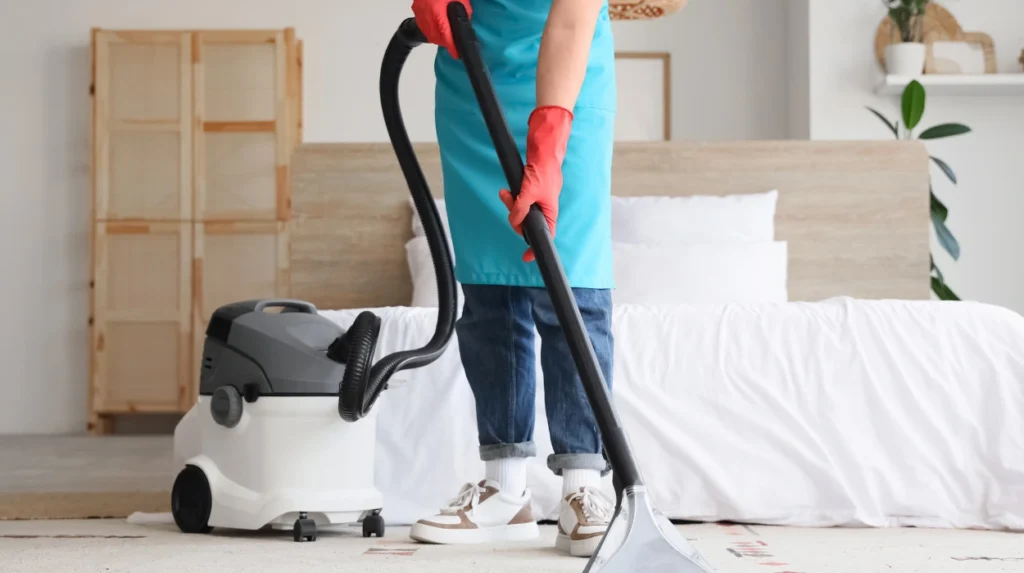
Professional treatment is worth considering when ordinary vacuuming no longer restores the carpet’s appearance, when stains remain after careful home treatment or when persistent odours suggest contamination beyond the visible surface. It can also be appropriate before property handovers, after periods of heavy occupancy or when carpets have experienced unusually high foot traffic.
The method should be selected after inspection rather than assumed from the customer’s preferred terminology. For example, a low-moisture approach may be more practical when rapid room use is essential, while hot water extraction may be considered when deeper rinsing is appropriate. Bee Cleaning Services Manchester approaches carpet cleaning as a method-selection problem, where carpet condition and the desired outcome guide the cleaning process.
What is the final difference between powder and steam cleaning?
Carpet cleaning powder is primarily associated with dry or low-moisture cleaning and offers convenience, controlled moisture and quicker turnaround. Steam cleaning, usually meaning hot water extraction, introduces heated water and cleaning solution before recovering the loosened soil, making it a stronger option for many heavily soiled carpets. Neither process should be treated as universally superior.
The most reliable decision considers fibre type, construction, contamination, stain history, odour source, drying conditions and available cleaning-equipment. Powder cleaning can be valuable for maintenance, while extraction can be appropriate for deeper cleaning when correctly specified and carried out. Understanding those differences helps homeowners choose a method based on the carpet’s needs rather than marketing terminology.
Carpet cleaning powder and steam cleaning are different approaches with different strengths, and the right option depends on the carpet rather than the name of the method. Low-moisture powder cleaning can provide convenient maintenance with reduced drying requirements, while hot water extraction can provide more intensive soil removal when the carpet and drying conditions allow it.
For Oldham homes and properties, the practical decision should balance fibre safety, cleaning depth, stain condition, odour concerns, drying time and the available cleaning-equipment. Bee Cleaning Services Manchester provides professional carpet cleaning solutions with the method selected around the condition and requirements of the carpet, helping make the cleaning process more controlled and appropriate.
Frequently Asked Questions
Is carpet cleaning powder better than steam cleaning?
Neither method is automatically better because each solves different cleaning requirements. Powder cleaning is useful when low moisture and fast turnaround matter. Hot water extraction is often preferable for heavier soil and deeper cleaning. The carpet fibre and contamination should guide the decision.
Does carpet cleaning powder really work?
Yes, suitable powder systems can remove surface soil and refresh carpets when correctly applied and thoroughly vacuumed. They are particularly useful for low-moisture maintenance. They may be less effective against deeply embedded contamination or some persistent odours. Professional equipment can improve application and recovery.
How long does a carpet take to dry after steam cleaning?
Drying time varies according to carpet construction, moisture recovery, ventilation, temperature and airflow. A professionally extracted carpet can dry considerably faster when appropriate equipment is used. Good ventilation and air movement can help. The cleaner should provide a realistic drying recommendation for the specific carpet.
Can I use carpet cleaning powder on a wool carpet?
Do not assume that a powder product is suitable simply because it is marketed for carpets. Wool and other natural fibres can require specialised cleaning methods and controlled moisture. Always check manufacturer guidance and product suitability first. Professional assessment is preferable when the fibre or construction is uncertain.
Which carpet cleaning method is best for pet stains and odours?
Pet stains and odours require attention to the source rather than simply adding fragrance. If contamination is primarily within the carpet surface, an appropriate cleaning process may improve it. Deeper contamination can require more intensive treatment. The suitable method depends on the carpet, severity and location of the contamination.