

Viruses can remain on office desks, keyboards, door handles, and shared equipment for hours, days, or even weeks depending on the virus type, surface material, temperature, and cleaning frequency.
Regular cleaning, effective disinfection, and proper use of cleaning-equipment are essential for reducing workplace contamination and protecting employees, visitors, and customers.
Understanding Virus Survival on Office Surfaces
How Long Do Viruses Survive on Office Surfaces? The answer depends on several environmental and biological factors. Viruses do not multiply on desks, keyboards, telephones, or meeting room tables, but many can remain infectious long enough to create a transmission risk. Hard, non-porous materials such as plastic, stainless steel, and glass typically allow viruses to persist longer than fabric or paper-based surfaces.
In a modern office environment, employees frequently touch shared surfaces throughout the day. Door handles, lift buttons, printers, computer mice, touchscreens, and reception counters can become contamination points. When infected individuals cough, sneeze, or touch surfaces after contact with respiratory droplets, viruses may remain on those surfaces until they naturally degrade or are removed through effective cleaning and disinfection.
Why Office Surfaces Matter During Virus Outbreaks
Office environments encourage repeated contact between people and shared equipment. Even when airborne transmission is a primary concern, contaminated surfaces can still contribute to the spread of infections. High-touch points receive hundreds of contacts daily, increasing opportunities for indirect transmission.
Research and public health guidance consistently identify shared workplace surfaces as areas requiring routine cleaning and targeted disinfection. This is particularly important in busy offices where multiple teams use the same facilities throughout the working day.
Common Virus Survival Times on Workplace Surfaces
Plastic and Stainless Steel
Plastic and stainless-steel surfaces are common throughout offices. Desks, keyboards, printers, and meeting room equipment often contain these materials. Studies have shown that certain respiratory viruses may remain detectable for several days on these surfaces under favourable conditions. COVID-19 related guidance suggested survival periods of up to 72 hours on some hard surfaces, although infectious levels reduce significantly over time.
Glass Surfaces
Glass is widely used in office partitions, reception desks, meeting rooms, and touchscreen devices. Some viruses can remain viable on glass surfaces for multiple days when environmental conditions support survival. Regular cleaning schedules help reduce contamination levels and minimise workplace risk.
Wood and Laminated Furniture
Wood and laminate desks may not support virus survival as long as highly polished non-porous materials. However, contamination remains possible, particularly on frequently touched surfaces. Routine cleaning remains essential regardless of material type.
Fabric and Soft Furnishings
Office chairs, carpets, and fabric partitions generally present different survival conditions. While some viruses degrade faster on porous materials, contamination can still occur. Soft furnishings should be included within workplace hygiene programmes where appropriate.
Factors That Affect Virus Survival
Surface Type
Non-porous materials generally allow viruses to survive longer than porous materials. Plastic, metal, and glass often support longer persistence compared with fabric, cardboard, or paper products.
Temperature and Humidity
Environmental conditions significantly influence virus survival. Temperature, humidity levels, airflow, and sunlight exposure can all affect how quickly viral particles break down. Different viruses respond differently to these conditions, making survival times highly variable.
Cleaning Frequency
Regular cleaning disrupts contamination before viruses can remain on surfaces for extended periods. Organisations with structured hygiene programmes generally reduce the opportunity for workplace transmission through contaminated surfaces.
Human Contact Levels
The more frequently a surface is touched, the greater the possibility of contamination. Reception areas, kitchens, washrooms, and collaborative workspaces often require enhanced cleaning attention due to higher contact frequency.
High-Touch Office Areas That Need Special Attention
Certain workplace locations consistently require additional cleaning and sanitisation measures. These include entrance doors, handrails, kitchen facilities, communal appliances, photocopiers, keyboards, meeting room controls, and washroom fixtures.
Businesses that understand contamination risks often implement scheduled cleaning protocols focused specifically on these high-contact areas. This approach supports better workplace hygiene and helps reduce potential virus transfer between staff members.
The Role of Cleaning-Equipment in Virus Control
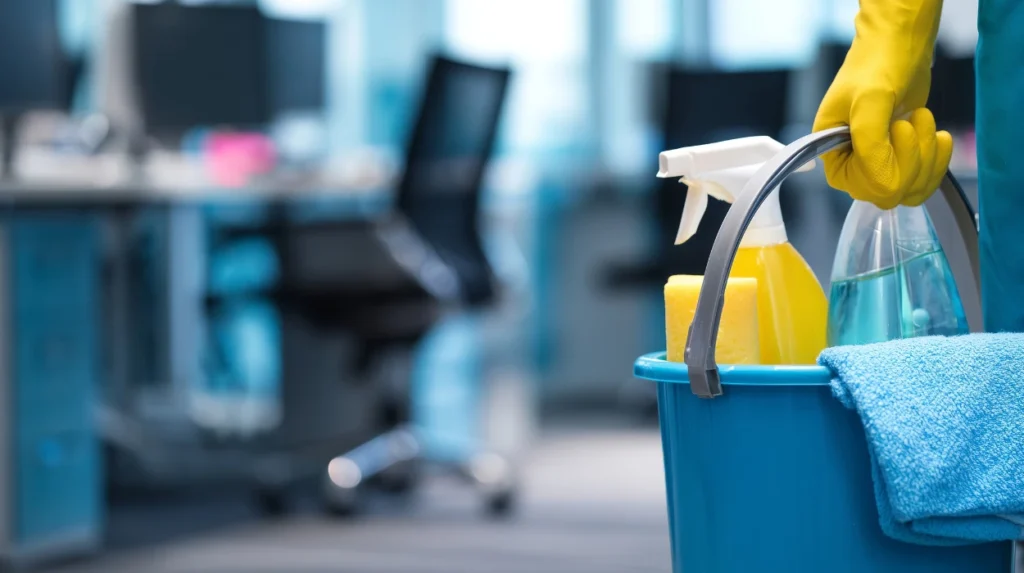
Effective cleaning-equipment plays a crucial role in workplace hygiene. Microfibre cloths, disinfectant systems, electrostatic sprayers, colour-coded cleaning materials, and appropriate PPE all contribute to contamination control when used correctly.
However, equipment alone is not enough. Proper procedures, staff training, and suitable disinfectant products are equally important. Cleaning must remove dirt and organic matter before disinfectants can work effectively. Healthcare cleaning standards also emphasise that cleaning is often a necessary first step before successful disinfection.
Businesses seeking professional workplace protection can benefit from specialised <a href=”https://beecleaningservices.co.uk/blogs/why-is-knowing-how-a-dirty-office-affects-employee-productivity/”>office sanitisation and hygiene services</a> designed to address high-contact workplace environments.
How Disinfection Differs from Cleaning
Many organisations use the terms cleaning and disinfecting interchangeably, but they are different processes. Cleaning physically removes dirt, debris, and many microorganisms from surfaces. Disinfection uses approved chemical products to reduce or eliminate harmful microorganisms remaining after cleaning.
When a workplace experiences increased illness rates or heightened infection concerns, disinfection becomes particularly important. Professional Antiviral Sanitisation Services in Oldham often combine both stages to achieve more effective contamination control.
Why Certified Disinfectants Matter
Not all disinfectants perform equally. Products tested against recognised standards provide greater confidence in their effectiveness. Businesses evaluating infection prevention strategies should understand the importance of recognised disinfectant testing standards and compliance requirements.
When Should Businesses Consider Antiviral Sanitisation Services?
Routine office cleaning remains important throughout the year. However, some situations may justify enhanced sanitisation measures. These include workplace illness outbreaks, high visitor volumes, seasonal infection concerns, shared desk environments, and customer-facing operations.
Professional Antiviral Sanitisation Services in Oldham can provide targeted treatment of high-risk areas using specialist methods and products. This approach helps organisations strengthen hygiene measures while supporting employee confidence in workplace cleanliness.
Bee Cleaning Services Manchester provides professional cleaning solutions designed to address workplace hygiene challenges through structured cleaning, disinfection, and contamination control processes.
Building a Long-Term Workplace Hygiene Strategy
A successful office hygiene strategy extends beyond occasional deep cleaning. Businesses should establish cleaning schedules, identify high-touch areas, train employees on hygiene practices, and regularly review workplace cleaning procedures.
Combining daily maintenance with periodic sanitisation helps create a cleaner environment and reduces the likelihood of contamination accumulating on frequently touched surfaces. Consistency is often more effective than reactive cleaning after problems occur.
Companies reviewing long-term cleaning arrangements may also find value in exploring flexible commercial sanitisation contract options that align with operational requirements and occupancy levels.
How Long Do Viruses Survive on Office Surfaces? The exact answer varies according to the virus, surface material, environmental conditions, and cleaning practices. Some viruses remain viable for only hours, while others may persist for days or longer under favourable conditions.
Consistent cleaning, appropriate disinfection, and effective cleaning-equipment remain among the most practical methods for reducing contamination risks. Bee Cleaning Services Manchester supports businesses through professional cleaning and Antiviral Sanitisation Services in Oldham, helping workplaces maintain cleaner and healthier environments.
Frequently Asked Questions
Can viruses really survive on office desks for several days?
Yes. Some viruses can remain on hard surfaces such as plastic, glass, and stainless steel for multiple days under suitable conditions. Survival depends on humidity, temperature, and the amount of contamination present. The infectious level usually decreases over time. Regular cleaning significantly reduces the risk. Consistent hygiene practices remain important.
Which office surfaces carry the highest contamination risk?
Frequently touched surfaces generally present the highest risk. These include door handles, keyboards, telephones, lift buttons, printers, and shared kitchen appliances. High-contact points receive repeated exposure throughout the day. Targeted cleaning schedules help reduce contamination levels. Workplace hygiene plans should prioritise these areas.
Is cleaning enough or should offices also disinfect?
Cleaning removes dirt and many microorganisms, but disinfection helps reduce harmful microorganisms further. In workplaces with elevated infection concerns, both processes are beneficial. Cleaning should normally occur before disinfection. This ensures disinfectants can work effectively on the surface. Combining both methods offers stronger protection.
How often should office surfaces be sanitised?
The required frequency depends on occupancy, visitor numbers, and workplace activity. High-touch surfaces often require daily attention and sometimes multiple treatments per day. Shared environments may need enhanced sanitisation programmes. Risk assessments help determine appropriate schedules. Consistency is more effective than occasional intensive cleaning.
What cleaning-equipment is most effective for office sanitisation?
Professional-grade microfibre systems, approved disinfectants, electrostatic sprayers, and colour-coded cleaning tools are commonly used. Effectiveness depends on correct procedures and staff training. Equipment should support both cleaning and disinfection objectives. Products must be used according to manufacturer instructions. Proper technique is as important as the equipment itself.