
One of the benefits of ensuring that the standard of sanitization is up to date is not only an obligation by the law but also a way of ensuring that the staff, customers, and the community at large are safe. Numerous businesses in Manchester, including pubs, tend to believe they are doing the right thing, but on closer scrutiny, there are common errors that can cost the company dearly. The lack of understanding how Manchester businesses misunderstand sanitization standards might result in low hygiene ratings, negative reviews, as well as in the regulatory action.
In this article, we shall investigate the reasons behind business failures, the failure traps, and the steps that can be applied to make it work. The local companies can find the difference in understanding the reality behind sanitisation. Manchester companies do not see the need of regular sanitisation. Big offices and small cafes alike, most of them do not even have the slightest idea of the standards they are supposed to meet. Through examining current hygiene ratings and actual cases, this article reveals the general myths. We are also going to discuss viable solutions, which can assist businesses in becoming more compliant and save their reputation.
The Reality of Sanitisation Standards in Manchester
The sanitisation regulations in the city of Manchester have strict rules that are aimed at safeguarding the population. The Food Hygiene Rating Scheme is managed by the local councils and is used to evaluate restaurants, pubs, and cafes with regard to cleanliness, food handling, and general hygiene. However, in spite of the clear guidelines, too many businesses do not comply with such requirements. Others believe a quick wipe down or periods of deep cleaning suffice, yet they are not aware that when it comes to sanitisation, much care should be taken in high-contact zones, kitchen appliances, and even the quality of air.
These are not just the errors in the food establishments. There is also a problem with the office environment and the shared workspaces. Dusts, communal tools, and insufficient disinfection habits can easily transform an otherwise pristine setting into a source of risk to both the employees and other visitors. Most of the times the businesses in question just do not receive proper training, or they just use the old-fashioned cleaning practice.
What is sanitation in health and social care
Sanitisation is not a cleaning exercise. Although cleaning only gets rid of obvious dirt, sanitising minimises the amount of harmful bacteria and viruses. Manchester enterprises tend to have misunderstandings between the two notions that superficial cleaning is the only standard. The Food Standards Agency and the local councils will require a systematic method: frequent cleaning schedules, proper use of chemicals, the training of staff, as well as regular checks.
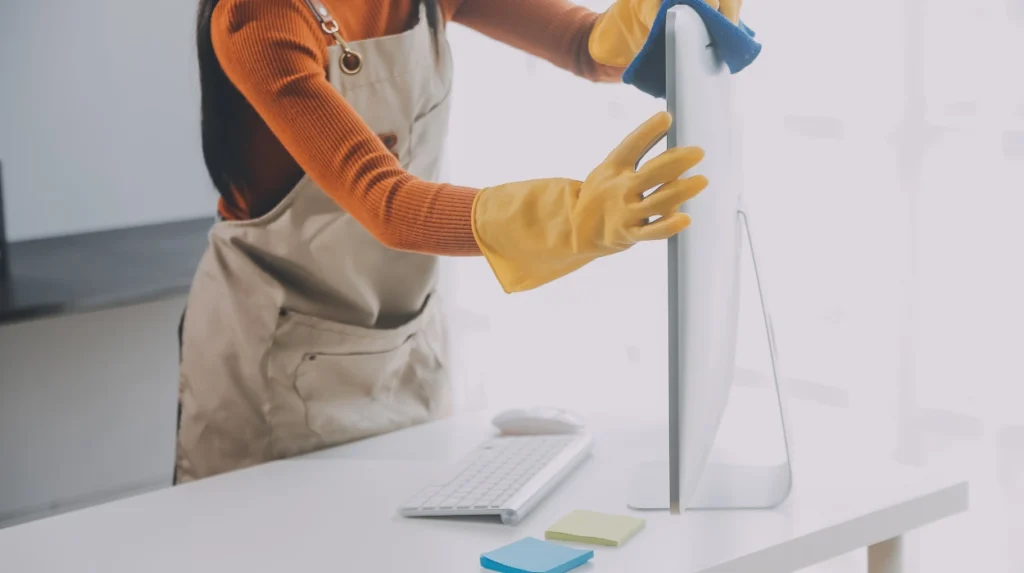
As an example, an example pub can clean tables and floors every day, but not door handles, bar appliances, or bathrooms. Offices can clean the carpets and clear the bins, but they do not pay attention to the keyboards, phones, and the common spaces where germs can live. Incorrect perception of the magnitude and frequency of sanitisation is a common issue.
Common Misunderstandings Manchester Businesses
Most of the businesses in Manchester believe that they need to clean up occasionally to be able to keep hygiene standards. The rest of us assume that the look of cleanliness is safety. This is a wrong belief that may be expensive. Professional audit is not done in some of the facilities because they believe that internal audits are enough. Consistency may also be impacted by staff turnover; the new employees may not be well-trained on proper sanitisation procedures.
The other error, which is evident, is the inappropriate handling of cleaning products. Even ordinary cleaning would be useless with the improper use of disinfectants or overdilution of chemicals. There are also instances when some businesses do not pay much attention to documentation, so they do not keep records on what has been cleaned and when. Such gaps may be easily observed when the councils conduct their inspections, which results in low ratings and even penalties.
Local Case Examples of Hygiene Missteps
Recent reports point to the way Manchester businesses do not understand sanitisation requirements. Poor hygienic practices in the kitchen and unclean surfaces led to a poor rating of certain pubs. Poor cleaning regime in offices resulted in more staff sickness and customer complaints. These cases demonstrate that all the good intentions of the businesses may not be enough in cases when they do not fully understand what sanitisation means.
An example of this was one of the cafes that had a clean dining area, yet they did not clean the kitchen equipment properly, thus they risked contamination. Likewise, an office building was presentable, but it had not taken care of ordinary touchpoints, such as elevator buttons and shared printers. The cases highlight the disparity between perceived and actual hygienic standards.
Regulatory Framework in Manchester
There are also explicit hygiene and sanitisation guidelines that are given by the Food Standards Agency and Manchester City Council. The businesses are supposed to adhere to cleaning timetables, have the staff trained, and have good records. Areas that are assessed through inspections include food handling, equipment sanitisation, waste disposal, and general cleanliness. Lack of adherence may result in low hygiene scores, reputation attacks,s or penalties. The fact is that councils are very strict on hygiene standards in the food service and other areas that deal with the public.
Costs & Consequences of Poor Sanitisation Standards
Failure to practice adequate sanitisation may be costly and reputation-wise. The low hygiene ratings would send away customers, lower the productivity of the staff, and even lead to closure. The negative hygiene reviews impact business performance in Manchester, where the competition is high.
The cost of medical expenses due to staff sickness or contamination cases can accumulate, and insurance payments might be impacted when the standards are not satisfied. Even the small errors, such as the lack of restroom sanitization or unnoticed high-contact surfaces, can escalate to significant compliance problems.
Practical Steps to Improve Sanitization
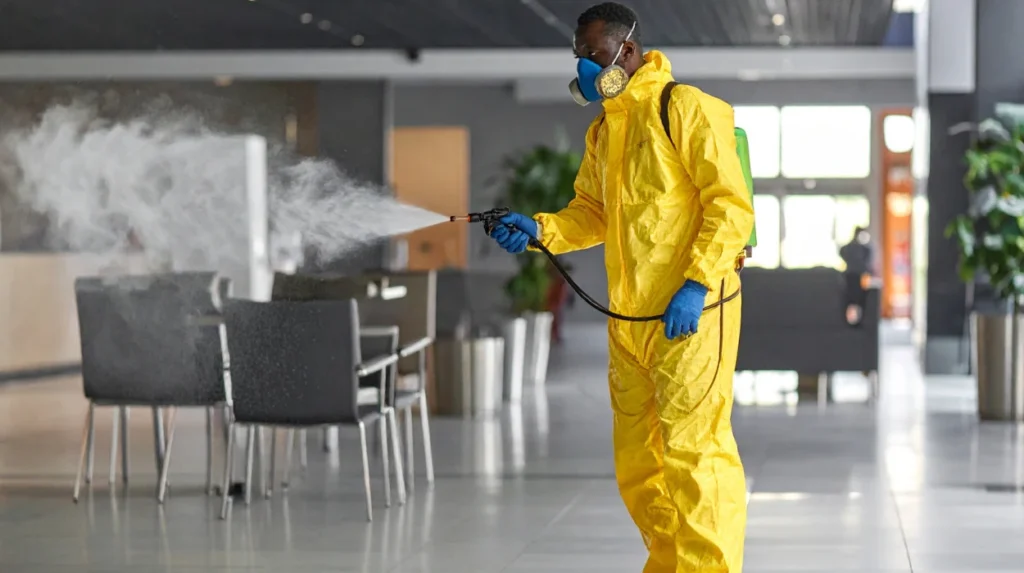
It begins with awareness in order to improve sanitisation. Companies ought to educate their employees on how to clean, and they must know the difference between cleaning and sanitising. It is important to set up a cleaning schedule that encompasses all the areas, particularly high-contact ones.
Audits (Internal or Professional) carried out on a regular basis can be used to point out weak points, prior to inspections. Professional cleaning services should be invested in so that the standards can always be followed. The fact that companies that deal with professionals are guided in Manchester in the context of local regulations can help to avoid failures during inspections and better adherence to hygiene in general.
Why Customer Perception Matters
Manchester customers are conscious of hygiene scores and apparent cleanliness. Lack of sanitisation may destroy trust, despite the excellence of the food or service. Observable measures, like cleaning logs or regular sanitising stations, will soothe the customers and employees.
A promise of good hygiene is another way of distinguishing a business among its competitors. High standards are not only a legal requirement in such an industry as hospitality, but also an important element in customer satisfaction and loyalty.
The knowledge on antiviral sanitisation standards is paramount to any business in Manchester. The number of poor hygiene ratings, regulatory fines, and lost customer confidence can arise due to misinterpretation or negligence. When conducted through the identification of the distinction between cleaning and sanitising, personnel training, and correct time disciplines, companies can guarantee that all staff and clients are safe.
When your business is based in Manchester and requires the assistance of a professional to ensure that you maintain and surpass the sanitisation standards, Bee Cleaning Services Manchester can do so. Having experience in local regulations, we will be able to make sure that any surface or space will be of the best quality concerning cleanliness, and take care of your surroundings and your image.