


That musty smell in your room is most likely coming from your mattress, where years of absorbed sweat, body oils, dead skin cells, and moisture create the perfect environment for odor-producing bacteria and mold. Mattress Cleaning Services in Farnworth address exactly this problem by targeting the biological sources trapped deep within mattress layers, rather than simply masking surface-level smells.
Many homeowners spend time cleaning floors, washing bedding, and airing out rooms, yet the smell persists. This is because the source is rarely visible. It lives inside the mattress itself, building up over months and years in a way that ordinary cleaning routines are not designed to reach. Routine mattress cleaning is one of the most overlooked aspects of home hygiene, and its absence is often the direct reason why bedroom odors become a recurring problem. Understanding what causes these deep-set odors is the first step toward eliminating them properly and maintaining a genuinely clean sleeping environment.
Why Your Bedroom Smells Musty Even After Cleaning
One of the most frustrating experiences for homeowners is thoroughly cleaning a bedroom only to notice the musty odor returns within hours. This happens because the smell is not originating from surfaces like floors, walls, or even bed linen. Those items can be cleaned and refreshed easily, but the mattress beneath the sheets is a different matter entirely. It is a porous, layered structure that absorbs everything it comes into contact with over its entire lifespan, and without dedicated mattress cleaning, those absorbed materials accumulate without limit.
When you sleep, your body loses heat, moisture, and natural oils continuously throughout the night. On average, a person perspires roughly a litre of fluid while sleeping, and a significant portion of that is absorbed directly into the top comfort layers of the mattress. Over weeks and months, this accumulation creates a warm, moist internal environment that is highly attractive to microorganisms. The odor you detect is largely a byproduct of their biological activity, not simply stale air or surface dirt. This is why cleaning the room around the mattress offers only temporary relief when the mattress itself has never received proper attention.
The Role of Your Mattress in Bedroom Odors
A mattress is one of the most used items in any home, yet it is also among the least frequently deep cleaned. Most people replace bed sheets regularly and may vacuum the mattress surface occasionally, but neither of these actions penetrates below the surface fabric layer. Skipping regular mattress cleaning means the internal foam, spring, and fiber layers continue absorbing organic material without any form of extraction, and it is this accumulation that produces the musty, stale odor that characterizes an aging or neglected mattress.
The fabric cover of a mattress is designed to be breathable, which is beneficial for comfort but also means that moisture and organic particles pass through it easily. Once inside the mattress, they settle into layers where airflow is minimal. Without proper mattress cleaning and extraction treatment, these particles remain indefinitely, continuing to decompose and generate odor compounds over time. The longer the issue is left unaddressed, the more deeply embedded the odor becomes, making it increasingly resistant to surface-level solutions.
What Causes Deep-Set Odors Inside a Mattress
The musty smell associated with mattresses is not caused by a single factor but by a combination of biological and environmental processes occurring simultaneously within the mattress structure. Each of these processes contributes to the overall odor profile in a different way, which is why a comprehensive mattress cleaning approach is necessary to address them effectively rather than targeting one cause in isolation.
Sweat and Body Oils: The Silent Contributors
Human sweat is a complex fluid containing water, salt, amino acids, proteins, and fatty acids. When this fluid is absorbed into a mattress, the water component evaporates relatively quickly, but the organic compounds remain. These residual substances undergo a gradual decomposition process facilitated by heat and the natural bacteria present in the sleeping environment. The byproducts of this decomposition include volatile organic compounds that are directly responsible for the sour, musty smell commonly reported in bedrooms, and they cannot be removed without targeted mattress cleaning that reaches into the affected layers.
Body oils follow a similar process. The sebum naturally produced by human skin is a mixture of fats, wax esters, and squalene. When transferred to a mattress surface and absorbed into deeper layers, these oils do not evaporate. Instead, they oxidize and break down chemically over time, producing a distinct rancid or stale smell. Because this process is slow and gradual, the odor often develops subtly before becoming noticeably unpleasant. By the time the smell is obvious, the contamination within the mattress is already significant, and surface-level mattress cleaning products are rarely sufficient to resolve it at that stage.
Dust Mites and Their Waste Products
Dust mites are microscopic arachnids that thrive in bedding and mattress environments. They feed on dead human skin cells, which are shed in substantial quantities during sleep. A typical mattress can host hundreds of thousands of dust mites, particularly if it has not undergone professional mattress cleaning in several years. Their presence is not the primary source of odor, but the waste products they produce contribute meaningfully to the overall smell profile inside the mattress.
Dust mite excrement contains digestive enzymes and proteins that, when present in large quantities, add a distinctive musty note to bedroom air. As these particles dry and break down, they also become airborne, meaning the odor is not just trapped within the mattress but can circulate throughout the room when air moves across the bed surface. This explains why the smell in a bedroom often becomes more pronounced when a bed is disturbed, such as when getting in or out of it or when changing bed linen, and why mattress cleaning that includes high-powered extraction is the only reliable way to reduce dust mite populations to safe levels.
How Humidity and Poor Ventilation Worsen Bed Odors
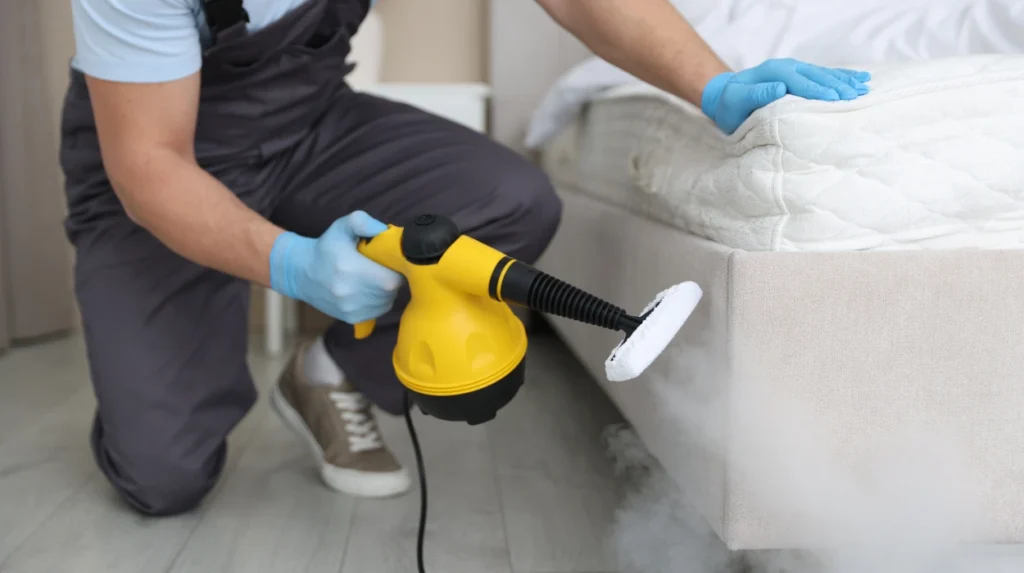
Moisture is the single most important factor in accelerating mattress odor development. Bedrooms that are poorly ventilated, located on ground floors, or situated in humid climates are particularly susceptible to mattress odor problems because the moisture absorbed during sleep has nowhere to evaporate to. In these conditions, even a mattress that has received some basic mattress cleaning can redevelop odors quickly if the underlying humidity issue is not managed alongside the cleaning process.
In homes where windows remain closed for long periods, or where central heating creates warm, stagnant air, the conditions inside a mattress become even more favorable for bacterial and mold growth. Mold spores are naturally present in most indoor environments, and they require only moisture and an organic food source to germinate and grow. Once mold establishes itself within mattress layers, it produces a distinctively earthy, damp odor that is far more persistent than the smell caused by sweat or dust mites alone. At this stage, simple airing out of the mattress is unlikely to resolve the problem without targeted professional mattress cleaning intervention that addresses mold at the source.
The Difference Between Surface Smells and Deep-Set Odor
Not all mattress smells originate from the same depth, and distinguishing between a surface smell and a deep-set odor is important for choosing the right mattress cleaning response. Surface odors are those caused by recent spills, fresh sweat, or skin contact that has not yet penetrated below the top fabric layer. These can often be addressed with prompt spot cleaning, baking soda application, or airing the mattress in a well-ventilated space, and in these cases a basic approach to mattress cleaning is usually sufficient.
Deep-set odors are fundamentally different. They are the result of accumulated contamination within the internal layers of the mattress, built up over months or years. These smells tend to be widespread rather than localized, persistent despite surface treatments, and stronger in warm or humid conditions. Sprays and deodorizing products that are applied to the mattress surface may temporarily reduce the intensity of the smell, but they do not neutralize the compounds causing it. For a more detailed comparison of these approaches, understanding odor-masking methods versus true mattress sanitization helps clarify why surface mattress cleaning treatments consistently fall short.
When Should You Consider Professional Mattress Cleaning
The point at which a mattress odor warrants professional mattress cleaning is generally when the smell persists despite regular bedroom ventilation, when it is noticeable immediately upon entering the room, or when it returns quickly after surface treatment. These are indicators that contamination has penetrated beyond the reach of domestic cleaning methods. Mattresses that are more than two to three years old without professional mattress cleaning are also likely to have a degree of embedded organic contamination, even if the smell is not yet obvious to the senses.
Other indicators include allergy or respiratory symptoms that worsen at night or in the bedroom, visible staining from spills or biological fluids, or a mattress that has been used in a property previously occupied by pets or smokers. All of these scenarios involve a level of embedded contamination that requires extraction equipment and professional-grade sanitizing agents to address through thorough mattress cleaning. Choosing professional deodorizing for your mattress in Farnworth is a practical solution for persistent odors that have resisted all household treatment attempts.
What Professional Mattress Cleaning Actually Does
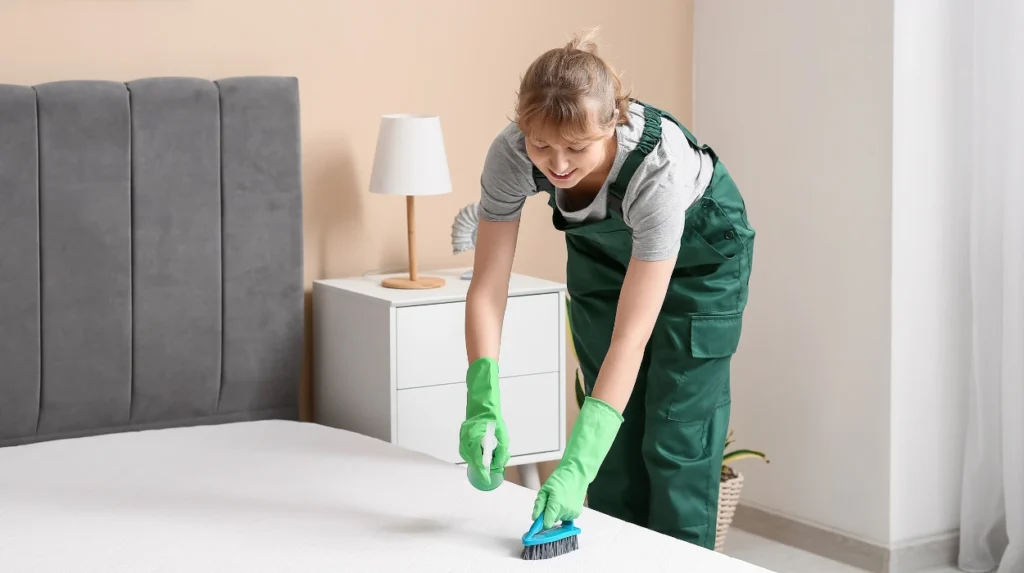
Professional mattress cleaning is a structured process that works in multiple stages to address contamination at the appropriate depth. The process typically begins with a thorough dry vacuuming using high-powered equipment designed to extract dust mite waste, dead skin cells, and dry particulate matter from deep within the mattress layers. This pre-treatment stage removes a large proportion of the biological material responsible for odor before any moisture or treatment agent is applied, which is what separates professional mattress cleaning from anything achievable with a domestic vacuum cleaner.
Following extraction, hot water extraction or steam treatment is applied to the mattress surface and penetrates into the upper layers to kill bacteria, mold spores, and residual biological matter. Professional technicians use sanitizing agents that are formulated to break down the proteins and fatty acids that cause persistent odors, rather than simply adding a fragrance to mask them. The final stage of professional mattress cleaning involves controlled drying to ensure no residual moisture is left within the mattress, which would otherwise create the conditions for new microbial growth. This end-to-end approach is what distinguishes professional mattress cleaning from domestic alternatives, and it is why the results are significantly more durable. Exploring professional mattress cleaning services in Farnworth gives a clear picture of what this process delivers in practice.
Understanding the origin of a musty bedroom smell changes how the problem is approached. When the source is identified as biological contamination within the mattress rather than a surface issue, it becomes clear that surface-level solutions will not produce lasting results. The combination of sweat, body oils, dust mite activity, and moisture creates conditions inside a mattress that ordinary cleaning routines and basic mattress cleaning products are not equipped to resolve. Bee Cleaning Services Manchester provides professional mattress cleaning solutions designed specifically to address these deep-set sources, delivering results that improve both the hygiene and the air quality of your sleeping environment.
How to clean a mattress in Casper?
Cleaning a mattress in Casper involves vacuuming the surface, spot-treating stains with a mild detergent, and allowing it to air dry fully. However, for deep-set odors and embedded contamination, professional mattress cleaning services deliver far more thorough and lasting results than any home method.
What are the symptoms of mattress toxicity?
Symptoms linked to a contaminated mattress include persistent skin irritation, unexplained headaches, nasal congestion, and worsening respiratory issues during sleep. These reactions are commonly triggered by dust mite waste, mold spores, and chemical off-gassing that accumulate deep within mattress layers over time.
How to tell if your mattress is making you sick?
If you regularly wake up with allergy symptoms, a sore throat, or skin irritation that improves when you sleep elsewhere, your mattress is likely contributing to the problem. A musty odor, visible staining, or a mattress older than three years without professional cleaning are strong additional indicators.
Can a bad mattress affect blood pressure?
A mattress harboring allergens, mold, or dust mites can disrupt sleep quality significantly, and consistently poor sleep is directly linked to elevated blood pressure over time. Addressing the underlying hygiene of your mattress through professional cleaning supports better sleep, which in turn supports healthier cardiovascular function.
What does it cost to clean a mattress?
The cost of professional mattress cleaning in Farnworth varies depending on mattress size, contamination level, and the cleaning method used. Mattress Cleaning Services in Farnworth from Bee Cleaning Services Manchester offer competitive pricing that reflects the depth of treatment provided, making it a cost-effective investment compared to early mattress replacement.