

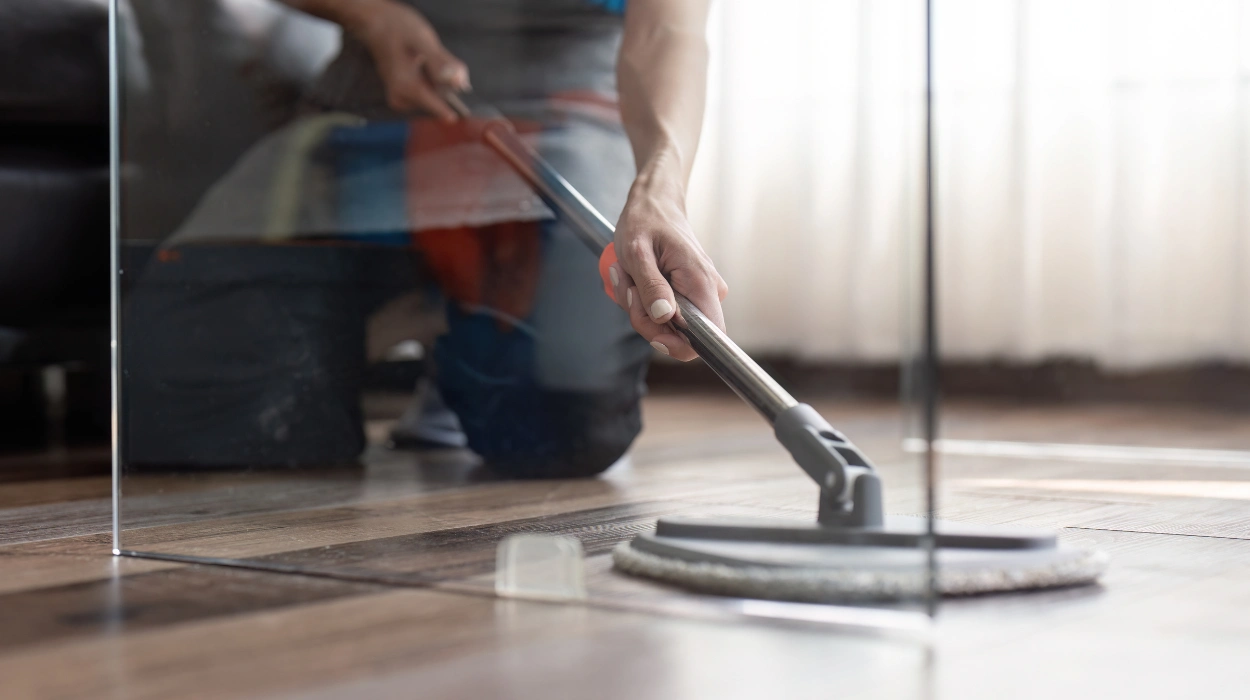
Clean floors do not just make a house appear good. However, even nowadays, many individuals are in a hurry when they have to vacuum and mop, and they are not aware of how the various surfaces should be cleaned. The ultimate guide to vacuuming and mopping all floors for a spotless home is aimed at making you do less work but clean more efficiently (without causing damage to any flooring in your residence).
It is possible to eliminate dust, allergens, and other plastered dirt by knowing how to vacuum and mop floors to prevent the buildup of dirt. Floor cleaning can be an easy task when it is properly done so that your home is healthier and always clean.
Why Proper Floor Cleaning Matters
Warp, dull, and permanent damage may be brought about by poor practices like the incorporation of excess water or incorrect cleaning agents. Learning how to take care of your floor early will save you the cost of repairing it in the future, and maintain your place of living healthier for all.
Vacuuming Before Mopping
The other question that most homeowners usually ask is whether to mop or vacuum. The solution always lies in vacuuming, then mopping. Vacuuming clears dust, crumbs, and pet hair, which would otherwise form a muddy residue after the addition of water.
Mopping without vacuuming will only spread everywhere. Such an extensive vacuuming procedure moisturises the surface such that when the mop is applied, the surface is well prepared to receive it, hence cleaning instead of streaking. This is the easiest order to use in order to get a spotless floor cleaning result in the house.
Preparing Your Floors Before You Start Cleaning
Transporting light furniture, pre-checking the sticky areas, and having the appropriate tools at hand will save time and increase efficiency. The clean floor permits you to clean around edges, corners and traffic areas.
The other thing to know is the type of floor you have before using any cleaning product. Application of the incorrect solution may lead to long-term damage.
Choosing the Right Tools for Vacuuming and Mopping
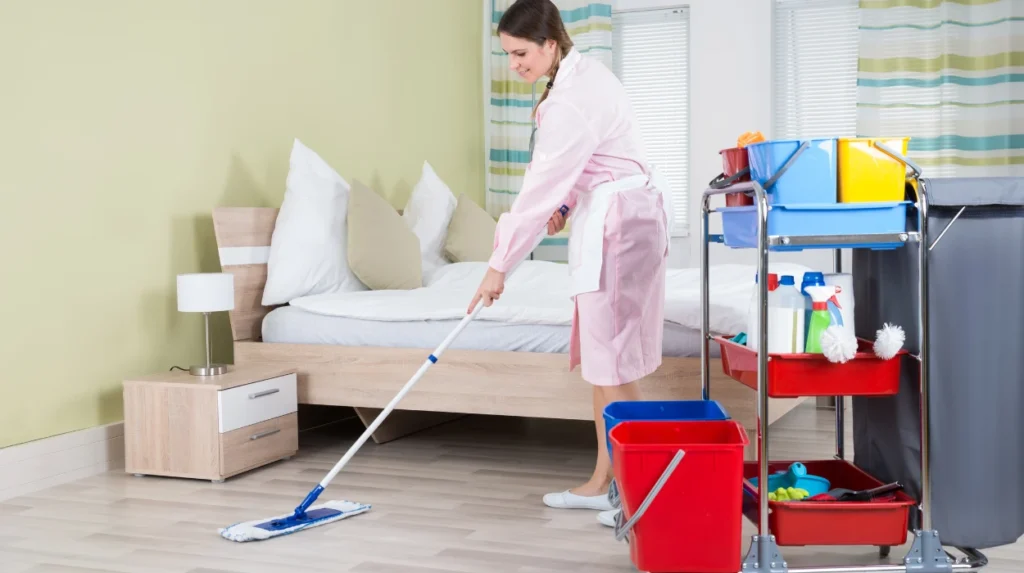
A vacuum cleaner that is well-suited and fitted with appropriate attachments will be able to easily remove dust that is entrenched in the interior of the carpet and in the skirting boards. Pet hair and upholstery attachments prove useful in a household with high traffic.
Microfiber mops may be regarded as one of the most effective to use when mopping the floor. They have the ability to trap dirt rather than spreading it, and also use less water, which is less harmful to most surfaces.
Step-by-Step Guide to Vacuuming Floors Properly
The beginning of vacuuming consists of slow, controlled steps. Dust is left behind as a result of rushing across the surface, particularly in the carpets. The overlap strokes will provide complete coverage, and the vacuuming will act to move the dirt that is trapped by the carpet pile.
It is necessary to pay attention to corners, edges, and under furniture. These spaces accumulate dust, which in many cases impacts the quality of indoor air.
How to Vacuum and Mop 6 Different Types of Floors
Hardwood Floors
Hardwood floors should be given special attention in the sense that too much moisture can ruin them. Hardwood floors can be vacuumed with a soft brush attachment or with a vacuum cleaner that will not scratch the floor. Mopping, a slightly wet microfiber mop using a cleaner that is non-toxic to the wood, should ensure that the surface is clean without damaging its finish.
Tile and Grout Floors
Floors made of tile and grout are stronger, and they hold dirt in between grout lines. The initial step is to vacuum and then follow up with the diligent use of mopping to loosen the dirt. Floors are kept pretty and clean through regular cleaning of tiles and grout.
Laminate Floors
The floor of the laminate must not be excessive. Swelling is caused by high moisture content and can be avoided by mopping floors with a small amount of water, and vacuuming floors with weak suction prevents scratches. Cleaning of streak-free laminate depends on the appropriate solution and fast drying.
Vinyl Floors
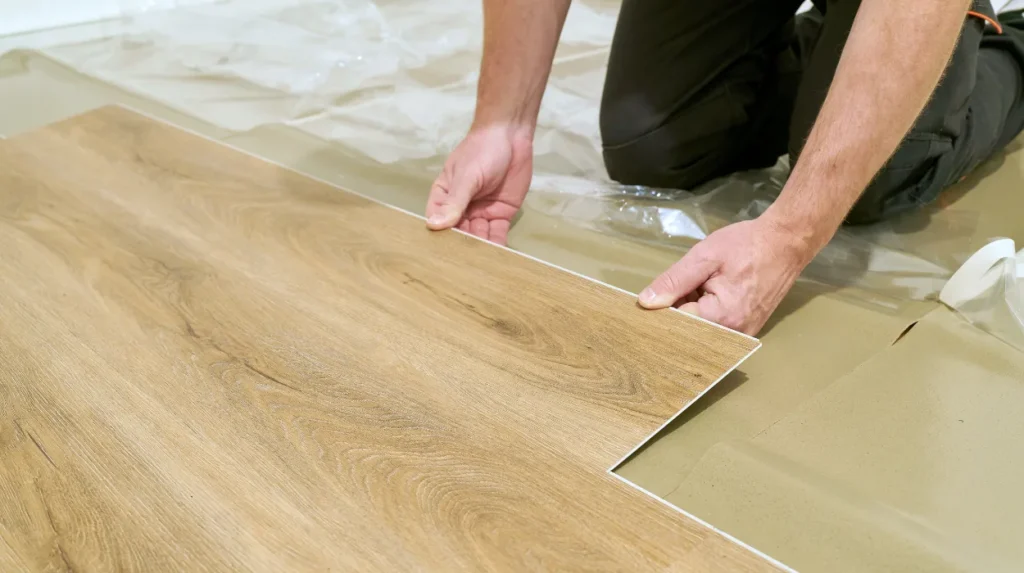
Vinyl floors are less complicated to maintain, and still, they are subject to good care. The dust on the floor covered with vinyl is vacuumed out, and soft mopping will avoid dullness in the long run.
Stone and Marble Floors
Stone and marble floors should be cleaned with a pH-neutral cleaner in order to maintain the natural finish. Abrasive particles are removed with the help of vacuuming, and mopping is done carefully, not to etch the stone.
Carpeted Floors
Vacuuming is very critical in carpeted floors. The regular vacuuming of carpets helps clean the floor and prolongs the service life of carpets.
How Often Should You Vacuum and Mop Your Floors?
Carpets can be vacuumed a number of times per week, whereas hard floors can be mopped less often. Deep floor cleaning at the seasonal level aids in clearing of accumulation that is possible to be overlooked in regular routines. A realistic schedule will help avoid the situation when dirt becomes overwhelming, and the dirt will always remain clean without any additional work.
Common Vacuuming and Mopping Mistakes to Avoid
Among the biggest errors that individuals commit is excessive water used in the process of mopping. Extra moisture destroys floors and leaves some residue. Missing out on vacuuming and cleaning the floor with mops beforehand is another possibility that undermines the effectiveness of cleaning.
Floor surfaces might also be damaged by the application of the wrong cleaning solution. Tips in floor care will usually focus on using the products that are tailored to the particular material to keep it looking and lasting longer.
Maintaining Clean Floors Between Deep Cleans
Habits on a daily basis are significant in the long-term maintenance of floors. Leaving shoes off at the door, wiping spills as soon as they occur, and speedy vacuuming on busy floors are some of the ways of ensuring that dirt does not accumulate. These are easy things that can help minimise the frequency of deep cleaning.
Health, Hygiene, and Indoor Air Quality Benefits of Clean Floors
Those dust particles sitting on your floor? They don’t just stay there. Every time you walk across the room, they get kicked back into the air. And then you breathe them in.
Regular hoovering makes a real difference. Especially if you’ve got a decent filter on your vacuum. It pulls out the allergens, the dust, all that invisible stuff that makes breathing uncomfortable.
The benefits go beyond just dust:
Fewer bacteria are lurking in corners
Less of that musty smell
Cleaner air for everyone at home
This matters even more if you’ve got kids crawling around. Or pets shedding everywhere.
Creating a Simple Floor Cleaning Routine That Actually Works
“Deep clean every room for three hours on Saturday.” Sounds great on paper. Never happens in real life. What actually works? Short bursts. Regular habits. And each session feels manageable instead of exhausting. Aim for progress. Got five minutes? Do the hallway.
When you hoover and mop the right way, something shifts. Your home doesn’t just look cleaner. It feels different. The air seems fresher. Surfaces last longer. You’re not constantly battling grime that’s been sitting there for weeks. But let’s be honest. Keeping on top of it takes time. And energy. And sometimes you just don’t have either.
That’s where getting some help makes sense. Not because you can’t do it yourself. But because life gets busy. Bee Cleaning Services Manchester handles all the floor cleaning properly. So you get a home that feels fresh and welcoming. Without spending your entire weekend on your hands and knees scrubbing.