


End of lease cleaning in Manchester involves not only cleaning up. The expectation of the landlords and letting agents is that the property should be returned in a similar state to that it is in the original inventory. It is a pity to note that most tenants do not take into consideration the details required. Cleaning work is considered to be a routine process; however, cleaning is controlled by examination, completeness, and standard compliance.
An analysis of renters in that 63% of them had encountered problems with deductions in their deposits because of cleaning problems, with nearly a third having lost more than £500. It is not only about dirt but also about not having access to places and surfaces that are why end-of-lease cleaning fails inspections in Manchester . The initial move towards preventing the loss of deposits at huge costs is knowing that there are passable checks during inspections.
Landlord Checks on Tenants
A landlord or an inventory clerk checking up on a property is searching for strict compliance with cleaning standards. The landlord checklist requirements take into consideration each room and surface, and usually compare it with the original check-in inventory. Ordinarily, such common points are skirting boards, window sills, door frames and light fixtures. Agents also verify that cupboards and wardrobes are wiped inside and outside, and floors are cleaned adequately using a vacuum cleaner or mopper, depending on the material.
Kitchens are inspected and checked for grease and cleanliness of ovens and hygienic surfaces, and the bathrooms also need to be descaled in the sinks, bathtubs, and showers. Berries like sockets, switches and extractor fans are even considered. These are usually skipped, resulting in inspection failures and deductions of deposits.
Top Reasons End of Lease Cleaning Fails Final Inspections in Manchester
Incomplete or Surface-Level Cleaning
Most tenants do their cleaning in a superficial manner, concentrating on the visible surfaces and disregarding the areas designated by the landlords as areas of concern. Furniture dust, radiators, and cupboards are always dusty. Superficial cleaning may give a house an appearance that it is neat, but it does not pass inspections.
Agents want deep cleaning, which is professionally done. According to the national surveys, more than 50 per cent of failed inspections are because of inadequate cleaning, and this indicates that outward appearances do not guarantee the deposit back. Even tenants are not aware that any omission, even in small things such as skirting boards or shelf tops, can end up costing them deductions.
Missing Deep Cleaning of Critical Areas
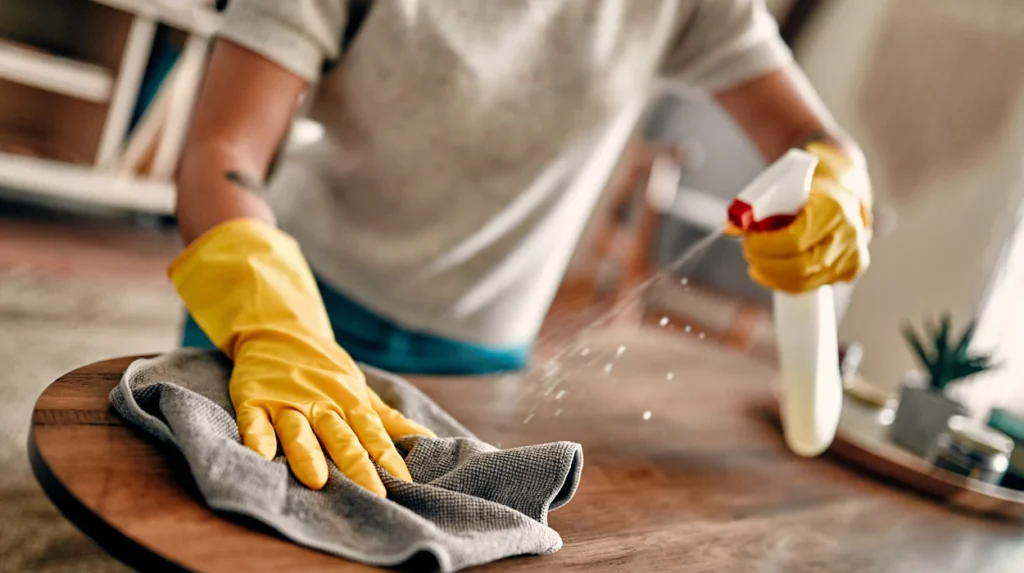
Failed inspections are likely to be caused by kitchens and bathrooms. Ovens, extractor fans, and fridges should be well washed and disinfected, whereas sinks, showers, and baths have to be descaled. The accumulation of limescales, especially in the hard water regions of Manchester, is likely to attract deductions should the problem go unchecked. These areas are clearly indicated in the landlord checklists.
These are some of the key areas in which failure would lead to failure in inspection, even when all the other areas of the property are clean. It has been demonstrated that more than half of nonconformity in inspection takes place in kitchens, and that a thorough cleaning is important.
Overlooked Detail Spots
The agents are sensitive to details tenants overlook, such as mould in corners, dust on vents, dirt behind appliances, and marks on walls or doors. One of the most common DIY cleaning undertakings not addressed is blinds, light fixtures or window sills.
Landlords take them as important indicators of cleanliness,s especially since they may accumulate throughout the tenancy. The absence of such spots may immediately suggest that the property has not been cleaned, despite the expanses being polished.
Incorrect Tools & Products
Inspecting failures that occur mostly relate to the use of ineffective cleaning products or the use of improper tools. The cheap supplies can leave streaks or cannot remove grease, limescale, and grime easily. Commercial-level supplies and remedies guarantee efficient cleaning, which is occasionally overlooked by house cleaning.
The industry statistics indicate the pass rates are far higher in professionally cleaned properties since the appropriate products attack the stubborn dirt and bacteria. This is something that tenants trying to save money pay little or no attention to, assuming that the use of the wrong cleaning solution to clean the ovens, tiles, and fixtures will not have any effect.
Rushing the Cleaning Service
Another cause of failing inspection among tenants is time pressure. Others are trying to do end-of-lease cleaning at the last-minute stages, and hence they end up neglecting corners, failing to do proper scrubbing and not cleaning the rooms. Landlords can detect when cleaning is being done in haste, dusty floors, worn-out fittings, and areas that have been cleaned unevenly are indications that the property has not been well-maintained.
According to surveys, 88 per cent of the agents listed rushed cleaning as a significant reason of an inspection failure. This can be done by simply taking time and doing each room at a time . This will significantly raise the probability of passing.
DIY vs Professional End-of-Lease Cleaning Service
The cleaning companies operating professionally know what is expected of them by the landlords and what the local inspections require as standards, and therefore, all the areas, including cupboards and extractor fans, are of standard. With the help of specialised equipment and environmentally friendly but efficient products, specialists can eliminate hard stains, limescale, and grime that, in the case of DIYs, can be overlooked. This detail has a direct effect on deposit returns.
Having specialists reduces stress and the chances of failing inspection, even for tenants who have limited time. This is true in Manchester, where the rigour of inspection is very high, and the saving which is made by investment in professional cleaning of premises may at times exceed the price paid in the retention of deposits.
Room-by-Room Cleaning Focus to Avoid Inspection Failures
Kitchen Cleaning.
The central point of inspection is the kitchens. All the surfaces, including worktops and cabinet interiors, should be wiped and disinfected. The appliances, such as ovens, fridges, microwaves, and dishwashers,s should not have grease and food remains. Extractor fans, tiles and sinks are to be cleaned really well and the limescale taken away.
The agents also inspect the backs and undercarriages of appliances. Absence of even a single section can cause deductions. The deep, careful cleaning of all the components of the kitchen will decrease the chances of losing the deposit by a great degree. Also, it is necessary to remember that landlords compare the condition of cleanliness with the first inventory, and it is important to pay attention to every detail.
Bathroom Cleaning
Bathrooms are also very imperative. Landlords ensure that toilets, showers, baths and sinks are descaled and have no mould. The tiles and grout should be washed to eliminate the dirt. Glass surfaces, mirrors and chrome fittings are to be polished. Inspection of the ventilation space, extractor fans and skirting boards is also done.
A neat and clean bathroom shows that there has been proper preparation and a high chance of passing inspection. The national statistics show that cleanliness in the bathroom contributes a significant percentage of deductions in the deposit; such activities should be considered first.
Bedroom and Living Area Cleaning

Dust should be removed in bedrooms and living areas, and it should also be vacuumed in carpets, including underneath furniture. Dusting of blinds and window sills, cleaning of walls, switches, and fittings of light is required. Wardrobes and cupboards should be clean and wiped.
The tenants tend to undervalue the significance of these areas as they are thought to be less significant, but they are regularly subtracted due to neglected details by the agents. Professional cleaning of such spaces can help to lose a deposit and win one.
In order to pass an end-of-lease inspection in Manchester, you need to do more than just a quick tidy-up. You should also expect to give the property a deep clean with a focus on detail, as well as being sure that you comply with the landlord’s checklist. The kitchen and bathroom are the two most important areas of focus; however, tenant failure to clean specific areas such as skirting boards, extractor fans and cupboard interiors are common reasons why tenants fail their inspections.
Many tenants try to DIY their cleaning, but generally do not meet the expected level of cleanliness; hiring a professional cleaning service assures tenants that they are cleaning every area of the property to the required inspection standard.By proactively planning and implementing a thorough cleaning routine while being aware of common pitfalls, tenants can minimize their risk of losing their deposit upon exiting their lease.
If you are looking for a trusted provider to help ensure you are successful in passing your end-of-lease inspection and retaining your deposit, Bee Cleaning Services Manchester provides you with knowledgeable and skilled staff who perform meticulous end-of-lease cleaning services that maximize your chances of passing your inspections and receiving your full deposit back.