

NDIS Cleaning Services in Farnworth are a fully funded, plan-supported option for eligible participants whose budgets include assistance with daily life or household maintenance tasks. If your NDIS plan covers home-related support, you can arrange a professional deep clean through an approved provider without bearing the cost directly from your own pocket.
What NDIS Deep Cleaning Actually Covers
Deep cleaning under an NDIS plan is a structured, comprehensive process that targets areas in a home that cannot be adequately managed through routine surface cleaning. This includes the interior of kitchen appliances, bathroom tile grout, extractor fans, skirting boards, window sills, and beneath large furniture where dust and allergens accumulate over time.
For participants living with physical disabilities, chronic fatigue conditions, or cognitive impairments, maintaining these areas independently is often not a realistic expectation. NDIS-funded deep cleaning exists precisely to bridge this gap, ensuring the home environment remains safe, hygienic, and supportive of the participant’s overall health goals. The scope of any individual clean is always agreed upon before work commences, and the tasks completed are documented in line with NDIS reporting requirements. This level of transparency ensures participants, support coordinators, and plan managers are always informed about how funds are being used.
How NDIS Funding Applies to Deep Cleaning
The National Disability Insurance Scheme categorises household cleaning support primarily under the Core Supports budget, specifically within the Assistance with Daily Life funding line. This category is one of the more flexible support streams available, meaning participants can often direct it toward a one-off professional deep clean rather than exclusively routine weekly visits. In some plans, cleaning support may appear under Improved Daily Living, particularly when the purpose is building a participant’s capacity to manage their household tasks more independently over the longer term.
Participants should review their current plan carefully or speak with their Support Coordinator before booking a service, to confirm which budget line applies and how much funding remains available. It is also worth noting that NDIS funding decisions are made by the NDIA based on what is reasonable and necessary for each individual participant, so the exact scope of covered services will vary. A reputable cleaning provider can assist participants in understanding how proposed tasks align with their stated plan goals before a service agreement is signed.
Who Qualifies for NDIS Deep Cleaning in Farnworth
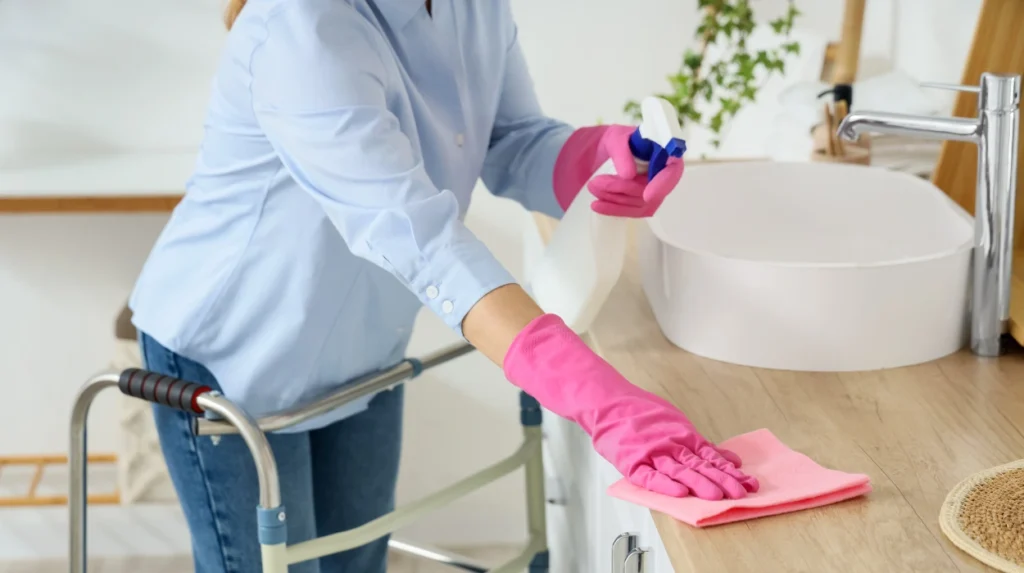
Eligibility for NDIS-funded deep cleaning is determined by the content of the individual participant’s plan rather than a universal entry requirement. Participants who have difficulty performing household tasks as a direct result of their disability, whether the disability is physical, cognitive, neurological, or psychosocial, are the most likely candidates to have cleaning support included in their plans. The deep cleaning component is especially relevant for those moving into a new property, returning home after a hospital or residential care stay, or living in a property that has accumulated significant dirt or neglect over an extended period without professional intervention.
In these specific circumstances, a one-off deep clean establishes a clean, manageable baseline before regular maintenance visits begin. Support Coordinators and Local Area Coordinators play an important role in helping participants identify and articulate these needs during plan reviews or at the point of plan creation. If your current plan does not explicitly include deep cleaning, raising this during your next scheduled review with a clear rationale tied to health, safety, or hygiene goals gives the best chance of having it included.
Understanding What the Free Site Visit Involves
Requesting a free site visit is the most practical and low-commitment first step toward accessing professional NDIS deep cleaning in Farnworth. During the visit, a member of the cleaning team will assess the property in full, noting areas that require specialist attention, additional labour time, or specific equipment to address properly. The site visit also gives the participant, their carer, or support person the opportunity to ask questions, express preferences, and flag any areas of the home that require careful or sensitive handling.
Access arrangements, scheduling preferences, and any relevant information about the participant’s disability or support needs can all be discussed openly at this stage. Once both parties are satisfied with the proposed scope and service agreement, a date is confirmed and the clean proceeds according to the agreed plan. This structured approach ensures that nothing is assumed and the service delivered genuinely reflects what the participant actually needs.
For participants who want to understand how specific items such as flooring are handled under NDIS funding, reading about NDIS carpet cleaning and how funding limits apply can help clarify expectations before the site visit takes place.
Why Provider Compliance and Registration Matter
Choosing the right provider for NDIS-funded deep cleaning is not simply a matter of preference; it carries real implications for compliance, safety, and funding integrity. Participants whose plans are managed directly by the NDIA are required to use NDIS-registered providers, while self-managed and plan-managed participants have greater flexibility in provider selection. Regardless of registration status, any provider delivering NDIS services should carry appropriate public liability insurance, follow safe work practices, maintain accurate service records, and use cleaning products that are appropriate for participants with sensitivities or respiratory conditions.
These standards are not administrative formalities but direct protections for the participant receiving the service. Engaging a provider who does not meet these standards creates risk not only in terms of service quality but also in relation to NDIS audits and record-keeping requirements. Taking the time to verify a provider’s credentials before signing a service agreement is always a worthwhile step.
If your current provider is not meeting these expectations, a detailed guide to switching NDIS cleaning providers can walk you through the process of transitioning safely and without disruption to your ongoing support.
What a Professional Deep Clean Looks Like Step by Step
A professional NDIS deep clean in Farnworth follows a systematic, room-by-room approach that differs substantially from what a standard weekly domestic clean covers. In the kitchen, the team will degrease extractor fans, clean inside ovens and under appliances, scrub tile grout, disinfect worktops and cabinet surfaces, and remove limescale from sink fixtures. Bathrooms receive comprehensive descaling of taps and showerheads, disinfection of toilet areas, thorough tile and grout treatment on both walls and floors, and attention to any visible mould growth on sealant or grouting.
Living spaces and bedrooms are vacuumed under and behind furniture, with curtains, upholstery, and carpets treated according to material requirements and the participant’s stated preferences. All waste and cleaning materials are removed from the property at the conclusion of the clean, leaving the space immediately usable and comfortable. The team conducts a post-clean walkthrough to confirm that all agreed tasks have been completed to the expected standard before departing the property.
Preparing Your Home Before the Deep Clean Arrives

Preparing for a professional deep clean does not require the participant to undertake any cleaning themselves beforehand, which is precisely why this service exists in an NDIS context. The most helpful preparation steps involve ensuring that all areas of the property are accessible to the cleaning team, including cupboards, storage areas, and rooms that might typically be kept closed. Fragile or valuable items should be secured or moved to a safe location before the team arrives, and the participant or their carer should communicate in advance if any surfaces require specialist handling due to material type or finish.
Participants with pets should arrange for animals to be kept safely in a separate area for the duration of the clean, both for the animal’s comfort and to allow the team to work without interruption. Access details such as entry codes, key safe arrangements, or building intercom procedures should be confirmed with the provider ahead of the scheduled date. These simple steps make a significant difference to how efficiently and thoroughly the cleaning team can complete the work within the agreed timeframe.
Aligning Your Deep Clean with Your NDIS Goals
Every NDIS-funded service should be aligned with the goals documented within the participant’s active plan, and deep cleaning is no different. When booking a deep cleaning service, it is useful to consider how a clean home environment directly supports goals related to health maintenance, safety, independent living, or community participation. A provider with experience in the NDIS space will understand how to frame service delivery in a way that connects clearly to these stated outcomes, making it easier to justify the service during plan reviews or audits.
Participants who are approaching a plan review should document any occasions where their home environment has presented a risk or health concern, as this evidence supports the case for including or expanding cleaning support in the next plan period. The relationship between a clean living environment and a participant’s physical and mental wellbeing is well established, and framing deep cleaning as a health-supporting intervention rather than a domestic convenience strengthens the funding case considerably. Working with a provider who understands the NDIS framework makes this process more straightforward for both participant and coordinator.
For a full overview of how NDIS-approved deep cleaning services are structured and delivered, reviewing the available service options is a useful step before confirming your booking.
Professional NDIS deep cleaning in Farnworth is a clearly defined, accessible, and fully documentable support option for participants whose plans include household maintenance funding. The process, from requesting a free site visit through to a completed, post-clean walkthrough, is designed to be transparent, participant-centred, and outcomes-focused. Bee Cleaning Services Manchester provides NDIS Cleaning Services in Farnworth through a structured approach that prioritises compliance, communication, and consistently high cleaning standards. Every service is carried out by trained professionals using appropriate equipment, ensuring that participants are left with a home that is safe, hygienic, and supportive of their everyday wellbeing.
What does a deep clean entail?
A deep clean covers high-contact and hard-to-reach areas such as inside appliances, grout lines, skirting boards, and beneath furniture. Unlike a standard clean, it targets built-up dirt, bacteria, and allergens that regular maintenance misses. For NDIS participants in Farnworth, the scope is agreed upon during a free site visit before any work begins.
What is the best month to deep clean a house?
Spring, particularly March to May, is widely considered the best time for a full deep clean as it follows the damp winter months, where mould, dust, and condensation tend to accumulate indoors. For NDIS participants, scheduling is flexible and based on individual needs rather than seasonal preference. A provider can arrange a clean at any point in the year based on your plan and property condition.
What areas are often missed during deep cleaning?
Extractor fans, behind large appliances, window tracks, door frames, and bathroom sealant are among the most commonly overlooked areas in both routine and deep cleaning sessions. Professional NDIS cleaning teams in Farnworth are trained to include these zones as standard. Addressing them regularly prevents long-term buildup that becomes harder and more costly to treat.
What is the 3-minute rule in cleaning?
The 3 minute rule encourages completing small cleaning tasks immediately if they take three minutes or less, such as wiping a surface or rinsing a dish. It is a habit-building strategy designed to prevent minor mess from becoming a larger problem over time. For NDIS participants with limited capacity, professional cleaning support removes the pressure of relying on this approach entirely.
What not to do when cleaning?
Avoid mixing bleach with ammonia-based products, as this produces harmful fumes that are particularly dangerous in enclosed spaces. Never use abrasive scrubbers on delicate surfaces such as stainless steel or treated timber, as this causes permanent damage. A professional cleaning team understands which products and methods are safe for each surface type and safe for participants with sensitivities.