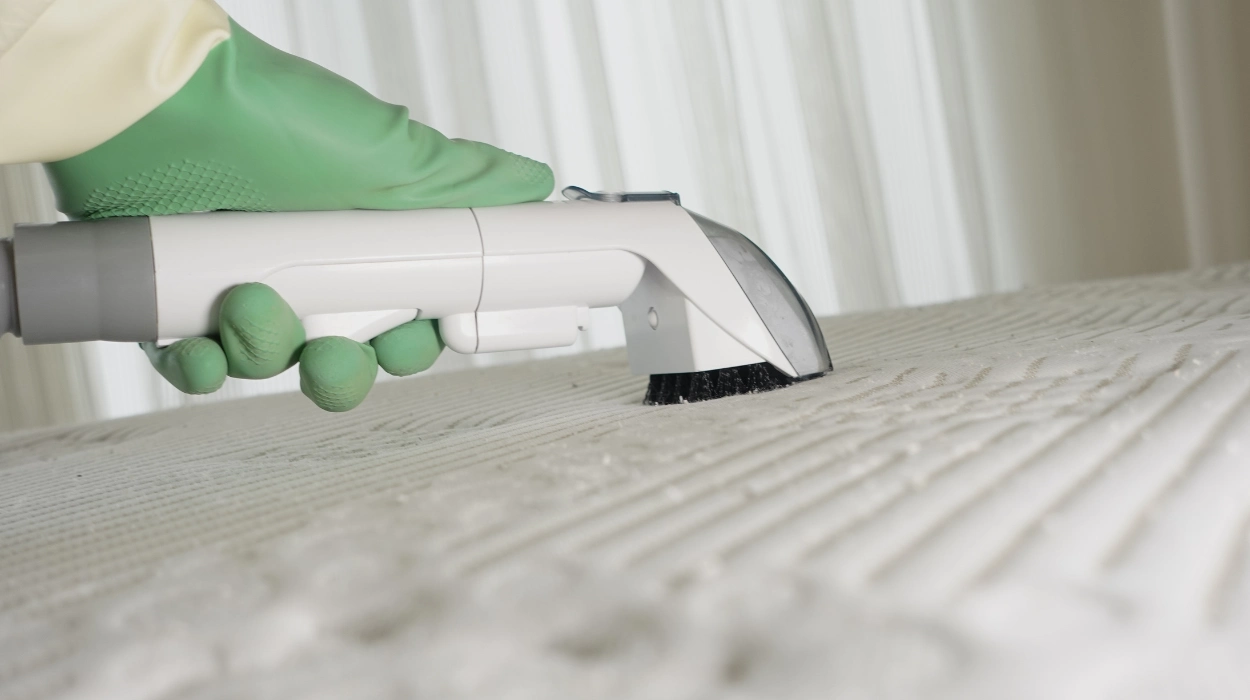
Many cotton, polyester, microfiber, and other water-tolerant upholstery fabrics can be steam cleaned when their care label permits water-based treatment. Silk, leather, some velvet, wool, and X-coded fabrics generally require alternative methods.
The safest choice depends on the manufacturer’s cleaning code, fibre composition, fabric construction, dye stability, and the amount of heat and moisture the material can tolerate.
Which upholstery fabrics can be steam cleaned safely?
Fabrics marked W or W/S are generally the strongest candidates for controlled steam or hot-water extraction because they permit water-based cleaning, provided the manufacturer does not impose additional restrictions.
Cotton upholstery can often tolerate water-based cleaning, although heavily dyed or loosely woven cotton requires careful testing before treatment. Polyester is generally more resistant to moisture and is commonly suitable for professional extraction cleaning. Microfiber can also respond well to controlled moisture cleaning, but its exact construction and manufacturer instructions still matter.
Nylon and acrylic upholstery may also be suitable where the care label permits water-based cleaning. The important distinction is that the word “steam” does not automatically make a method safe. Professional upholstery cleaning may use heated water extraction rather than simply directing high-temperature vapour at the fabric.
The cleaning technician must therefore assess the upholstery before selecting equipment. Bee Cleaning Services Manchester uses fabric condition, cleaning requirements, and suitable equipment as factors when determining an appropriate upholstery treatment. This approach reduces the risk of excessive moisture, colour transfer, shrinkage, or texture changes.
How do upholstery cleaning codes determine steam-cleaning suitability?
The W, S, W/S or X code is one of the most important indicators because it tells the cleaner whether water-based products, solvents, either method, or no liquid cleaning should be used.
A W code means water-based cleaning is permitted. These fabrics are generally the most compatible with controlled wet cleaning, although over-wetting should still be avoided. A W/S or WS code means either water-based or solvent-based cleaning can be used, giving professionals greater flexibility.
An S code means solvent-based cleaning is recommended and water should not be used. Applying steam or excessive moisture to an S-coded fabric can create watermarks, shrinkage, colour changes, or other damage. An X code is more restrictive because the fabric should normally be vacuumed or lightly brushed rather than treated with liquid cleaners.
The code should be checked before any cleaning-equipment is switched on. The tag may be located beneath a cushion, underneath the furniture frame, or on another manufacturer information label. If the label is missing, the safest approach is to identify the fabric and manufacturer guidance before applying water or heat.
Can cotton and polyester upholstery be steam cleaned?
Cotton and polyester can often receive water-based upholstery cleaning, but cotton requires more control because natural fibres may react to moisture, dyes, and drying conditions differently from synthetic polyester.
Polyester upholstery is widely used because it combines durability with relatively good resistance to everyday staining and moisture. Where the manufacturer specifies a suitable water-based cleaning code, professional hot-water extraction can remove embedded soil without relying solely on surface wiping.
Cotton is more variable. Some cotton upholstery can tolerate water-based cleaning, while other constructions may shrink, bleed colour, or develop marks if excessively wetted. The weave, backing material, dye and finish all influence the result.
This is why fibre name alone should never be treated as a complete cleaning specification. A polyester sofa with an S code should not automatically receive steam simply because polyester is generally moisture-tolerant. Likewise, cotton marked X should not be treated with a wet method simply because cotton clothing can normally be washed.
Which fabrics should generally not be steam cleaned?
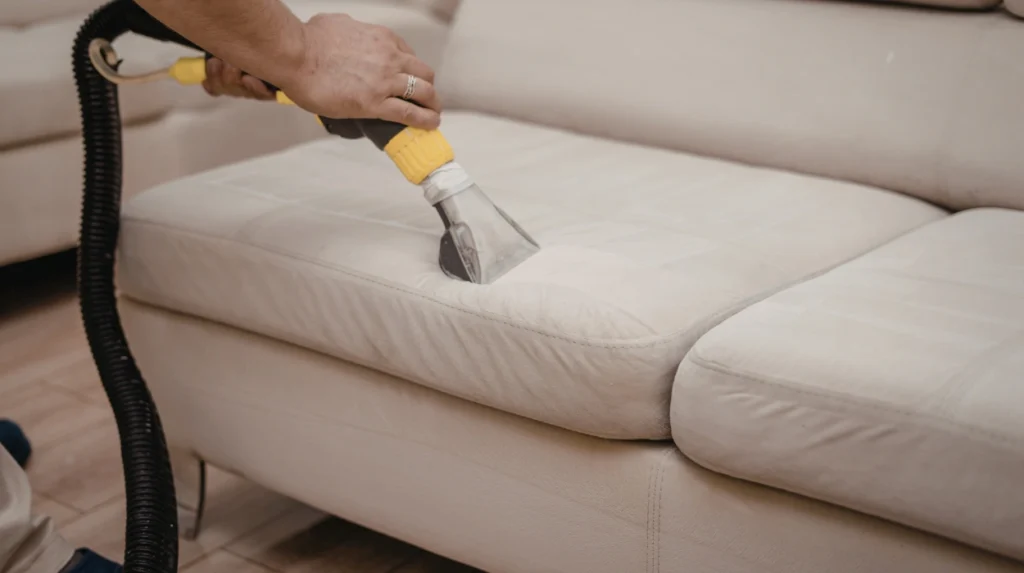
Silk, leather, many delicate velvets, some wool fabrics, S-coded upholstery, X-coded upholstery, and materials with heat-sensitive finishes should not receive conventional steam treatment unless the manufacturer specifically permits it.
Silk is particularly sensitive because excessive heat and moisture can affect colour, texture and fibre condition. Velvet also requires caution because heat, moisture and incorrect handling can alter the pile or create visible changes in direction and appearance. Natural wool upholstery can respond unpredictably to moisture and heat depending on construction and finishing.
Leather is not a conventional steam-cleaning fabric. Heat and moisture can affect the hide, finish and surface appearance. Leather normally requires a material-specific cleaning and conditioning approach rather than the same process used for water-tolerant textile upholstery.
Vintage fabrics, embroidered upholstery, fabrics with delicate backing and furniture with unknown construction also deserve additional caution. The absence of a visible cleaning code is not permission to steam clean.
Why can steam damage delicate upholstery?
Steam combines heat and moisture, and both can create problems when a fabric, backing, dye, adhesive or surface finish cannot tolerate those conditions. Excessive treatment can cause shrinkage, colour bleeding, watermarks or texture changes.
The risk is not limited to the visible fabric surface. Upholstered furniture can contain foam, batting, adhesives, backing cloth and other internal materials. Moisture entering these layers may take longer to evaporate than moisture on the surface.
Heat can also affect sensitive dyes and textile finishes. Velvet is a good example because its pile has a directional structure that can change appearance after unsuitable treatment. Silk and some delicate natural fibres can also respond poorly to excessive heat.
Over-wetting creates another problem. When water is introduced faster than extraction and evaporation can remove it, the upholstery may remain damp internally. Good ventilation and appropriate extraction reduce this risk, but they cannot make an unsuitable fabric safe for steam.
Is steam cleaning the same as hot-water extraction?
Steam cleaning and hot-water extraction are often used interchangeably in everyday language, but professional upholstery cleaning can involve different equipment and processes, particularly regarding how moisture is introduced and removed.
A true steam cleaner primarily produces heated vapour. Hot-water extraction uses heated water and cleaning solution, followed by powerful extraction that removes suspended soil and moisture from the upholstery. Professional cleaning providers may use different terminology, so asking which process is actually being applied is useful.
Hot-water extraction can provide a deeper clean when the upholstery is designed to tolerate water. It combines agitation or chemical action with extraction, allowing loosened soil to be removed rather than merely redistributed.
However, deeper cleaning does not mean universally better cleaning. The best method is the one compatible with the material. Bee Cleaning Services Manchester’s published upholstery guidance similarly emphasises selecting methods according to fabric type, soiling level and drying requirements rather than applying one technique to every sofa.
What should you check before using a steam cleaner?
Before using any steam or extraction cleaning-equipment, check the manufacturer label, identify the cleaning code, inspect the fabric condition, test colourfastness, and confirm that the construction can tolerate controlled moisture and heat.
Start by locating the upholstery care label. If it says W, water-based cleaning may be permitted. If it says W/S, both water and solvent methods may be acceptable. If it says S or X, conventional steam treatment should not be selected without specific professional guidance.
Next, inspect seams, backing, loose threads, worn areas and previous repairs. Existing damage can become more visible after cleaning even when the cleaning method itself is appropriate.
A hidden-area test is also important where the manufacturer permits cleaning. It can reveal colour bleeding, texture changes or other reactions before the complete furniture surface is treated. Professional cleaners use this assessment stage to reduce avoidable damage.
How does professional upholstery cleaning reduce fabric risk?
Professional upholstery cleaning reduces risk by matching the cleaning method to the fabric rather than treating every sofa identically, while controlled moisture, extraction and drying help protect the furniture during the process.
The first stage is normally inspection. The cleaner identifies the material, reads the care information, assesses staining and checks the furniture’s physical condition. This determines whether water-based extraction, low-moisture cleaning, solvent cleaning or another approach is appropriate.
The second stage involves selecting suitable cleaning solutions and equipment. Different fabrics respond differently to moisture, agitation, heat and chemical concentration. Using excessive solution does not necessarily produce a cleaner result and can increase residue or drying problems.
The final stage focuses on extraction and drying. Strong extraction can remove more moisture, while airflow helps the remaining moisture evaporate. Drying is particularly important because upholstery can feel dry on the surface while retaining moisture underneath.
When is dry cleaning a better alternative to steam?
Dry cleaning can be more appropriate for fabrics that are sensitive to water or heat, especially upholstery carrying an S cleaning code or materials for which the manufacturer specifies solvent-based treatment.
Dry cleaning upholstery generally uses specialised solvent-based products rather than conventional water-based extraction. This reduces the amount of water introduced into sensitive fabrics and can help prevent problems associated with excessive moisture.
It does not mean that every delicate fabric should automatically be dry cleaned. The manufacturer’s instructions remain the primary reference because different textiles can have different finishes, backings and construction methods.
For furniture without a clear care label, professional assessment is particularly useful. The objective is not simply to choose the strongest cleaning method. It is to select a process that removes soil while preserving the fabric’s structure, colour and finish.
What role does cleaning-equipment selection play?
The right cleaning-equipment controls heat, moisture, pressure and extraction, allowing professionals to adjust the treatment according to the fabric rather than applying identical settings to every upholstered item.
Consumer steamers can produce substantial heat but may provide limited control over moisture recovery. Professional upholstery equipment is designed around controlled application and extraction, making it possible to manage the amount of moisture remaining in the fabric.
Equipment selection also depends on furniture size, fabric construction and the level of contamination. A heavily soiled, water-safe sofa may require a deeper extraction process, while delicate upholstery may require a low-moisture approach.
This distinction is important because a technically powerful machine does not compensate for an unsuitable cleaning method. Equipment should support the material specification, not override it.
Should you steam clean upholstery yourself?
DIY steam cleaning can be appropriate for clearly labelled, water-safe upholstery when the operator understands the equipment, but professional cleaning is preferable when the fabric is delicate, valuable, heavily soiled or difficult to identify.
A straightforward W-coded polyester cushion is a very different cleaning problem from an antique velvet chair with no visible care label. The first may tolerate controlled water-based cleaning, while the second requires considerably more assessment.
DIY cleaning also creates a drying responsibility. Excessive moisture can penetrate cushions and backing materials, extending drying time and increasing the possibility of unpleasant odours.
For consumers comparing methods, the decision should therefore be based on fabric compatibility, cleaning objective, equipment capability and drying conditions rather than simply choosing steam because it sounds more powerful.
Which steam-cleaning method is best for different fabrics?
There is no universal steam-cleaning setting for upholstery. Water-safe synthetic fabrics generally provide the widest options, while delicate natural fibres, solvent-only materials and no-liquid fabrics require increasingly restrictive methods.
| Fabric or code | Steam suitability | Typical consideration |
|---|---|---|
| Polyester, W | Often suitable | Controlled water-based cleaning |
| Microfiber, W/WS | Often suitable | Check construction and drying |
| Cotton, W | Potentially suitable | Control moisture and test colour |
| Nylon, W | Often suitable | Follow manufacturer guidance |
| Wool | Caution | Heat and moisture sensitivity varies |
| Velvet | High caution | Protect pile and finish |
| Silk | Generally unsuitable | Use manufacturer-approved method |
| Leather | Generally unsuitable | Use leather-specific care |
| S code | No conventional steam | Solvent-based method |
| X code | No liquid cleaning | Vacuum or light brushing |
The table is a decision aid rather than a substitute for the furniture manufacturer’s instructions. Cleaning codes identify permitted cleaning categories, but they do not guarantee that every possible cleaning process will produce the same result.
How should you choose between steam and dry cleaning?
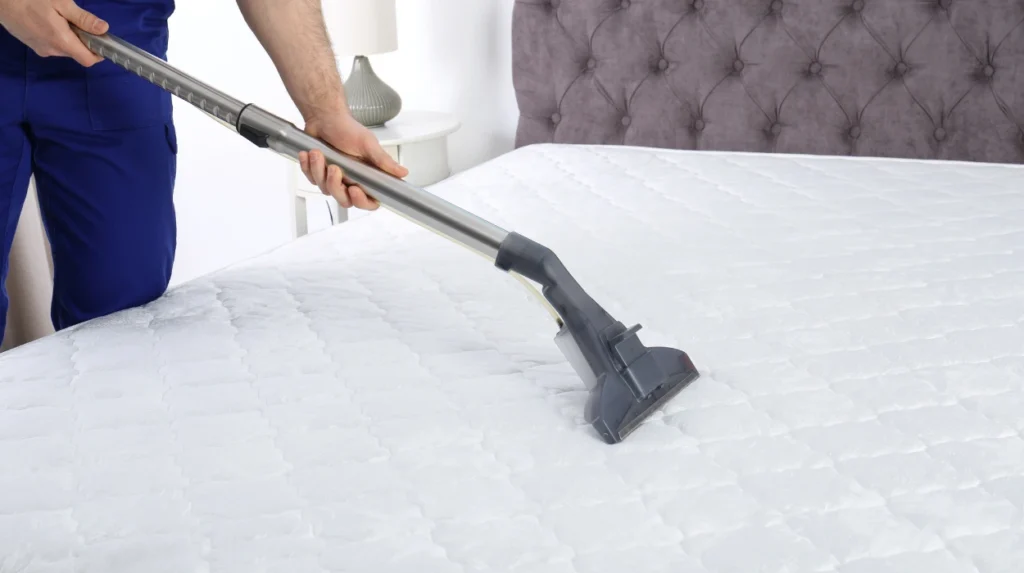
Choose steam or hot-water extraction when the manufacturer permits water-based treatment and the fabric can tolerate controlled heat and moisture; choose dry or low-moisture cleaning when water exposure presents a greater risk.
The first decision is compatibility. The second is the cleaning objective. Heavy embedded soil on a water-safe sofa may benefit from extraction, while routine maintenance on delicate upholstery may require a gentler approach.
Drying requirements also matter. A low-moisture process can be advantageous where furniture needs to return to service quickly, while deeper water-based extraction may require more ventilation and drying time.
For households in Oldham considering Upholstery Cleaning Services in Oldham, the practical question is therefore not simply “Is steam better?” The more useful question is “Which cleaning process matches this particular upholstery?”
What is the final rule for steam cleaning upholstery?
The safest rule is simple: never choose steam from the fabric name alone. Read the care code, follow manufacturer instructions, assess the construction and use equipment that provides appropriate control over heat, moisture and extraction.
Water-tolerant fabrics such as many polyester and W-coded textiles can often receive professional steam or hot-water extraction. Delicate, solvent-only and no-liquid fabrics require different approaches.
The same principle applies to professional services. A responsible cleaner should inspect the furniture before treatment rather than assume every sofa can receive the same process. This reduces unnecessary risk while allowing the cleaning method to match the actual material.
Bee Cleaning Services Manchester provides professional cleaning solutions based on fabric suitability, cleaning requirements and appropriate treatment methods. For residents considering Upholstery Cleaning Services in Oldham, understanding the fabric first is the most reliable starting point for choosing the right cleaning process.
Frequently Asked Questions
Can every sofa be steam cleaned?
No. Steam cleaning is not suitable for every upholstery fabric. The manufacturer’s cleaning code should be checked first, because S and X-coded materials generally require alternatives to water-based steam cleaning.
What fabric should not be steam cleaned?
Silk, leather, some velvet and wool fabrics can require special treatment because heat and moisture may affect their colour, texture or structure. X-coded and solvent-only S-coded upholstery should not receive conventional steam cleaning.
Is polyester upholstery safe to steam clean?
Many polyester upholstery fabrics can tolerate water-based cleaning, particularly when marked W or W/S. However, the exact care label and fabric construction should always be checked before treatment.
Can steam cleaning damage a sofa?
Yes, incorrect steam cleaning can cause shrinkage, colour bleeding, watermarks, texture changes or prolonged moisture retention. The risk increases when the fabric is not designed for water or high heat.
Is dry cleaning better than steam cleaning for upholstery?
Neither method is universally better. Steam or hot-water extraction can be effective for water-safe fabrics, while dry cleaning is more appropriate for solvent-only or moisture-sensitive materials. Fabric compatibility should determine the method.