

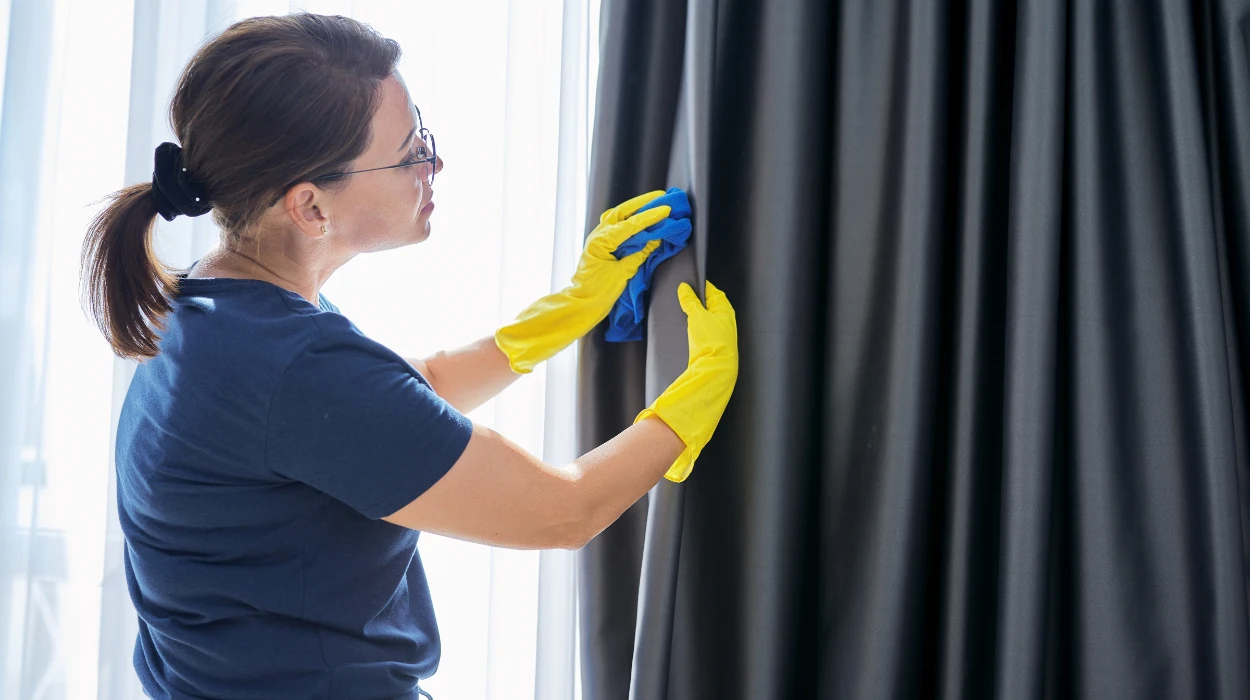
Steam cleaning is generally suitable for durable, steam-safe curtains that need refreshing, while dry cleaning is usually better for delicate, lined, embellished, or dry-clean-only fabrics. The safest choice depends on the curtain’s fabric, care label, lining, condition, and the type of dirt or staining present.
Why Does the Cleaning Method Matter?
Curtains collect dust, household odours, airborne particles, and everyday grime because they remain exposed to indoor air for long periods. However, cleaning them is not simply a matter of choosing the strongest cleaning method. Different fabrics respond differently to heat, moisture, solvents, pressure, and agitation. A method that works well on polyester may be unsuitable for silk or a structured lined curtain. This is why fabric identification should come before selecting cleaning equipment or a treatment method.
For homeowners considering professional curtain cleaning, the main decision is often between steam cleaning and dry cleaning. Steam can refresh suitable fabrics while curtains remain hanging, whereas dry cleaning uses specialised solvents and is commonly chosen for delicate or water-sensitive materials. Neither approach is automatically better for every curtain. The correct option depends on the textile and manufacturer’s care instructions.
What Is Steam Cleaning for Curtains?
Steam cleaning uses heated water vapour to loosen surface dirt, dust, odours, and other deposits from suitable curtain fabrics. Because the curtains can often remain on their tracks, the process can be convenient for large or difficult-to-remove window treatments. Professional technicians control the amount of steam and keep the equipment moving rather than concentrating heat and moisture in one area. This helps reduce the possibility of excessive wetting, marks, or fabric distortion.
Steam cleaning is commonly considered for durable materials such as polyester, cotton, and some blended fabrics when their care instructions permit it. It can be particularly useful when curtains need freshening rather than an intensive solvent-based treatment. Steam may also help loosen wrinkles and reduce unpleasant odours. However, it should not be treated as a universal solution because excessive heat or moisture can affect sensitive fabrics and certain finishes.
When Is Steam Cleaning a Practical Choice?

Steam cleaning can be useful when curtains have accumulated everyday dust or have developed a stale smell but do not require removal for specialist treatment. It is also convenient when the fabric is suitable for controlled moisture and the homeowner wants to minimise disruption. A professional cleaner can inspect the material first and perform a small hidden-area test where appropriate. This helps identify potential colour change, shrinkage, water marking, or texture problems before the main treatment begins.
Another advantage is that suitable curtains can often be treated in place, reducing the need to remove large panels, transport them, and reinstall them later. However, steam cleaning should not be selected simply because it is convenient. The care label remains the starting point, and professional assessment becomes especially important for lined, coated, textured, or unusually expensive curtains.
What Is Dry Cleaning for Curtains?
Dry cleaning uses specialised cleaning solvents instead of conventional water-based washing. The method is designed for textiles that may react poorly to water or require careful handling to preserve their shape, texture, colour, or construction. Professional dry cleaning can be appropriate for delicate materials such as silk and some velvet curtains, as well as certain lined or structured window treatments.
Unlike on-site steam treatment, professional dry cleaning commonly involves taking the curtains down and processing them using specialist equipment. The curtains may then receive finishing or pressing before being returned. This approach can provide better control for fabrics where moisture creates a greater risk of shrinkage, distortion, bleeding, or changes to the fabric’s appearance.
Which Curtains May Need Dry Cleaning?
Curtains labelled “dry clean only” should not be treated as ordinary washable fabrics. Certain delicate textiles, complex linings, decorative trims, embroidery, metallic details, or specialist coatings can require a more controlled cleaning process. In these circumstances, attempting an unsuitable home method can create damage that is more expensive to correct than professional cleaning.
Dry cleaning may also be considered where curtains have oily or stubborn contamination that requires specialist stain treatment. However, even dry cleaning is not automatically appropriate for every textile, so the cleaner should assess the fabric and construction before treatment. The objective is not simply to remove dirt but to clean the curtains while maintaining their intended appearance and function.
Steam Cleaning vs Dry Cleaning Curtains: What Is the Difference?
The main difference is the cleaning medium and the way the fabric is handled. Steam cleaning uses controlled water vapour and is often carried out while suitable curtains remain hanging. Dry cleaning uses specialised solvents and generally requires the curtains to be removed for professional processing. Steam can be convenient for routine freshening, while dry cleaning can provide a safer option for fabrics that are sensitive to water or heat.
The condition of the curtains also matters. Light dust and odours may require a different approach from grease, ingrained soil, or difficult staining. A curtain with a delicate lining may require more careful treatment than an unlined synthetic panel. Therefore, comparing the methods only by convenience or price can be misleading. Fabric compatibility and the manufacturer’s instructions should always take priority.
Which Method Is Better for Different Curtain Fabrics?
Cotton and Polyester
Cotton and polyester curtains are generally more forgiving than highly delicate textiles, although their exact care instructions still matter. Some suitable cotton and polyester curtains can tolerate controlled steam cleaning, making it useful for routine maintenance and freshening. Polyester is particularly common in everyday curtains because of its durability and relatively easy maintenance. Even so, high heat should not automatically be assumed to be safe for every polyester blend or finish.
Silk and Delicate Fabrics
Silk requires considerably more caution because heat and moisture can affect its appearance and structure. If the manufacturer specifies dry cleaning, that instruction should be followed rather than experimenting with steam. Delicate fabrics may also be vulnerable to water marks, colour changes, or texture alteration. Professional assessment is therefore more appropriate when the material is valuable, fragile, or difficult to identify.
Velvet and Textured Curtains
Velvet and other pile fabrics require careful handling because their surface texture can be affected by moisture, heat, pressure, or incorrect finishing. Some velvet curtains may tolerate specialist steam techniques, but others may require dry cleaning according to their construction and care label. This is one situation where the material alone does not provide enough information. The cleaner should consider the pile, backing, lining, and manufacturer’s instructions before deciding on treatment.
Lined, Blackout, and Structured Curtains
Lined and blackout curtains can be more complicated because different layers may react differently to moisture or heat. The outer fabric may appear suitable for steam while the lining or coating is not. This can create problems such as distortion or damage to specialist finishes. For these curtains, a professional inspection is particularly useful because the cleaning method needs to account for the complete construction rather than just the visible outer fabric.
How Should You Choose the Right Cleaning Method?
Start with the care label. Look for washing, steaming, or dry-cleaning instructions supplied by the manufacturer. If the label clearly states “dry clean only,” avoid steam cleaning unless a qualified professional has specifically confirmed that an alternative treatment is safe. A hidden-area test can also help identify potential colour or fabric reactions when steam is permitted.
Next, consider the curtain’s condition. Curtains with light dust and general odours may only need a suitable refreshing treatment, while heavy staining may require specialist stain removal. Also consider whether the curtains have linings, decorative trims, embroidery, coatings, or other features that could change the cleaning requirements. A professional assessment is particularly useful when the fabric composition is unknown.
The available cleaning equipment should also match the job. Professional steam equipment allows better control over temperature, moisture, and application than improvised household techniques. Dry cleaning requires specialist machinery and appropriate solvents, which is why it is normally handled by trained professionals. The safest process is therefore the one that matches the fabric rather than the method that appears fastest or cheapest.
What Are the Risks of Choosing the Wrong Method?
The biggest risk is fabric damage. Excessive heat or moisture can contribute to shrinkage, colour changes, water marks, or texture problems in unsuitable fabrics. Over-saturating curtains can also extend drying time and create moisture-related concerns. These risks are why professionals commonly inspect the material and test an inconspicuous area before applying a cleaning method to the entire curtain.
Another issue is the curtain’s construction. A fabric can appear suitable for steam cleaning while its backing, lining, or decorative elements are not. Similarly, a stain may require a treatment that differs from ordinary maintenance cleaning. Trying to remove a difficult stain with excessive heat or unsuitable products can make the problem harder to resolve.
For residents looking for professional curtain cleaning solutions in Oldham, the important point is that method selection should come after assessment. Bee Cleaning Services Manchester can consider the fabric, condition, and cleaning requirements before determining the appropriate professional approach.
How Professional Curtain Cleaning Works
A professional curtain cleaning process normally begins with an inspection. The technician checks the material, care label, construction, visible staining, lining, and any areas that appear weak or damaged. This assessment helps determine whether steam, dry cleaning, low-moisture treatment, or another suitable technique is appropriate. The purpose is to minimise unnecessary risk while achieving a thorough clean.
The next stage is preparation. Loose dust and surface debris may be removed before deeper treatment begins. Stains can then be assessed individually rather than treating every mark with the same product. Where steam is appropriate, controlled application helps prevent excessive moisture. Where dry cleaning is required, specialist equipment and solvents are used according to the fabric’s requirements.
After cleaning, the curtains may need finishing, drying, reshaping, or inspection before they are considered complete. This final stage is important because professional curtain care is not only about removing visible dirt. Maintaining the fabric’s shape, appearance, texture, and functionality is also part of a successful result.
How Can You Maintain Curtains Between Professional Cleans?
Regular light maintenance can reduce the amount of dirt that accumulates between professional treatments. Gentle vacuuming with an appropriate attachment can remove loose dust, while careful dusting can help prevent particles from becoming embedded in the fabric. Rooms with cooking activity, pets, heavy foot traffic, or poor ventilation may require more frequent attention.
Avoid using random cleaning products simply because they are marketed for general household fabrics. Curtains can contain specialist fibres, coatings, linings, or finishes that react differently to chemicals and moisture. If a stain appears, check the care instructions before applying anything. When the material is expensive, delicate, or difficult to identify, professional advice can prevent an avoidable mistake.
For additional information about maintaining curtains and choosing an appropriate cleaning approach, this curtain-cleaning guide can provide useful context about professional curtain care and dry-cleaning considerations.
Is Professional Curtain Cleaning Worth Considering in Oldham?
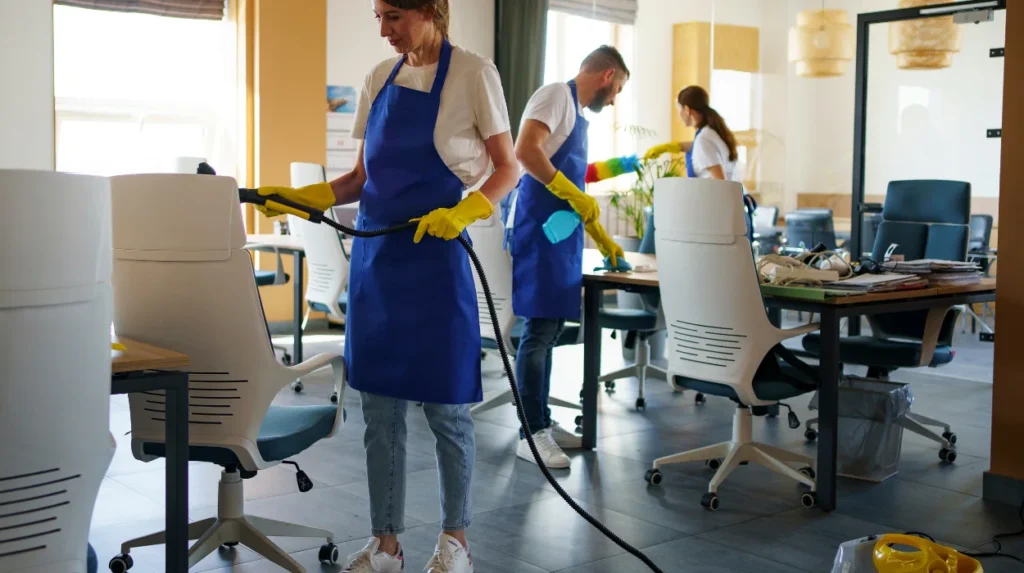
Professional cleaning can be useful when curtains are large, difficult to remove, delicate, heavily soiled, or made with multiple layers. It can also be practical when homeowners do not have suitable cleaning equipment or are uncertain about which treatment is safe. Rather than relying on a one-method-fits-all approach, professional cleaning focuses on matching the treatment to the curtain.
For households considering Curtain Cleaning Services in Oldham, this assessment-led approach can help reduce the risk of fabric damage while addressing dust, odours, and visible soiling. Bee Cleaning Services Manchester provides professional cleaning solutions with attention to the material and condition of the curtains rather than simply selecting a method based on convenience.
Choosing between steam and dry cleaning should be based on the curtain rather than a general claim that one method is always superior. Steam can be a practical option for suitable, durable fabrics that need refreshing, while dry cleaning can be more appropriate for delicate, structured, lined, or water-sensitive curtains.
The most important step is to assess the fabric, care instructions, construction, and condition before cleaning. This helps protect the appearance and lifespan of the curtains while ensuring that the cleaning method is appropriate. Bee Cleaning Services Manchester offers professional cleaning solutions designed around the specific requirements of curtains, helping homeowners in Oldham make a more informed cleaning choice.
Frequently Asked Questions
Is steam cleaning safe for all curtains?
No. Steam cleaning is not suitable for every fabric or construction. Curtains labelled dry clean only, or those made from particularly delicate materials, may require another method. Always check the care label and consider professional assessment before applying heat or moisture.
Can steam cleaning remove stains from curtains?
Steam can loosen some surface dirt and help freshen curtains, but it is not a universal stain-removal treatment. Oil-based, deeply embedded, or specialised stains may require targeted professional treatment. Using excessive steam on a stain can also create problems if the fabric is moisture-sensitive.
Is dry cleaning better than steam cleaning for velvet curtains?
It depends on the particular velvet curtain and its care instructions. Some velvet can receive specialist steam treatment, while other velvet constructions may be better suited to dry cleaning. The pile, backing, lining, and manufacturer’s instructions should all be considered before choosing a method.
Can curtains be steam cleaned without taking them down?
Yes, suitable curtains can often be steam cleaned while hanging. This is one of the main practical advantages of steam cleaning. However, the fabric must be compatible with heat and moisture, and the equipment should be used carefully to avoid over-saturating the material.
How do I know which curtain cleaning method to choose?
Start with the manufacturer’s care label and identify the fabric if possible. Then consider the lining, decorative features, stains, and overall condition. If the instructions are unclear or the curtains are delicate or valuable, professional assessment is the safest approach.