

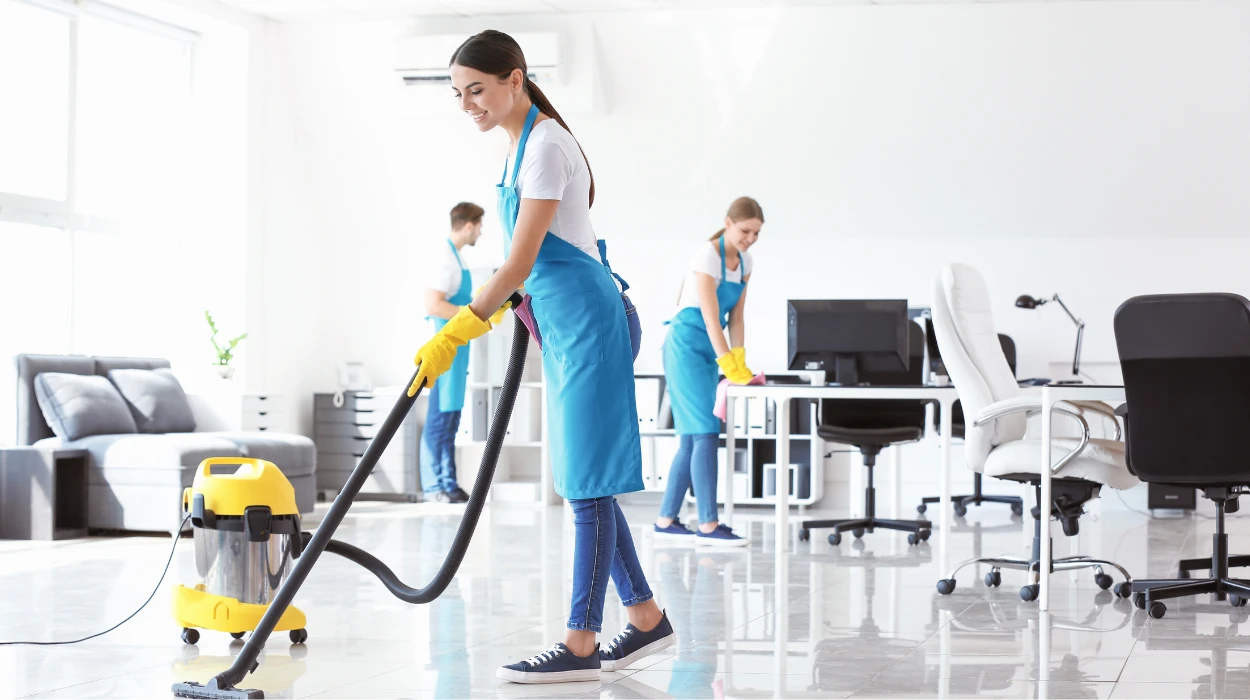
For Commercial Post Construction Cleaning Oldham Offices and Retail projects, the answer is a staged clean that removes dust, debris, residues and marks after the trades finish. It leaves the space safe, presentable and ready for staff, stock and customers.
Why Builders’ Dust Is Different From Everyday Dirt
Builders leave behind far more than visible rubbish. Fine plaster dust, cement residue, paint splashes, adhesive marks and packaging settle across floors, ceilings, vents and fittings, and routine janitorial cleaning is not designed to remove them. A specialist clean treats the site as a newly built environment that must be cleared, detailed and inspected in a set order. Bee Cleaning Services Manchester works this way for commercial premises across Greater Manchester, including Oldham, so finished fit outs are ready for occupation.
Construction dust is also unusually fine and abrasive. It travels through air movement and settles on shelving, light fittings, window frames and inside ventilation grilles, where it can resurface for weeks. If it is wiped dry, it scratches glass, laminate and polished metal. If it is left on flooring, it grinds into the surface as people walk over it. Removing it correctly protects the new finishes that the client has just paid for.
How the Cleaning Process Works Stage by Stage
Rough Clean and Debris Removal
The first stage clears the space so detailed work can begin. Larger offcuts, packaging, protective sheeting and loose rubble are gathered and removed, and heavy dust is taken off floors and surfaces with industrial vacuums. This stage usually happens while some trades are still finishing, which means it must be coordinated with the site manager. Doing it first prevents the fine dust from being spread further during later stages, and it gives the cleaning team a clear view of every surface.
Detailed Clean of Surfaces and Fixtures
Once the bulk waste is gone, the team works from the top of the room downward. Ceilings, light fittings, air vents, window frames, skirting boards, doors and worktops are wiped with damp microfibre cloths that lift dust rather than push it around. Paint flecks, stickers, silicone smears and adhesive residue are treated with products suited to each surface. Toilets, kitchenettes and staff areas receive a full sanitising clean. This stage is where most of the labour sits, and it determines how the finished space will look under inspection.
Final Clean and Inspection
The final stage is a polish and check. Floors are machine scrubbed or mopped according to their material, glass is cleaned inside and out, and reception desks, counters and displays are wiped to a clean finish. A supervisor then walks the premises with a checklist, looking for missed dust lines, smears and marks that only appear in certain light. Anything found is corrected before handover. Many clients use this walkthrough as the point where they sign off the space with their contractor.
What Offices and Retail Units Each Require
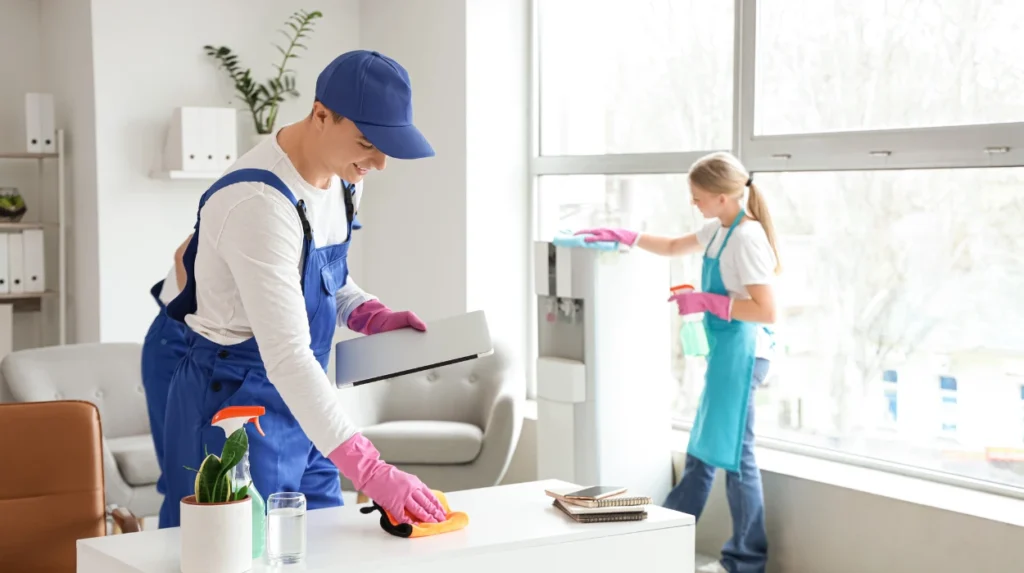
Offices and retail units share the same basic process, but their priorities differ. An office fit out often includes carpet tiles, glass partitions, meeting rooms and data or comms cabinets, so the clean focuses on protecting fabrics, cabling areas and screens from lingering dust. Kitchen and breakout areas also need a hygiene level clean before staff arrive. The aim is a workplace that feels professional on the first morning and does not trigger dust related complaints among employees.
Retail units place more weight on presentation and timing. Shop floors, display shelving, changing rooms, shopfronts and stockrooms must look flawless before merchandising begins, because dust on fixtures shows up quickly on new stock. Opening dates are usually fixed, so cleaning windows are tight and often fall late in the project. Glass, mirrors, tills and entrance areas receive extra attention because customers see them first. Planning the clean around the shopfitting schedule avoids delays to the launch.
Cleaning Equipment Used for Builders’ Cleans
The right cleaning equipment makes the difference between removing dust and redistributing it. Professional teams use industrial vacuums with HEPA filtration that trap fine particles rather than blowing them back into the air. Microfibre cloths, extendable poles for high level surfaces, scrapers for paint and adhesive, and low-abrasion pads for delicate finishes are all standard. Scrubber dryers and buffing machines are used on hard floors. Matching each tool to a surface reduces scratching and protects the fit out.
Chemical choice matters just as much. Neutral cleaners are used on stone, wood and laminate, while mild descalers are used for cement film on glass and tiles. Using a harsh product on the wrong surface can leave permanent marks that are costly to repair. Trained operatives test products on a small area first, and they follow safety data sheets for ventilation and personal protection. This controlled approach is a core difference between builders’ cleaning and general commercial cleaning.
Timing, Touch Ups and Handover
Timing shapes the whole job. Cleaning that starts too early is undone by trades still generating dust, and cleaning that starts too late risks the opening date. Most projects use one rough clean during works and one detailed final clean shortly before handover. Some also add a short return visit after snagging repairs. Understanding the touch up cleaning and final clean differences helps project managers book the right visit at the right moment and avoid paying for stages they do not need.
Access and site conditions also affect the schedule. Cleaners need working water, power, lighting and safe access to every floor, and they need to know which areas are still under snagging. Good communication with the contractor prevents damage to freshly painted walls and newly installed flooring. A clear scope, written in advance, lists each room, the surfaces involved and the expected finish. This removes guesswork and makes the final inspection straightforward for everyone involved.
Choosing a Cleaning Provider in Oldham

Selecting a contractor is easier when the criteria are clear. Look for a company that carries public liability insurance, uses trained staff, and can describe its process and equipment in plain terms. A site visit or detailed quote should show the square footage, the number of visits and the type of finish expected. Anyone planning to hire a post construction cleaning company in Oldham should also ask about waste handling, working hours and what happens if an inspection finds a missed area.
Local knowledge is a practical advantage. Oldham has a mix of town centre retail units, business parks and converted mill buildings, and each brings its own access, parking and delivery constraints. A provider familiar with these conditions can plan arrival times and equipment loading more accurately. Bee Cleaning Services Manchester covers the wider Greater Manchester area, so teams can be scheduled around the contractor’s programme rather than the other way round.
Getting a Handover-Ready Finish
A well run builders’ clean gives project managers, landlords and tenants a clear result: surfaces free of residue, floors ready for use, and fittings that look as intended. It also lowers the risk of complaints, snagging disputes and extra cleaning costs after opening. For offices and retail spaces, the outcome is a location that can be occupied immediately, without staff or customers noticing that building work ever took place.
Professional after builders cleaning in Oldham follows the staged approach described above, from debris clearance to a final inspection. Bee Cleaning Services Manchester provides this service for commercial premises, with trained teams, suitable cleaning equipment and a written scope for each site. For project managers planning an office or retail handover, understanding these stages makes it easier to schedule the work and judge the finish with confidence.
Frequently Asked Questions
What is the difference between post construction cleaning and regular commercial cleaning?
Regular commercial cleaning maintains a space that is already in use, while post construction cleaning removes the dust, debris and residues left by builders and fit out trades. It uses industrial vacuums, specialist tools and surface-specific products. It also follows a staged process ending in an inspection before handover.
How long does after builders cleaning take for an office or retail unit?
The time depends on floor area, the level of dust and the number of visits needed. A small retail unit may take a day, while a large office fit out can take several days across separate stages. A site visit or written scope gives the most accurate estimate.
When should the final clean be booked?
Book it after the trades have finished and snagging repairs are mostly complete, and before handover or opening. Booking earlier means new dust settles on cleaned surfaces, and booking later puts the opening date at risk. Many projects add a short return visit after snagging.
Can construction dust damage new fixtures and flooring?
Yes. Fine dust is abrasive, so wiping it dry can scratch glass, laminate and polished metal, and walking over it can grind it into flooring. Damp microfibre cloths, HEPA vacuums and suitable cleaners remove it without harming the finish.
What should I ask a cleaning company before hiring?
Ask about public liability insurance, staff training, the equipment used and how waste is handled. Also ask for a written scope listing rooms, surfaces and the expected finish, and what happens if the final inspection finds a missed area.