


Types of cleaning services range from routine domestic cleaning to specialist post-construction cleaning, depending on the property and cleaning requirements. For renovated properties, construction cleaning is particularly useful for removing fine dust, debris, marks and leftover building residue before the space is used.
Why Do Different Properties Need Different Cleaning Services?
Not every property requires the same level or type of cleaning. A home that needs weekly maintenance has different requirements from a newly renovated house, commercial premises or construction site. Choosing the appropriate service helps ensure that cleaning work matches the condition of the property and the surfaces that need attention.
After building or renovation work, ordinary household cleaning may not be enough. Fine construction dust can settle on floors, windows, skirting boards, fixtures and other surfaces. Renovation projects can also leave behind packaging, small debris, paint marks and other residues that require detailed cleaning. Specialist post-construction cleaning is designed around these conditions.
Professional cleaning providers may therefore divide their services according to the property’s purpose, condition and cleaning requirements. Common categories include domestic cleaning, deep cleaning, commercial cleaning, end-of-tenancy cleaning, carpet and upholstery cleaning, and construction or after-builders cleaning. Post-construction cleaning is widely recognised as a specialist service for properties following building or refurbishment work.
What Are the Main Types of Cleaning Services?

1. Regular Domestic Cleaning
Regular domestic cleaning is designed to maintain cleanliness rather than deal with heavy or unusual contamination. It can include routine dusting, vacuuming, mopping, kitchen cleaning, bathroom cleaning and general surface care.
This type of cleaning is normally suitable when a property is already in reasonable condition and needs ongoing maintenance. Regular cleaning can help prevent dust and everyday dirt from accumulating between more intensive cleaning sessions.
2. Deep Cleaning
Deep cleaning goes beyond ordinary maintenance by giving greater attention to areas that may not be cleaned during a standard visit. Depending on the property, this can include detailed cleaning of kitchens, bathrooms, floors, fixtures, corners and difficult-to-reach areas.
It may be suitable before or after an important event, when a property has not been cleaned for an extended period, or when a more detailed reset is required. Deep cleaning can also complement other specialist services when a property needs additional attention.
3. Commercial and Office Cleaning
Commercial cleaning is designed for workplaces, shops, offices and other business environments. The cleaning requirements can vary according to the size of the premises, working hours, number of occupants and type of business.
A commercial cleaning programme may include floors, washrooms, kitchens, shared areas, desks and other frequently used spaces. Businesses can choose schedules according to operational needs, including regular or one-off cleaning arrangements.
4. End-of-Tenancy Cleaning
End-of-tenancy cleaning focuses on preparing a rental property for inspection, handover or its next occupants. The work is generally more detailed than everyday household cleaning because multiple rooms and surfaces may need attention.
The exact requirements can vary according to the tenancy agreement, landlord expectations and property’s condition. Tenants may use this service when preparing to move out, while landlords and property managers may require a thorough clean before a property is re-let.
5. Carpet and Upholstery Cleaning
Carpet and upholstery cleaning focuses on fabric surfaces that can collect dust, dirt and everyday marks. Specialist cleaning methods are selected according to the material, condition and manufacturer’s care requirements.
This service can be useful after building work because fine dust can settle into carpets and soft furnishings. However, delicate materials should be assessed before cleaning to reduce the risk of inappropriate treatment.
6. One-Off Cleaning
One-off cleaning is intended for properties that need a specific cleaning session rather than a recurring contract. It can be used before an event, after a move, during a property preparation project or when a particular area requires additional attention.
The scope can be adjusted according to the property’s condition. For example, a one-off clean may focus on a kitchen and bathroom, or it may cover an entire property.
7. Construction and After-Builders Cleaning
Construction cleaning is a specialist service for properties affected by building, refurbishment, extension or renovation work. It can involve removing construction dust, debris and surface residue while preparing rooms for normal use.
The timing of the service matters because cleaning may take place during different stages of a project. Builders cleaning can support an ongoing project, while an after-builders or post-construction clean is generally performed after building work has finished. Specialist providers commonly distinguish these stages according to the condition and timing of the project.
For properties in Oldham, professional construction cleaning in Oldham can be considered when renovation or building work has created dust, debris and other cleaning requirements.
What Does Cleaning After Renovation Usually Include?
Cleaning after renovation requires attention to both visible and less obvious residue. Fine dust can settle on horizontal surfaces, inside corners and around fixtures even after larger pieces of waste have been removed.
A suitable cleaning process may begin with the removal of remaining loose debris. Surfaces can then be dusted and cleaned systematically, followed by detailed attention to floors, windows, doors, fixtures, skirting boards and other accessible areas. The exact scope depends on what work has been completed and the condition of the property.
Windows and glass may require additional attention where renovation work has left marks or dust. Floors can also require careful treatment because different materials respond differently to cleaning products and methods. The objective is to leave the completed space clean without using an unsuitable method that could damage a surface.
For a more detailed explanation of the process, cleaning after renovation can be used as a related informational resource when planning the final stage of a refurbishment.
Which Cleaning Equipment Is Used After Building Work?
The cleaning equipment selected for post-construction work depends on the surfaces, amount of dust and type of residue present. Basic equipment can include vacuum cleaners, microfiber cloths, brushes, mops, buckets and suitable surface-cleaning products.
For larger or more demanding projects, specialist equipment may be required. Industrial cleaning equipment can include professional vacuum systems, floor machines and other machinery designed for particular cleaning applications. Equipment suppliers also emphasise matching machines to the intended task rather than using the same equipment for every surface.
Using appropriate cleaning equipment is important because construction dust can spread easily if handled incorrectly. A structured approach can reduce unnecessary redistribution of dust and help cleaners work systematically through different areas.
The equipment should also be selected according to the surface being cleaned. Glass, natural stone, wood, laminate, tiles and painted surfaces may all have different care requirements. Professional cleaning therefore involves more than simply choosing the strongest available product or machine.
When Should Construction Cleaning Be Scheduled?
The best time depends on the stage of the building or renovation project. A preliminary clean may be appropriate when major construction debris has been removed, while a final clean can take place when contractors have completed the work and the space is ready for inspection or use.
Scheduling should also consider whether additional tradespeople will still be working in the property. Cleaning too early can mean that dust and debris return when installation, painting or finishing work continues.
For larger projects, cleaning may be arranged in stages. This can help maintain cleaner working areas and prepare completed sections while construction continues elsewhere. Specialist construction cleaning providers commonly work around project schedules and phased completion requirements.
How Can You Prepare a Property for Post-Construction Cleaning?
Preparation can make the cleaning process more efficient. Large construction materials, tools and waste should normally be removed by the responsible contractor before the final cleaning stage begins.
It is also useful to identify areas that require particular attention. For example, a property owner or project manager may highlight paint marks, dusty corners, newly installed fixtures or surfaces that require careful treatment.
Access should be available to the areas included in the cleaning scope. If several contractors are working on the same project, confirming when their work has finished can also reduce the chance of recently cleaned areas becoming dusty again.
Clear communication about the property’s condition is particularly important for larger projects. The cleaner can then understand whether the requirement is a basic builders clean, detailed post-construction cleaning or a final presentation clean.
How Much Does Construction Cleaning Cost?
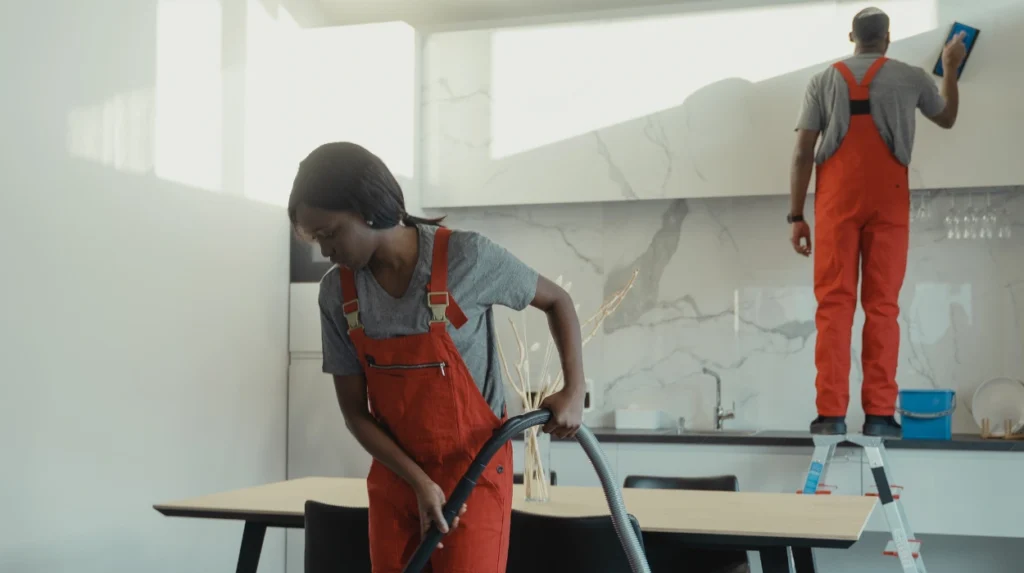
The cost of construction cleaning is not normally determined by one fixed figure because each project has different requirements. Property size, amount of construction residue, number of rooms, surface types, access and required cleaning equipment can all influence the final scope.
A small renovated room may require considerably less work than a large property undergoing extensive refurbishment. Additional tasks such as detailed window cleaning, floor treatment or heavy residue removal can also affect the overall price.
For anyone comparing quotes, it is useful to ask what is included rather than comparing the headline price alone. The scope should clarify the areas covered, expected level of cleaning and whether specialist tasks or equipment are charged separately.
If you are assessing the commercial side of the service, construction cleaning costs and pricing factors provides a relevant resource for understanding what can influence the price.
What Should You Check Before Choosing a Cleaning Service?
Before arranging specialist cleaning, consider whether the company has experience with the type of property and cleaning requirement involved. Construction and renovation cleaning can involve different surfaces and residues from ordinary domestic cleaning, so the service scope should be clearly explained.
It is also sensible to confirm what the quotation covers. Ask whether dust removal, floors, windows, fixtures, debris collection and other required tasks are included. If specialist equipment is needed, clarify whether it forms part of the quoted service.
For commercial or larger construction projects, scheduling is another important consideration. The cleaning provider should understand when the site will be ready and whether the work needs to be completed in stages.
A clear cleaning specification can reduce misunderstandings and make it easier to evaluate different providers. This is particularly useful when the property needs to be ready for occupants, clients, inspection or handover.
Understanding the different types of cleaning services makes it easier to choose a service that matches the property’s actual condition. Renovated properties often require more detailed attention than a standard domestic clean because construction dust, debris and surface residue can remain after the main work has finished.
For renovation projects in Oldham, Bee Cleaning Services Manchester provides professional cleaning solutions designed around different property and project requirements. A suitable cleaning scope, appropriate cleaning equipment and well-timed service can help prepare a renovated space for practical use, inspection or handover.
Frequently Asked Questions
What type of cleaning is best after a house renovation?
Post-construction or after-builders cleaning is generally suitable after renovation work.
It focuses on dust, debris, surface residue and detailed cleaning left by building work.
The exact service should depend on the property’s condition and renovation scope.
Deep cleaning may also be added when rooms require broader detailed cleaning.
The cleaning schedule should ideally follow the completion of dusty construction activities.How do I clean construction dust after renovation?
Start by removing loose debris and allowing major building work to finish.
Use suitable vacuuming and dusting methods before wet-cleaning appropriate surfaces.
Microfiber cloths and suitable equipment can help reduce the redistribution of fine dust.
Different materials should be cleaned according to their care requirements.
For extensive renovation dust, specialist post-construction cleaning can be considered.What cleaning equipment is needed after building work?
Basic equipment may include a suitable vacuum, microfiber cloths, brushes, mop and buckets.
Larger projects may require professional vacuum systems or floor-cleaning machinery.
The equipment should match the type of dust, residue and surface being cleaned.
Using inappropriate equipment can spread dust or potentially damage delicate surfaces.
Professional cleaners can select equipment according to the property’s specific requirements.Should I clean before or after the builders leave?
Final detailed cleaning is normally more effective after major dusty building activities are complete.
Cleaning too early can result in new dust, debris or marks being created by ongoing work.
A staged builders clean may still be useful when a project continues over several phases.
The final clean should take place when the relevant areas are ready for use or inspection.
The timing should therefore be coordinated with the construction schedule.Is construction cleaning different from normal house cleaning?
Yes, construction cleaning deals with residue associated with building and renovation activities.
This can include fine dust, small debris, paint marks and other post-work residue.
It may also require specialist equipment or careful treatment of newly installed surfaces.
Normal house cleaning is primarily designed for everyday dirt and routine maintenance.
The appropriate service depends on the property’s condition and cleaning objectives.