

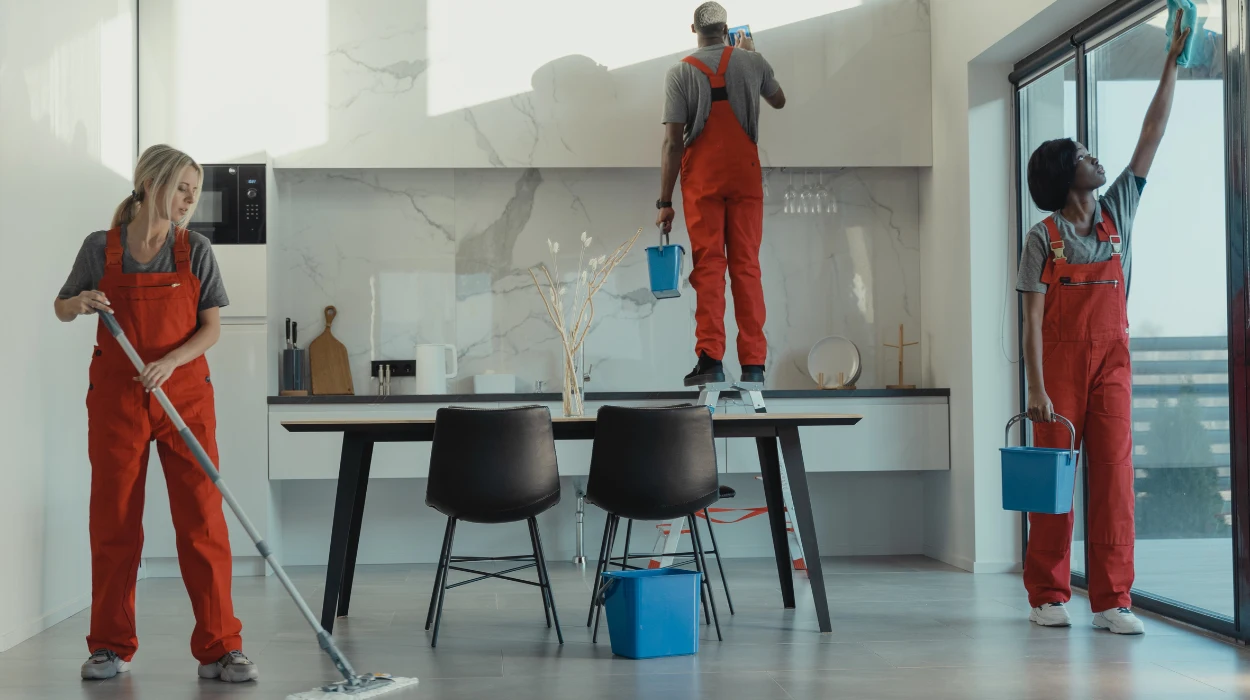
After Builders Cleaning Oldham requires specialist equipment because construction dust, plaster residue, and debris cannot be removed effectively with standard household cleaning tools.
Professional cleaners use industrial-grade machines and advanced cleaning methods to ensure properties are safe, hygienic, and ready for occupancy after renovation or construction work.
Why Specialist Equipment Matters After Building Work
After building or renovation projects, fine dust spreads into every corner of a property. It settles on floors, skirting boards, window frames, light fittings, and ventilation areas. Standard domestic vacuums often fail to capture microscopic particles, allowing dust to return even after cleaning. Professional after-build cleaning teams therefore rely on specialist machinery designed specifically for construction environments. This approach improves cleaning efficiency and helps achieve a higher finishing standard. Professional builders’ cleaning services commonly use industrial vacuums and advanced filtration systems to remove airborne particles safely.
Bee Cleaning Services Manchester provides After Builders Cleaning in Oldham using professional equipment suitable for residential and commercial renovation projects. The objective is not only to remove visible dirt but also to eliminate hidden contaminants that affect indoor cleanliness and presentation.
Industrial HEPA Vacuum Systems
One of the most important tools used during after-build cleaning is the industrial HEPA vacuum. Construction dust often contains extremely fine particles from plaster, cement, wood, and drywall. These particles can remain suspended in the air for long periods and settle repeatedly on surfaces. HEPA filtration technology captures microscopic dust particles that ordinary vacuums may release back into the environment. This makes HEPA-equipped machines essential for post-construction cleaning projects.
Professional cleaners typically perform multiple vacuuming stages throughout the cleaning process. Initial debris removal is followed by detailed vacuuming of floors, corners, skirting boards, fixtures, and difficult-to-reach locations. This systematic approach significantly reduces dust migration after project completion.
Commercial Dust Extraction Equipment
Dust extraction equipment is designed specifically for renovation and construction environments. Unlike traditional vacuum cleaners, these machines handle large volumes of fine dust efficiently without losing suction performance. They help remove debris from walls, ceilings, high shelves, and inaccessible areas where construction dust commonly accumulates.
Dust extraction technology is especially valuable in newly renovated homes and commercial units. Professional cleaning teams use these systems before detailed surface cleaning begins. This creates a cleaner environment and improves the effectiveness of subsequent cleaning stages. Many professional builders-clean services rely on specialist extraction systems as part of a structured cleaning process.
Floor Scrubbing and Polishing Machines
Construction projects often leave flooring covered with dust, footprints, adhesive marks, and residue. Floor scrubbing machines provide deep mechanical cleaning that manual mopping cannot achieve. These machines use rotating pads and controlled water application to remove stubborn contamination safely.
Different floor surfaces require different cleaning methods. Hard flooring, tiles, vinyl, and commercial surfaces benefit from machine scrubbing because it lifts embedded dirt while protecting the floor finish. In larger properties, professional floor-cleaning equipment also improves efficiency and consistency across all areas.
Professional Window Cleaning Equipment
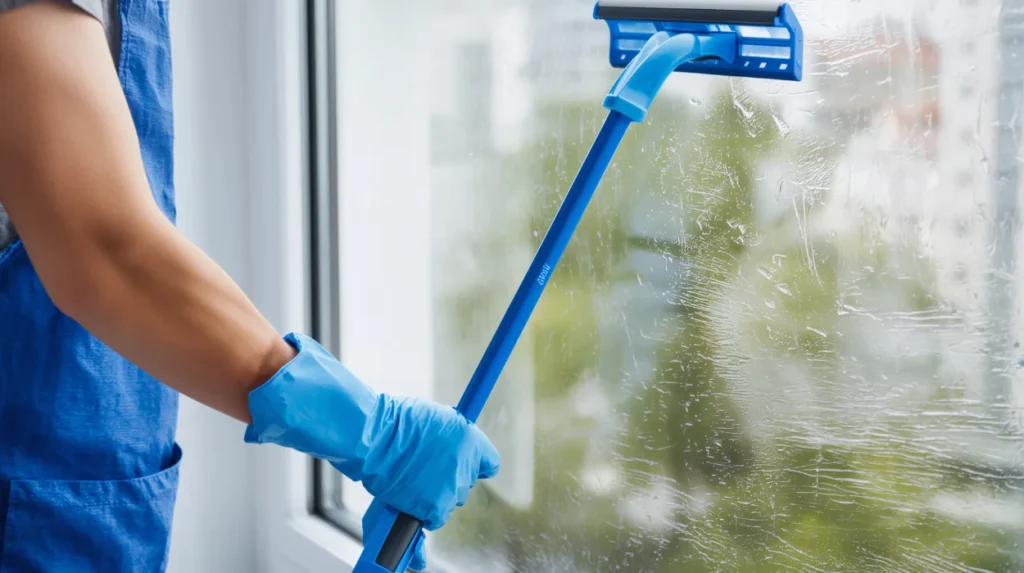
Windows frequently collect paint specks, dust particles, adhesive residue, and fingerprints during building work. Professional window-cleaning equipment allows cleaners to restore clarity without damaging glass surfaces. Specialist scrapers, extension poles, microfibre systems, and purified water tools are commonly used.
Detailed window cleaning also includes frames, tracks, sills, and surrounding fixtures. Construction residue often gathers in these areas and can affect the overall presentation of the property. Professional post-construction cleaning normally includes detailed glazing work as part of the final finishing stage.
Steam Cleaning Equipment
Steam cleaning equipment is highly effective for removing dirt, grease, and construction residue from hard surfaces. High-temperature steam helps loosen stubborn contamination while reducing the need for excessive chemical usage. This method is particularly useful in kitchens, bathrooms, and recently refurbished areas.
Professional steam systems can reach areas that are difficult to clean manually. Grout lines, tiled surfaces, sanitary fixtures, and detailed fittings often benefit from steam-based cleaning methods. The process also assists with sanitisation and surface restoration after renovation work.
Specialist Cleaning Chemicals and Applicators
Professional after-build cleaning involves more than machines. Specially formulated cleaning solutions are used to remove plaster marks, paint residue, silicone traces, adhesive contamination, and builder dust. Different surfaces require different chemical treatments to avoid damage while achieving effective cleaning results.
Applicators such as microfibre cloths, detailing brushes, non-scratch pads, and precision tools help cleaners work safely on delicate surfaces. Using the correct products and equipment combination ensures professional results across the entire property.
For a broader understanding of post-construction cleaning requirements, read our guide on professional construction cleaning solutions.
Access Equipment for High-Level Cleaning
Construction dust often settles in elevated areas that remain unnoticed during routine cleaning. High-level cleaning equipment allows professionals to reach ceiling fixtures, beams, vents, light fittings, and upper wall surfaces safely. Specialist ladders, extension tools, and access systems are commonly used.
Professional after-build cleaning is not limited to visible surfaces. Dust hidden in elevated locations can continue circulating throughout a property if not removed properly. High-level cleaning therefore forms an important part of a comprehensive cleaning programme.
The Typical Equipment-Based Cleaning Process
Professional after-build cleaning usually follows a structured sequence. Initial debris collection removes larger waste materials before detailed dust extraction begins. Industrial vacuums are then used throughout the property to eliminate fine dust. Surface cleaning follows, including fixtures, fittings, kitchens, bathrooms, and glazing.
Once primary cleaning is complete, floor machines and specialist detailing tools are used to restore presentation standards. Many professional cleaning teams also conduct a final sparkle clean before handover. Industry professionals often recognise builders cleaning, sparkle cleaning, and final handover cleaning as separate stages within the overall process.
Those planning a renovation project may also find value in our article covering construction cleaning costs and service factors.
Choosing a Professional After Builders Cleaning Service
The effectiveness of an after-build clean depends heavily on the quality of equipment used. Professional cleaning companies invest in industrial-grade machinery because domestic tools cannot deliver the same level of dust removal or finishing quality. When evaluating cleaning providers, it is useful to understand the equipment, methods, and processes they employ.
A professional service should be capable of addressing fine dust, debris removal, floor restoration, glazing work, and detailed finishing. Properties that undergo major refurbishment often require specialist cleaning equipment to achieve a truly ready-to-use condition.
For property owners ready to arrange a professional service, explore our professional renovation cleanup booking options.
After Builders Cleaning Oldham involves far more than vacuuming and wiping surfaces. Industrial HEPA vacuums, dust extraction systems, floor-cleaning machines, steam cleaners, specialist chemicals, and high-level access equipment all play important roles in delivering professional results. These tools help remove construction dust, restore surfaces, and prepare properties for safe occupation.
Bee Cleaning Services Manchester understands the importance of using the correct cleaning-equipment and professional methods for post-construction environments. With the right equipment and structured cleaning process, renovated properties can be returned to a clean, presentable, and ready-to-use condition.
Frequently Asked Questions
What equipment removes builders dust most effectively?
Industrial HEPA vacuums are considered one of the most effective solutions. They capture microscopic dust particles that ordinary vacuums often miss. Professional cleaners also combine HEPA systems with dust extraction equipment. This reduces airborne contamination throughout the property. Multiple vacuuming stages usually provide the best results.
Why can’t I use a normal household vacuum after renovation?
Household vacuums are not designed for large amounts of construction dust. Fine plaster and cement particles can clog filters quickly. Some dust may even be released back into the air. Industrial machines have stronger filtration systems and higher suction power. This makes them more suitable for after-build cleaning.
How long does an after builders clean usually take?
The timeframe depends on property size and renovation scope. Small projects may require only a few hours. Larger refurbishments can take an entire day or longer. Properties with heavy dust contamination often require multiple cleaning stages. Professional assessment helps determine the expected duration.
Is steam cleaning necessary after building work?
Steam cleaning is not always essential but can be highly beneficial. It helps remove stubborn dirt and residue from hard surfaces. Kitchens, bathrooms, and tiled areas often benefit most. Steam cleaning can also reduce the need for stronger chemicals. Many professional services include it where appropriate.
What areas are commonly missed during after builders cleaning?
High-level surfaces are frequently overlooked during DIY cleaning. Ceiling corners, light fittings, vents, and upper shelves collect significant dust. Window tracks and skirting boards are also common problem areas. Professional cleaners use specialist equipment to reach these locations. This helps prevent dust from reappearing later.