


Curtain cleaning can be done without taking curtains down, and this approach is now standard practice among professional cleaning companies. Specialist equipment allows trained technicians to clean curtains thoroughly while they remain fully hung, eliminating the risk of fabric damage during removal and reinstallation.
What Is On-Site Curtain Cleaning and How Does It Work?
On-site curtain cleaning, often called in-situ cleaning, is a method where curtains are treated and cleaned while still attached to their tracks or poles. Professional technicians use steam injection systems, dry-cleaning compounds, and low-moisture extraction tools to penetrate fabric fibres and lift dust, allergens, and stains from the material. The process typically begins with a fabric assessment to determine the correct treatment for the curtain’s weave, dye, and lining.
Heat settings, chemical concentrations, and dwell times are all adjusted based on the fabric type to avoid shrinkage, colour loss, or structural weakening. Most sessions require no more than two to four hours depending on the size and number of curtain panels. Once treated, curtains dry relatively quickly due to the low-moisture nature of modern professional equipment. The result is a clean, fresh curtain that has never been removed from the window.
Why Removing Curtains Is Not Always the Right Approach
Many homeowners assume that curtains must be taken down and machine-washed or sent to a dry cleaner to be properly cleaned, but this assumption overlooks several practical concerns. Curtain fabric, particularly lined or weighted styles, can stretch, shrink, or lose its pleat structure when exposed to machine washing cycles or industrial dry-cleaning solvents. Reinstalling curtains after off-site cleaning is also a physically demanding process that often requires ladders, tools, and precise rehooking to restore the original hang and drape.
Curtains that are removed repeatedly are more likely to develop stress points along the heading tape, eyelets, or ring hooks over time. For properties with large bay windows or floor-to-ceiling curtain runs, the labour involved in removal alone makes the process impractical. On-site cleaning removes these complications entirely by bringing the service to the curtain rather than moving the curtain to the service. This is one of the primary reasons professional curtain cleaning services in Farnworth have adopted in-situ methods as a standard offering.
Types of Curtains That Benefit Most From In-Situ Cleaning
Not all curtain types present the same cleaning challenges, but a wide range of fabrics and styles are well-suited to on-site treatment. Velvet, silk, linen, and interlined curtains are particularly good candidates because these materials respond poorly to submersion in water or mechanical agitation. Pencil pleat, goblet pleat, and pinch pleat curtains are also ideal for in-situ cleaning because preserving the pleat structure is extremely difficult once the heading has been removed and rewashed.
Sheers and voile panels, while lighter and easier to launder, still benefit from professional on-site treatment when they are part of a layered window arrangement. Eyelet curtains with metallic rings are another common case where removal poses a risk of ring corrosion or lining detachment if exposed to steam in an uncontrolled environment. Understanding how dirty fabrics affect the indoor environment is also important, as discussed in detail in this guide on [how curtain dust affects the air inside your home]. Professional technicians evaluate each curtain before beginning to ensure the selected method matches the material and its current condition.
The Role of Steam in No-Takedown Curtain Cleaning
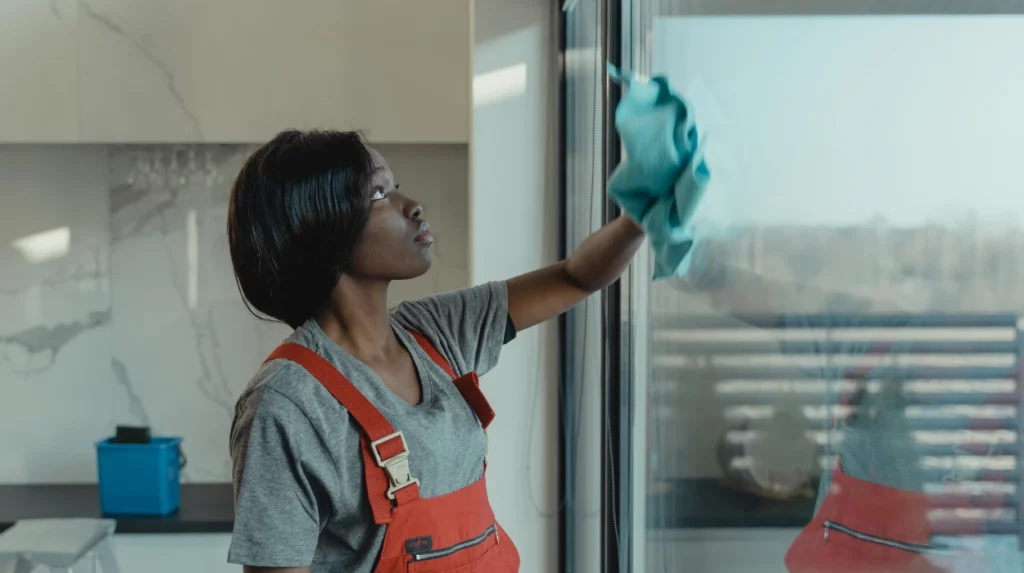
Steam is one of the most effective tools available in professional curtain cleaning, and it plays a central role in the no-takedown method. When applied correctly, steam penetrates deep into the fabric weave to break down dust mite colonies, mould spores, bacteria, and odour-causing particles that have settled within the fibres over time. The temperature of the steam is carefully controlled to sanitise the fabric without causing thermal damage to delicate materials or water-sensitive dyes.
Steam also acts as a natural deodoriser, neutralising cooking smells, pet odours, and tobacco residue that fabric naturally absorbs over months of use. Following the steam treatment, extraction equipment removes the loosened soil and residual moisture, leaving the fabric clean and mostly dry within a short period. Technicians typically work in sections from the top of the curtain downward to ensure even coverage and to prevent dirty water from running over areas already treated. This systematic approach ensures a consistent clean across the full height and width of every panel.
Stain Treatment During In-Situ Curtain Cleaning
Spot stains are one of the most common reasons homeowners seek professional curtain cleaning, and in-situ treatment handles most stain types effectively without removal. Pre-treatment solutions are applied to stained areas before the main cleaning process begins, allowing the active agents to break down the stain compounds at a molecular level before extraction. Common curtain stains including water marks, grease transfer from blinds or nearby surfaces, mildew from condensation, and food splashes near dining room windows can all be addressed with targeted pre-treatment.
Technicians are trained to identify stain composition before selecting a treatment chemical, which prevents the risk of setting a stain further into the fabric through an incorrect cleaning agent. For older or set-in stains, multiple treatment cycles may be applied within the same visit to progressively reduce the mark without over-saturating the fabric. Bee Cleaning Services Manchester trains its technicians to document stain types during the initial inspection so that the correct products are applied with precision. Homeowners are advised to avoid rubbing or treating curtain stains at home before the professional visit, as this frequently worsens the damage.
How Frequently Should Curtains Be Professionally Cleaned?
The frequency of professional curtain cleaning depends on several environmental and lifestyle factors that vary from one household to another. Homes in urban areas with higher ambient dust, pollution particles, or proximity to busy roads typically require curtain cleaning every twelve months to maintain healthy indoor air quality. Properties where pets are present, where there are allergy sufferers, or where cooking odours are particularly pronounced may benefit from cleaning cycles as short as every six to eight months.
Curtains in rooms that are seldom used, such as formal dining rooms or spare bedrooms, generally accumulate soil at a slower rate and may only need professional attention every eighteen to twenty-four months. In rental properties, curtain cleaning is typically carried out at the end of each tenancy as part of a comprehensive property preparation process.
Bee Cleaning Services Manchester recommends scheduling an inspection clean before allergy seasons to reduce the volume of pollen, spores, and dust mites in the fabric ahead of peak exposure periods. Consistent professional cleaning also extends the lifespan of curtains significantly by preventing fibre breakdown caused by embedded particulate matter over time.
What Happens During a Professional Curtain Cleaning Appointment

Understanding what to expect from a professional curtain cleaning visit helps homeowners prepare appropriately and ensures the session runs efficiently from start to finish. A technician arrives with a full equipment kit including steam units, extraction tools, pre-treatment solutions, and protective floor coverings to prevent any overspray or moisture from reaching carpets or furniture below the curtain. The first step is a thorough fabric and condition assessment, during which the technician checks for pre-existing damage, areas of heavy soiling, and any fabric characteristics that require a specific treatment approach.
Once the assessment is complete, furniture near the curtain area is temporarily moved or covered, and the cleaning process begins from the top of each panel working systematically downward. For homes with multiple rooms requiring treatment, a schedule is agreed at the start of the visit to ensure the most practical room order. Booking professional [curtain cleaning services that protect fabric and restore freshness] ensures that this process is handled with appropriate tools and documented processes throughout. The entire visit for a standard three-bedroom home typically takes between two and four hours depending on panel count and soil level.
Choosing Professional Curtain Cleaning in Farnworth
Selecting the right curtain cleaning provider requires considering more than price alone, as the quality of equipment, technician training, and fabric knowledge varies significantly between operators. A reputable provider will always conduct a pre-clean assessment before committing to a treatment plan, and will be transparent about which stains or fabric conditions may present limitations. Local knowledge is also a relevant factor, as companies familiar with property types and environmental conditions in a specific area are better placed to anticipate common soiling patterns.
Homeowners seeking value without compromising on quality should look for providers who offer a clearly defined scope of work, documented processes, and a consistent service standard across every visit. For residents exploring their options, this overview of [trusted and affordable curtain cleaning options in Farnworth] covers what to look for when comparing local providers. Bee Cleaning Services Manchester operates across Farnworth and surrounding areas, offering curtain cleaning solutions that are tailored to the specific needs of each property rather than applying a single approach to all fabric types.
On-site curtain cleaning is a practical, effective, and increasingly preferred solution for homeowners who want professionally cleaned curtains without the disruption of removal and reinstallation. The method covers a wide range of fabric types, addresses staining and odour, and preserves the structure and drape of the curtain throughout the process. For properties in Farnworth and the wider Manchester area, Bee Cleaning Services Manchester provides professional curtain cleaning solutions that combine technical knowledge with fabric-specific care, ensuring results that reflect the quality expected from an experienced local cleaning provider.
How to clean curtains while they are hanging?
Use a steam cleaner or a vacuum with an upholstery attachment to clean curtains directly on the rail. Professional technicians apply low-moisture steam and extraction tools to lift dust, allergens, and stains without removing the fabric from its hooks or track.
How expensive is it to dry clean curtains?
Dry cleaning costs vary based on curtain size, fabric type, and the number of panels, but professional on-site cleaning is generally more cost-effective than off-site dry cleaning. Bee Cleaning Services Manchester offers curtain cleaning in Farnworth at competitive local rates without hidden removal or reinstallation charges.
Is it better to wash or dry clean curtains?
It depends on the fabric. Delicate materials like velvet, silk, and interlined curtains respond better to dry cleaning or professional steam treatment, while lightweight cotton or polyester curtains can often tolerate gentle machine washing. When in doubt, professional assessment before cleaning prevents shrinkage or colour damage.
Which color curtains make a room look bigger?
Light colours such as white, cream, soft grey, and pale blue reflect natural light and visually expand a room. Hanging curtains close to the ceiling and extending the rod beyond the window frame further enhances the sense of space regardless of colour choice.
What are some outdated curtain trends to avoid?
Heavy swag valances, overly formal layered drapes with tiebacks, and short curtains that sit above the floor are widely considered outdated in modern interiors. Matching curtains too precisely to wall colour, rather than using them as a contrasting element, is also a styling approach most interior designers now move away from.